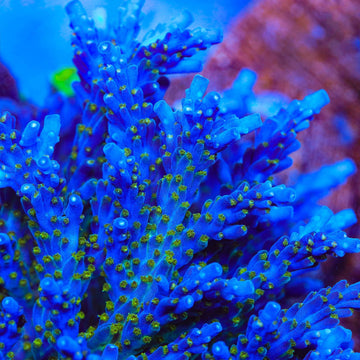
TSA Blood Spear Acropora Coral
Overview
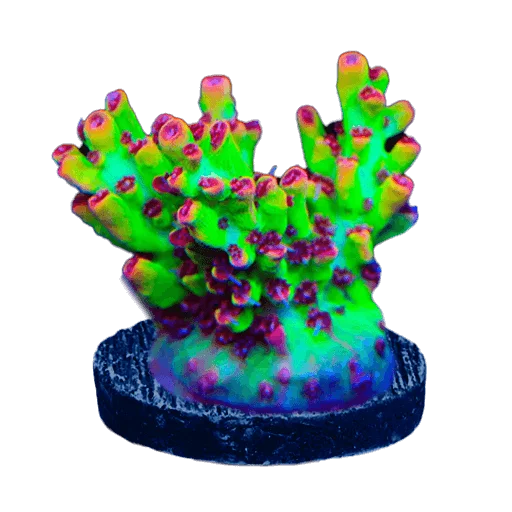
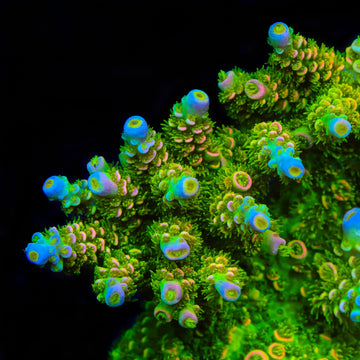
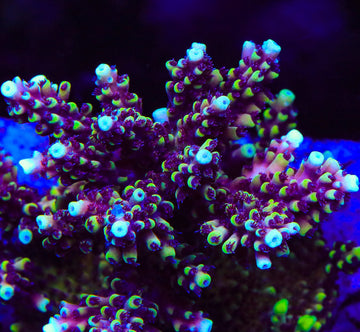
Blood Spear Acropora Coral shows deep red to burgundy branch tips with fine axial corallites. Acropora sp., a branching stony coral, prefers strong light and high, turbulent flow. It relies mainly on symbiotic algae for energy; occasional small-polyp foods at night can support growth and maintain color. Place high on stable rock with space from aggressive neighbors, and keep alkalinity stable with low, consistent nutrients.
Quick Facts
Care
Difficult
Lighting
High
Flow
High, turbulent
Placement
High
Temperament
Peaceful (3–6 inches spacing)
Recommended Parameters
Temp
76–80°F
pH
8.1–8.4
Salinity
1.025–1.026
Calcium
400–450 ppm
AlkAlkalinity
7–9 dKH
Magnesium
1280–1350 ppm
Feeding
photosynthetic, microplankton, zooplankton, rotifers, copepod nauplii, oyster eggs, cyclops, powdered coral foods, amino acid supplements
Care & Placement
FAQ
Frequently Asked Questions
About the TSA Blood Spear Acropora Coral
-
How do I keep the “blood-red” coloration from fading or browning in Blood Spear Acropora (Acropora sp.)?
Maintain strong but acclimated PAR (250–350) with rich violet/blue (420–470 nm) and moderate white. Keep NO3 around 2–10 ppm, PO4 0.03–0.08 ppm; too lean pales, too rich browns. Hold alk steady (7.5–8.5 dKH), Ca 420–460, Mg 1300–1400. Monitor potassium (380–420 ppm)—low K often washes out reds. Avoid abrupt spectrum or photoperiod changes. -
What growth quirks should I plan for with this spear-branched morph?
It encrusts, then sends narrow, upright “spears” that can self-shade and trap detritus at the base. Mount high with open space and cross-flow so branches sway and light penetrates. Periodically prune interior branches to prevent basal shadowing. A slightly angled mount improves light to the core and reduces stagnant pockets that can trigger STN at the base. -
How can I spot and address pests that target this coral before damage spreads?
Watch for reduced polyp extension and yellowish “sugar-grain” dots (red bugs) or semicircular bite marks/white patches (AEFW). Inspect undersides and shaded areas. Act fast: isolate, dip (commercial coral dips), turkey-baste to dislodge, and repeat per life cycle. Quarantine new frags. Differentiate from alk burn (uniform tip burn after a spike) to avoid misdiagnosis. -
What’s the best response to sudden basal tissue recession on an established colony?
Stabilize parameters first (especially alkalinity), increase turbulent flow at the base, and gently baste out detritus. Trim back shaded or dead skeleton to stop creep and frag healthy tips as insurance. Verify nutrients aren’t bottoming out. Consider a short blackout or reduced whites if photoinhibition is suspected. If progression continues, isolate and perform targeted dips.