TSA Blood Red Goniopora Coral
Overview
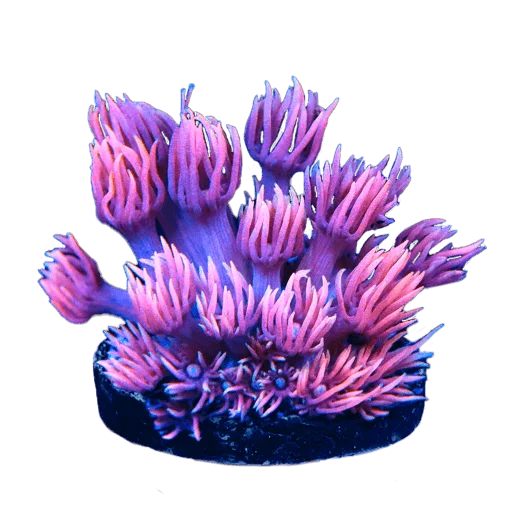
Blood Red Goniopora Coral shows deep red, long daisy-like polyps that sway on extended stalks. Goniopora sp. is a stony LPS coral forming encrusting to domed colonies; it prefers moderate light and gentle, indirect water flow. It is photosynthetic via symbiotic algae but benefits from occasional small particulate or meaty foods, which can support growth and color. Place on stable rock or sand with space for full extension, and keep clear of aggressive corals and strong flow that can damage tissue.
Quick Facts
Care
Difficult
Lighting
Low–Moderate
Flow
Moderate, indirect
Placement
Low–Mid
Temperament
Semi-aggressive (6–8 inches spacing)
Recommended Parameters
Temp
76–80°F
pH
8.1–8.4
Salinity
1.025–1.026
Calcium
420–450 ppm
AlkAlkalinity
8–9 dKH
Magnesium
1250–1350 ppm
Feeding
photosynthetic, phytoplankton, zooplankton, rotifers, copepod nauplii, cyclops, baby brine shrimp, marine snow, coral-specific micro-particulate foods, finely minced mysis
Care & Placement
FAQ
Frequently Asked Questions
About the TSA Blood Red Goniopora Coral
-
Why does my Blood Red Goniopora sometimes stay retracted for a day or two even when parameters look fine?
Short “rest days” can coincide with budding or skeletal thickening. If tissue isn’t receding, leave it undisturbed. Verify gentle, random flow and stable alk 8–9 dKH. Slightly increase particulate feeding (5–200 µm) and consider trace support (iron/manganese). Avoid abrupt PAR changes; a 10–15% ramp over a week often restores extension. -
How can I keep the deep red coloration from washing out over time?
Red morphs fade under excessive PAR and ultra-low nutrients. Aim moderate light (120–180 PAR) with a blue-leaning spectrum, NO3 ~5–15 ppm, PO4 ~0.04–0.10 ppm. Feed fine zooplankton and reef roids–type foods 2–3x weekly. Consistent iron and manganese dosing (measured, not blind) helps maintain chromoproteins and polyp vigor. -
My Goniopora shows early tissue thinning and sticky mucus—could this be brown jelly disease?
Yes. Immediately siphon the slime, perform an iodine or coral antiseptic dip, improve aeration, and isolate in a clean, stable environment. If spread continues, consider a targeted antibiotic bath (ciprofloxacin) in a separate container. Reduce organics, increase flow slightly around—but not blasting—the colony, and resume small, frequent feedings only after stabilization. -
Are there placement or tankmate quirks specific to the red morphs?
Give 3–4 inches of space; their sting is strong though sweepers are short. Avoid direct contact with Euphyllia and aggressive softies. Gentle, cross-flow works best; detritus dusting is fine but don’t let sand bury the base. Discourage clownfish from “hosting”—repeated rubbing can prevent extension and invite bacterial issues.