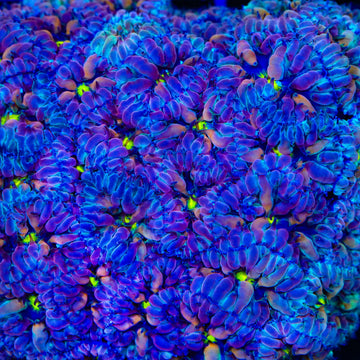
TSA Black Widow Blastomussa Coral
Overview
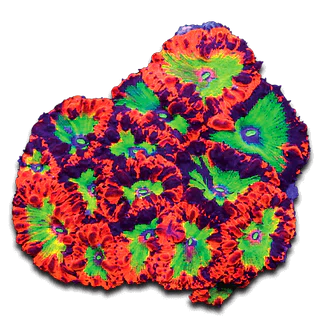
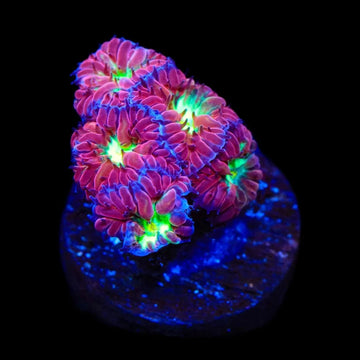
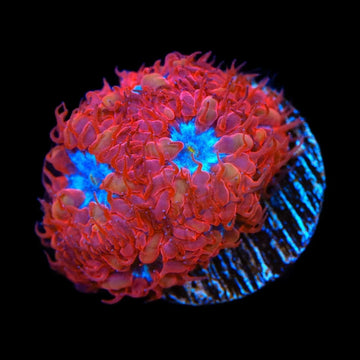
Black Widow Blastomussa Coral displays fleshy, deep red to maroon polyps with darker centers and visible radial striping. Blastomussa wellsi is a large‑polyp stony coral that forms clustered heads and prefers moderate light with low to moderate, indirect flow. It is photosynthetic with symbiotic algae but accepts small meaty foods, which can improve growth and color. Place on a stable sandbed or lower rockwork, acclimate to light changes, and give space from more aggressive corals.
Quick Facts
Care
Moderate
Lighting
Low–Moderate
Flow
Low–Moderate
Placement
Low–Mid
Temperament
Semi-aggressive (2–3 inches spacing)
Recommended Parameters
Temp
76–80°F
pH
8.1–8.4
Salinity
1.025–1.026
Calcium
400–450 ppm
AlkAlkalinity
8–9 dKH
Magnesium
1280–1350 ppm
Feeding
photosynthetic, mysis shrimp, enriched brine shrimp, finely chopped marine meaty foods, zooplankton, microplankton, copepods, rotifers, powdered coral foods (e.g., Reef-Roids)
Care & Placement
FAQ
Frequently Asked Questions
About the TSA Black Widow Blastomussa Coral
-
Why does my Black Widow Blastomussa shrink during the day but puff up at night?
B. wellsi often expands after lights dim to feed on suspended plankton. Daytime “shrinking” can be normal, but if tissue hugs the skeleton for days, check for excess light or vermetid snail irritation. Lower PAR gradually (mesh or screen acclimation), reduce direct flow, and inspect for mucus nets. Stable alk 8–9 dKH and nitrates 5–15 ppm support recovery. -
My coral’s red turns dull and the center darkens—lighting or nutrients?
Both. Too much white spectrum or sudden PAR increases can wash reds; very low nutrients mute pigmentation. Aim for moderate PAR (60–120), stronger blue weighting, and balanced nutrients (NO3 5–15 ppm, PO4 0.03–0.1). Trace stability helps: regular water changes, avoid aggressive GFO swings. Improve color slowly over 2–4 weeks to avoid stress. -
The tissue is receding from the base upward, but parameters look fine—what else should I check?
Look for mechanical irritation and nocturnal stressors: vermetid snail tubes, bristle stars wedging polyps, or laminar flow hitting the collar. Redirect flow to be broad and gentle, break off vermetids, and place the colony on a smooth, sandbed “island” or a flat rock. Run fresh carbon to reduce chemical aggression from nearby LPS like favias or euphyllias. -
Can feeding too often cause problems with this coral?
Yes. Overfeeding can foul tissue and invite bacterial issues (including brown jelly). Target feed small portions of fine meaty foods 1–2 times weekly after tentacles extend; ensure enough flow after feeding to clear leftovers. Skip feeding if polyps look stressed or are mid-recovery. Prioritize overall stability; consistent nutrients and gentle flow often improve plumpness more than heavy feeding.