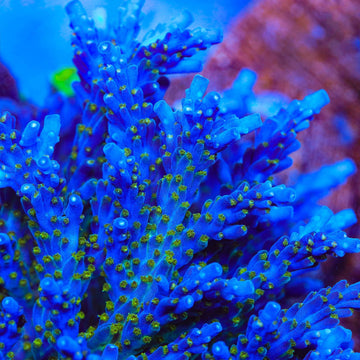
TSA BioShock Tenuis Acropora Coral
Overview
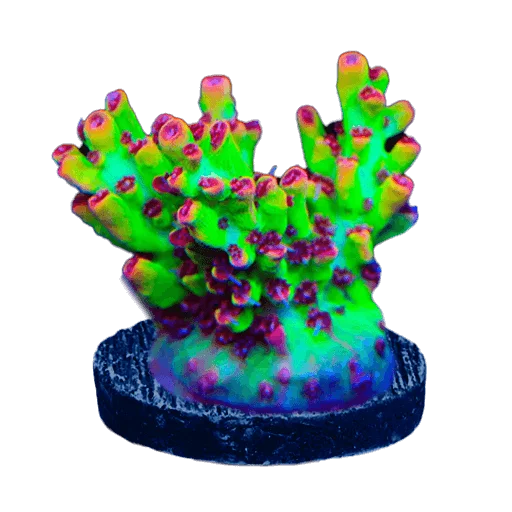
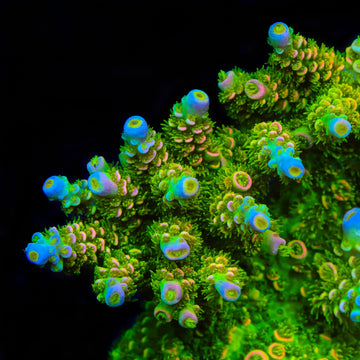
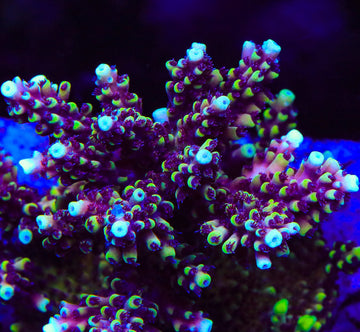
BioShock Tenuis Acropora Coral displays branching, tightly spaced axial tips with contrasting polyp coloration. Acropora tenuis is a small-polyp stony branching coral that prefers strong light and high, turbulent water flow. It is primarily photosynthetic via symbiotic algae but can accept fine particulate foods, which may support growth and coloration. Place high on stable rockwork with space from aggressive neighbors, and keep alkalinity and nutrients stable.
Quick Facts
Care
Difficult
Lighting
High
Flow
High, turbulent
Placement
High
Temperament
Peaceful (2 inches spacing)
Recommended Parameters
Temp
77–80°F
pH
8.1–8.4
Salinity
1.025–1.026
Calcium
420–450 ppm
AlkAlkalinity
7.5–9.0 dKH
Magnesium
1280–1350 ppm
Feeding
photosynthetic, microzooplankton, rotifers, copepod nauplii, coral-specific powdered foods, amino acid supplements, marine snow
Care & Placement
FAQ
Frequently Asked Questions
About the TSA BioShock Tenuis Acropora Coral
-
Why does BioShock Tenuis (Acropora tenuis) shift colors under different lights, and how can I keep its “glow” stable?
Tenuis pigments respond strongly to heavy blue/UV and stable, low-to-moderate nutrients (NO3 ~5–15 ppm, PO4 ~0.03–0.08 ppm). Excess white or sudden PAR jumps can wash out tips; too little nutrients cause pastels and reduced fluorescence. Maintain potassium ~380–420 ppm and trace iron at low, testable levels. Strong, chaotic flow prevents film buildup that dulls tissue. Acclimate to higher PAR over weeks to avoid tip burn and ensure even coloration from base to branches. -
What growth form should I expect, and how do I prevent the base from browning out?
Acropora tenuis grows corymbose, forming bushy clumps with thick axial tips. High, cross-directional flow and PAR 250–400 encourage tight, compact branching. As colonies thicken, inner bases can shade and starve. Mount on a low-profile plug or small pedestal, prune interior branches periodically, and keep flow penetrating the colony. Avoid letting encrustment creep into stagnant corners; small “windows” created by selective trimming keep light/flow to the base and preserve color. -
How can I spot pests early on this species, and what signs are specific to tenuis?
Tenuis shows early stress at new growth: look for crescent-shaped bite marks or sandpaper patches (AEFW), tiny orange specks at polyp bases (red bugs), or dimmed fluorescence on the brightest tips. Night inspection with blue light and a magnifier reveals pests faster. Dip new pieces (oxidative or iodine-based), then observe on a frag rack for two weeks. If bite marks appear, perform targeted dips and turkey-baste daily; inspect frags’ undersides and axial tips where eggs cluster. -
My tenuis receded after a PAR increase and minor alk swing—how do I stop STN/RTN and rebuild color?
Stabilize first: hold alk within 0.2 dKH daily, pause further PAR changes, and restore prior spectrum. Increase aeration and flow, and run fresh carbon to remove irritants. Trim clearly necrotic tips to clean tissue, then iodine dip. Feed small, frequent aminos or fine particulate at lights-out for a week to support recovery. Resume light acclimation via mesh/screens over 2–3 weeks. Verify temperature stability and maintain moderate nutrients to regain fluorescence.