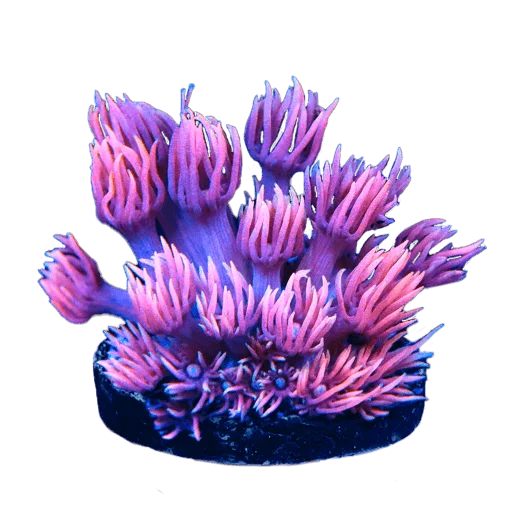
TSA Be Mine Goniopora Coral
Overview
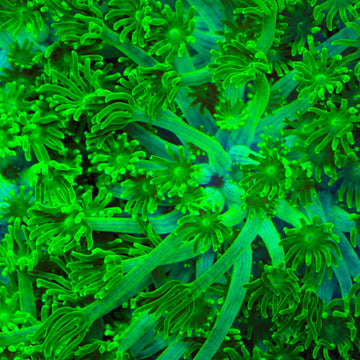
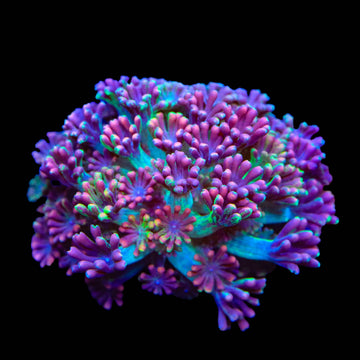
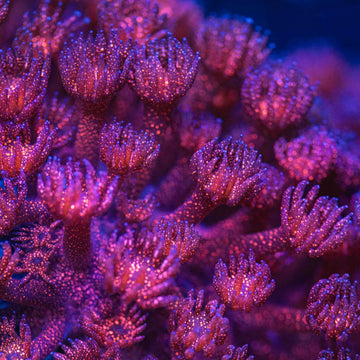
Be Mine Goniopora Coral displays long, flower-like polyps with extended tentacles in clustered heads. Goniopora sp. is a large-polyp stony coral forming rounded colonies; it prefers moderate lighting and gentle to moderate, indirect water flow. It is photosynthetic with symbiotic algae but benefits from regular small meaty or planktonic foods, which can improve growth and coloration. Place it where polyps can fully extend without strong direct flow, leaving space from other corals to prevent contact and stings.
Quick Facts
Care
Difficult
Lighting
Moderate
Flow
Moderate, indirect
Placement
Low–Mid
Temperament
Semi-aggressive (6–8 inches spacing)
Recommended Parameters
Temp
76–82°F
pH
8.1–8.4
Salinity
1.025–1.026
Calcium
420–450 ppm
AlkAlkalinity
8–9.5 dKH
Magnesium
1250–1350 ppm
Feeding
photosynthetic, phytoplankton, zooplankton, rotifers, copepod nauplii, microplankton, powdered coral foods (e.g., Reef-Roids), cyclops, finely chopped mysis shrimp, enriched brine shrimp, oyster eggs, marine snow
Care & Placement
FAQ
Frequently Asked Questions
About the TSA Be Mine Goniopora Coral
-
Why does my Be Mine Goniopora stay retracted for days after looking great?
Extended retraction usually points to instability or over-stress. Common triggers: alkalinity swings, abrupt PAR increases, excessive direct flow, ultra-low nutrients, or insufficient particulate foods. Aim for stable KH 8–9 dKH, nitrate 5–15 ppm, phosphate 0.05–0.15 ppm, and moderate, varied flow. Increase small-particle feeding 2–4x weekly. Consider trace iron/manganese support. Run carbon after chemical treatments, and avoid frequent handling. Improvement often follows 1–2 weeks of stability. -
How do I keep its pink/red “Be Mine” coloration from washing out or browning?
Color shifts mirror light and nutrients. Provide moderate PAR (100–180) with strong blue spectrum (14–20K look), avoid sudden intensity changes, and don’t bottom out nutrients. Target feed fine foods to support chromoprotein density. Maintain trace balance (especially iron) and stable alk. If paling, lower PAR 15–25% and increase feedings; if browning, modestly raise light or flow and keep nutrients in the low-but-present range. -
Are clownfish safe to host in this Goniopora?
Not recommended. Many clowns will attempt to nestle in long-polyp Goniopora, which abrades tissue, hampers polyp extension, and can lead to recession. If hosting behavior starts, redirect with a surrogate (e.g., large toadstool, fake anemone) or use an acclimation box to break the habit. Provide enough distance from the coral’s perimeter, and avoid pairing with highly assertive clown species that persistently investigate LPS. -
How should I respond to tissue recession, brown jelly, or polyp bailout?
Act quickly. Siphon any gelatinous tissue, perform an iodine dip, and increase indirect flow around the base. Frag away healthy sections if recession is localized. Stabilize parameters, raise feeding frequency, and avoid drastic light changes. For bailout, cage loose polyps in a fine basket, gentle flow, and target feed; some reattach. If infection spreads, repeat dips and consider isolating the colony. Run fresh carbon and maintain high oxygenation.