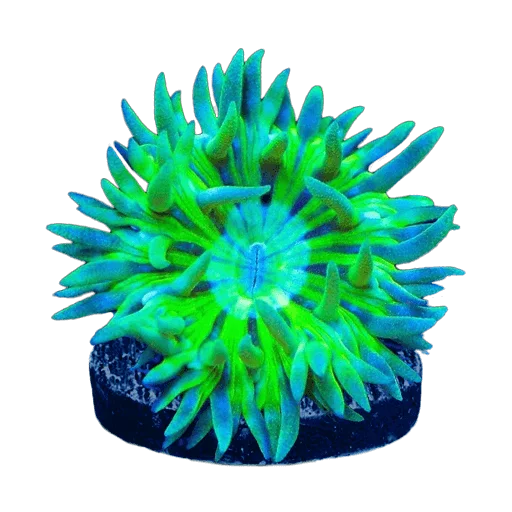
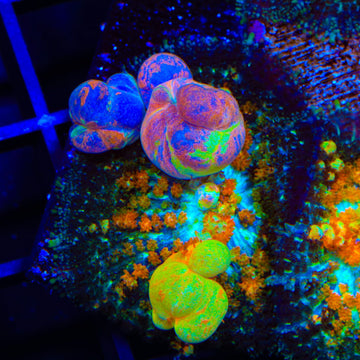
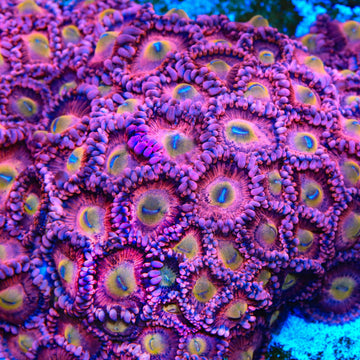
TSA BBL Bounce Yuma Mushroom Coral
Overview
BBL Bounce Yuma Mushroom Coral has large bubble-like vesicles on a thick, domed oral disc. Ricordea yuma is a soft corallimorph (mushroom coral) that prefers moderate light and low to moderate, indirect water flow. It relies on symbiotic algae for energy but will accept small meaty foods, which can support faster growth and stronger color. Place on stable rubble or a sheltered rock with space from aggressive neighbors, and avoid strong flow that can cause detachment.
Quick Facts
Care
Moderate
Lighting
Low–Moderate
Flow
Low–Moderate
Placement
Low–Mid
Temperament
Semi-aggressive (3–6 inches spacing)
Recommended Parameters
Temp
76–80°F
pH
8.1–8.4
Salinity
1.025–1.026
Calcium
400–430 ppm
AlkAlkalinity
8–9.5 dKH
Magnesium
1250–1350 ppm
Feeding
photosynthetic (primary), finely chopped mysis shrimp, enriched brine shrimp, copepods, rotifers, microplankton, powdered coral foods (reef roids), marine snow
Care & Placement
FAQ
Frequently Asked Questions
About the TSA BBL Bounce Yuma Mushroom Coral
-
Why do the “bounce” vesicles on my BBL Bounce Yuma inflate some days and shrink on others?
Vesicle size fluctuates with light, flow, and nutrients. Too much light/flow can deflate bubbles; moderate PAR (80–150), gentle indirect flow, and slightly elevated nutrients (nitrate 5–15 ppm, phosphate 0.03–0.1) usually keep them puffy. Avoid rapid spectrum changes—blue-heavy lighting preserves fluorescence. Don’t chase daily shifts; look for week-to-week stability. Sudden, lasting deflation often signals stress or parameter swings. -
My Ricordea yuma started “melting” after a move—can I save it?
Yuma can crash from heat spikes, harsh light, or bacterial stress. Reduce PAR quickly (shade/mesh), increase gentle flow, and ensure stable temp (24–26°C) and alkalinity (8–9 dKH). Perform an iodine or povidone-iodine dip, then place in a low-flow healing basket with rubble. Keep nutrients non-zero and avoid heavy feeding until tissue firms up. Remove dying tissue to prevent fouling. -
My Yuma keeps detaching or “walking” off its plug. How do I anchor it?
They pedal-lacerate and move when unhappy with light/flow. Adjust to gentle, indirect flow and slightly lower PAR. Use a rubble cup or shallow dish with bridal veil/mesh so the foot can reattach without being blown away. Super glue around, not on, the foot if needed. Once it grips rubble, you can epoxy the rubble to your scape. -
The coral’s colors look dull compared to photos—what can I tweak safely?
Prioritize spectrum over intensity. Increase blue/violet (420–470 nm) while keeping PAR modest; reduce whites and deep reds that wash fluorescence. Maintain low-moderate nutrients (not ultra-low) and stable parameters; mild amino/trace supplementation can help, but avoid big swings. View under clean glass and consistent photoperiod. Color shifts take weeks—adjust slowly and track with PAR readings.