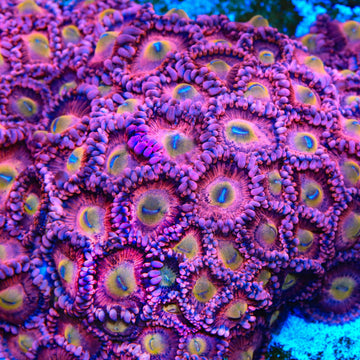
TSA Bangarang Alveopora Coral
Overview
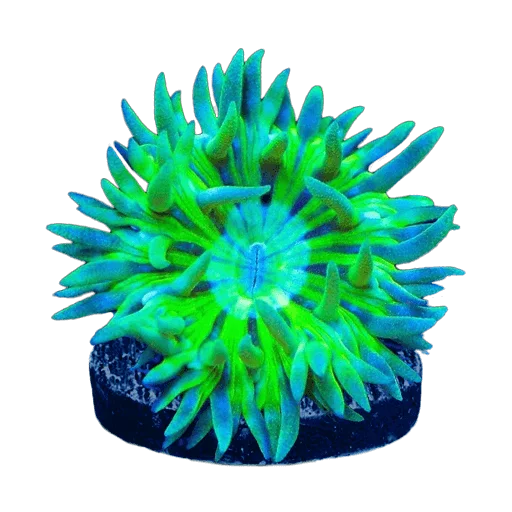
Bangarang Alveopora Coral shows long, daisy-like polyps with contrasting centers and extended tentacles. Alveopora sp. is a large-polyp stony coral with a branching skeleton and fleshy heads, preferring moderate light and gentle to moderate water flow. It is photosynthetic via symbiotic algae but accepts small meaty foods or coral foods, which can support faster growth and richer color. Place with space around it, as its polyps can reach far and may irritate nearby corals.
Quick Facts
Care
Moderate
Lighting
Low–Moderate
Flow
Moderate, indirect
Placement
Low–Mid
Temperament
Semi-aggressive (3–6 inches spacing)
Recommended Parameters
Temp
76–80°F
pH
8.1–8.4
Salinity
1.025–1.026
Calcium
400–450 ppm
AlkAlkalinity
8–9 dKH
Magnesium
1250–1350 ppm
Feeding
photosynthetic, phytoplankton, microplankton, rotifers, zooplankton, oyster eggs, marine snow, reef-specific powdered coral foods, cyclops, enriched baby brine shrimp
Care & Placement
FAQ
Frequently Asked Questions
About the TSA Bangarang Alveopora Coral
-
How do I confirm Bangarang Alveopora isn’t Goniopora, and does that change care?
Count tentacles: Alveopora polyps have 12; Goniopora typically show 24. Bangarang Alveopora also has a lighter, more porous skeleton and tends to tolerate slight nutrient levels better. It prefers moderate PAR (80–150) with indirect, rolling flow. Feeding is helpful but not daily; broadcast micro-plankton 2–3 times weekly. This species generally responds better to stability than heavy feeding. -
My Bangarang’s vivid colors are washing out—what should I adjust first?
Check spectrum and nutrients. Keep nitrate 5–15 ppm, phosphate 0.03–0.1 ppm; zeroed nutrients fade greens and pastels. Aim PAR around 100 and ramp changes slowly. Favor strong blue channels and moderate whites. Maintain alk 8–9 dKH, calcium 420–450, magnesium ~1350. Occasional trace supplementation (iodine, iron) can support fluorescence if tested and dosed conservatively. -
Why are the polyps staying retracted after a move or cleaning?
Light shock, blast flow, or parameter swings are common triggers. Reduce PAR 20–30% for a week, redirect flow to a gentle, oscillating pattern, and verify alkalinity stability (avoid >0.3 dKH daily swing). Gently baste off detritus to prevent irritation. Resume light feeding of phyto/zooplankton. If tissue looks intact, give it several days; sudden tearing requires repositioning to prevent skeleton abrasion. -
How should I handle early brown jelly or polyp bailout?
Isolate immediately. Siphon necrotic slime, perform an iodine dip, and increase indirect flow around the colony. Frag away unaffected sections with a small safety margin. Stabilize alk, temp, and salinity; avoid heavy feeding during recovery. For bailout, collect viable polyps in a low-flow basket and glue any attached skeleton fragments; some reattach if conditions remain stable.