TSA Banana Pie Goniopora Coral
Overview
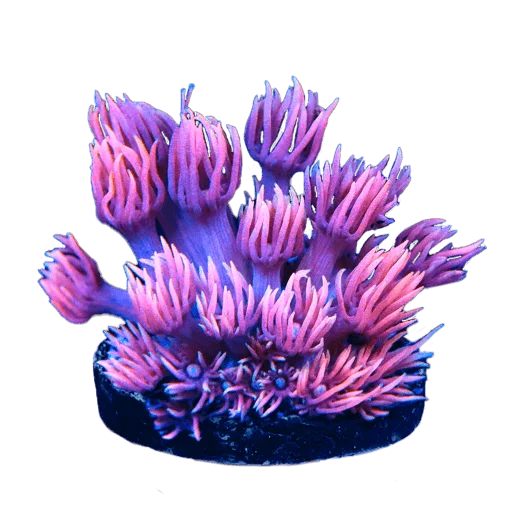
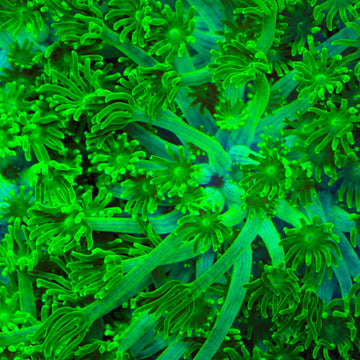
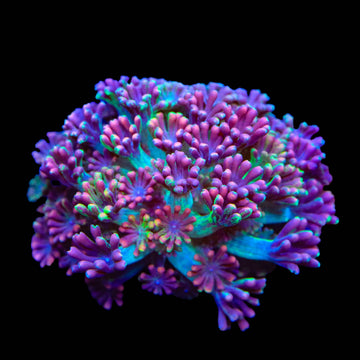
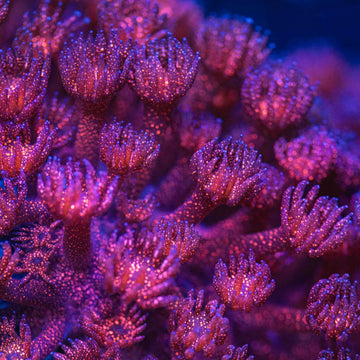
Banana Pie Goniopora Coral shows long, daisy-like polyps with yellow to cream tips. Goniopora sp. is a large-polyp stony coral with a branching or encrusting skeleton; it prefers moderate light and gentle, indirect water flow. It relies on symbiotic algae for energy but benefits from supplemental feeding of fine meaty or planktonic foods, which can support growth and maintain color. Place it on a stable surface with room for full polyp extension, and keep distance from other corals to avoid stings.
Quick Facts
Care
Moderate
Lighting
Moderate
Flow
Moderate, indirect
Placement
Mid–Low
Temperament
Semi-aggressive (4–6 inches spacing)
Recommended Parameters
Temp
75–80°F
pH
8.1–8.4
Salinity
1.025–1.026
Calcium
420–450 ppm
AlkAlkalinity
8–9 dKH
Magnesium
1250–1350 ppm
Feeding
photosynthetic, phytoplankton, zooplankton, microplankton, rotifers, copepod nauplii, oyster eggs, cyclops, powdered coral foods (e.g., Reef-Roids), marine snow, very fine minced mysis or enriched brine
Care & Placement
FAQ
Frequently Asked Questions
About the TSA Banana Pie Goniopora Coral
-
Why does my Banana Pie Goniopora Coral lose its bright yellow hue over time?
Color shifts often follow spectrum, nutrients, and trace balance. Blue-heavy lighting can push it greener; overly white can wash it out. Aim for moderate PAR (100–180), slow acclimation, and stable NO3/PO4 (e.g., 5–15 ppm NO3, 0.05–0.15 ppm PO4). Maintain consistent alkalinity and consider modest iron/manganese dosing, which influences greens but can overwhelm yellows if overdosed. Stability over weeks restores saturation. -
My Goniopora sp. is staying closed—how do I pinpoint the cause?
Start with flow and irritation. Too-strong laminar flow, sand abrasion on long polyps, or vermetid snail webs commonly keep it retracted. Check for clownfish nipping, hydroids, or nudibranchs at night. Verify nutrients aren’t bottomed out and alkalinity isn’t swinging. If tissue sloughs or smells, perform an iodine dip and increase random, gentle flow. Raise nutrients gradually and reposition off abrasive substrates. -
What feeding approach works best for Banana Pie Goniopora Coral without polluting the tank?
Offer small particulates (5–200 microns): rotifers, enriched baby brine, mixed phyto, and fine coral foods. Target feed 2–4 times weekly with pumps off for 10–15 minutes, letting mucus capture food without burying the polyps. Rotate foods to broaden nutrition, and resume gentle flow to clear excess. Stable nutrients plus occasional amino acids support extension and growth without fueling nuisance algae. -
How close can Banana Pie Goniopora Coral be to other corals, and are there unique risks?
Give 3–4 inches of space; it can sting neighbors but loses to aggressive Euphyllia and some Faviids. Avoid clownfish hosting—persistent nuzzling damages polyps. Keep away from vermetid-dense zones and high-traffic sand where urchins or cucumbers can topple it. A small riser or stable plug keeps polyps off abrasive substrate while allowing flow beneath the skirt.