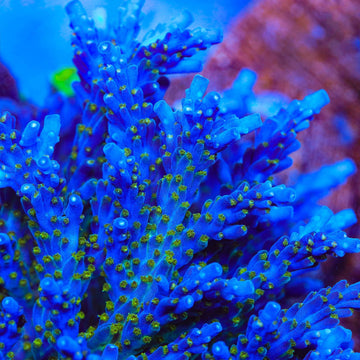
TSA Bali Blue Slimer Acropora Coral
Overview
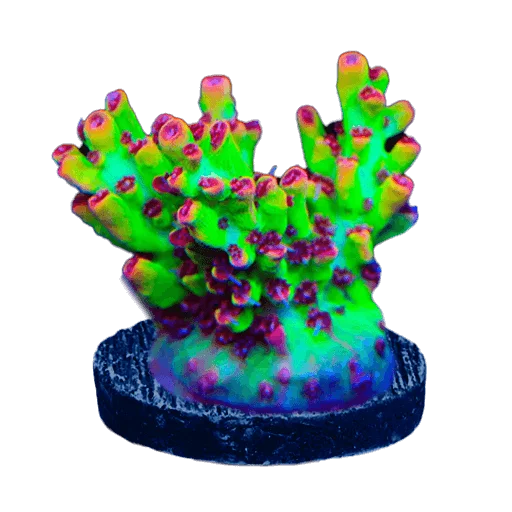
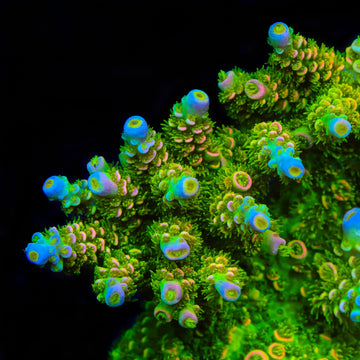
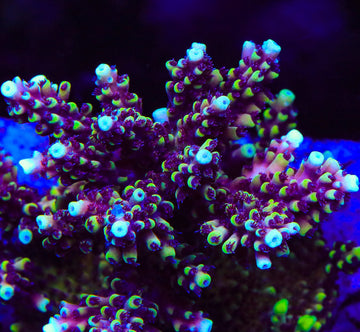
Bali Blue Slimer Acropora Coral displays slender, blue-green branching stalks with a smooth, slime-coated surface. Acropora yongei is a small-polyp stony coral that forms upright branches and prefers strong light and high, turbulent water flow. It is photosynthetic through symbiotic algae, and occasional microplankton feeding can support growth and color. Place high on stable rockwork with room for growth, keep distance from aggressive corals, and maintain stable calcium and alkalinity.
Quick Facts
Care
Difficult
Lighting
High
Flow
High, turbulent
Placement
High
Temperament
Semi-aggressive (fast-growing; allow 3–6 inches spacing)
Recommended Parameters
Temp
76–80°F
pH
8.1–8.4
Salinity
1.025–1.026
Calcium
420–450 ppm
AlkAlkalinity
7.5–8.5 dKH
Magnesium
1280–1350 ppm
Feeding
photosynthetic (primary), microplankton, phytoplankton, zooplankton, rotifers, copepod nauplii, bacterioplankton, coral-specific powdered foods (e.g., Reef Roids), amino acid supplements
Care & Placement
FAQ
Frequently Asked Questions
About the TSA Bali Blue Slimer Acropora Coral
-
Why is my Bali Blue Slimer Acropora Coral turning green or brown instead of blue?
Acropora yongei shifts color with spectrum, nutrients, and stability. Aim for strong blue/UV-heavy lighting (high PAR), nitrate 2–10 ppm and phosphate 0.03–0.08 ppm, with very stable alkalinity. Excess nutrients push brown; ultra-low nutrients wash it out. New frags and recent dips often look dull for weeks. Reduce yellow spectrum, keep trace elements balanced, and avoid rapid changes—consistent conditions bring the blue back. -
How do I prevent base recession and shadowing in this fast-branching acro?
It encrusts, then shoots vertical branches that can shade the base. Give high, turbulent flow, mount at a slight angle to spread light, and periodically prune inner branches to open pathways. Avoid crowding with other SPS. Ensure PAR reaches the base (raise colony if needed). Stable alkalinity and moderate nutrients help tissue at the base resist die-off. -
After fragging, it produced heavy slime—can that affect the tank?
Yes. The slime can irritate neighbors and cause a temporary skimmer surge. Frag outside the display, rinse frags in clean saltwater, and discard slime water. Run fresh carbon and increase aeration for 24 hours. A small water change helps if the event was large. Provide strong, random flow around the colony to clear mucus and prevent stagnation. -
What causes tip burn or sudden tissue loss in Acropora yongei?
Common triggers are alkalinity spikes under intense light, abrupt temperature swings, and low flow around branch tips. Keep alk tightly stable (about 7.5–8.5 dKH), match new saltwater parameters, and ramp PAR changes over 1–2 weeks. If tips burn, reduce light slightly, correct alk, and improve flow. For RTN/STN, frag healthy sections ahead of the die-off and stabilize conditions immediately.