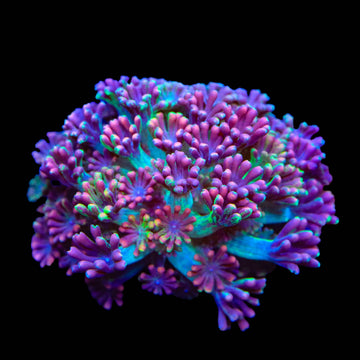
TSA Axle Rose Alveopora Coral
Overview
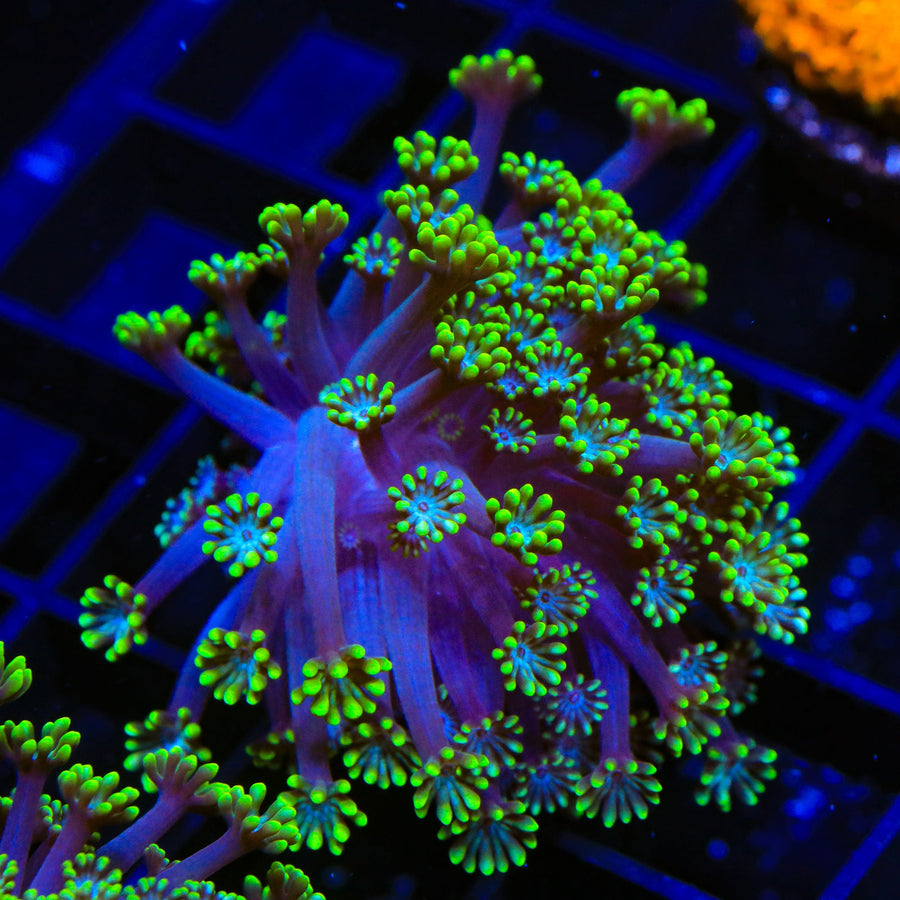
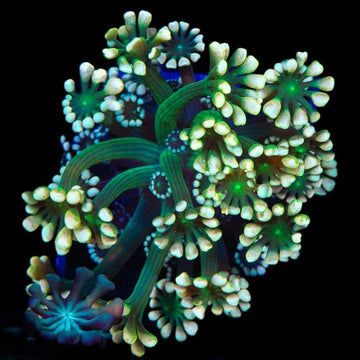
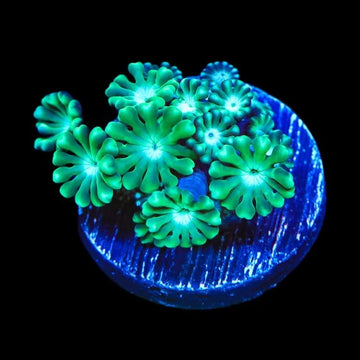
Axle Rose Alveopora Coral displays long, daisy-like polyps on thin branching heads that sway with the current. Classified as Alveopora sp., it is a large-polyp stony coral with a branching, lightweight skeleton; provide moderate light and gentle to moderate, indirect flow. It relies on symbiotic algae for energy but benefits from occasional small-particle foods, which can support growth and maintain color. Place it with space around its extended polyps and away from aggressive neighbors to avoid contact stings.
Quick Facts
Care
Moderate
Lighting
Low–Moderate
Flow
Moderate, indirect
Placement
Mid–Low
Temperament
Semi-aggressive (3–6 inches spacing)
Recommended Parameters
Temp
76–80°F
pH
8.1–8.4
Salinity
1.025–1.026
Calcium
400–450 ppm
AlkAlkalinity
8–9 dKH
Magnesium
1280–1350 ppm
Feeding
photosynthetic, microplankton, phytoplankton, zooplankton, rotifers, copepod nauplii, oyster eggs, marine snow, powdered coral foods (e.g., Reef-Roids)
Care & Placement
FAQ
Frequently Asked Questions
About the TSA Axle Rose Alveopora Coral
-
How can I tell Axle Rose Alveopora (Alveopora sp.) from Goniopora, and does that change how I keep it?
Count tentacles: Alveopora polyps have 12, Goniopora usually 24. Axle Rose forms lighter, more flexible branches with long, daisy-like polyps. It generally tolerates moderate light and gentle, indirect flow better than many Goniopora. Feed small particulate foods 2–3 times weekly; it accepts finer fare more readily. Aim for stable, slightly nutrient-rich water to avoid paling or recession. -
My Axle Rose is receding from the base upward. What’s the likely cause and fix?
Common triggers are excessive flow blasting the skeleton, sudden light increases, or bacterial stress after nips or cuts. Move to cushioned, cross-flow; lower PAR 20–30% and ramp slowly. Perform a short iodine dip, then increase fine-particle feedings. Ensure alk 8–9 dKH with steady calcium/magnesium. If brown jelly appears, frag above the melt and discard infected sections. -
Why did my coral deflate for days after shipping or a big water change?
Alveopora often “shut down” under shock. Keep it in low–moderate light with gentle, oscillating flow; avoid direct jets. Maintain temperature and salinity tightly. Offer very small feedings after lights down to coax extension. Amino acids and trace manganese/iron at conservative, tested levels can help recovery. Avoid repeated handling; give 3–7 days before judging. -
Can Axle Rose Alveopora sting or be stung, and what neighbors are safest?
It has short reach and loses to aggressive LPS and many soft corals. Keep 3–4 inches from Euphyllia, Galaxea, and favias. Zoanthids and mushrooms can overgrow and shade it. Best neighbors are calmer SPS or LPS with limited sweepers. Run carbon and ensure good skimming to reduce allelopathy. Watch for nipping fish (angels, some butterflies).