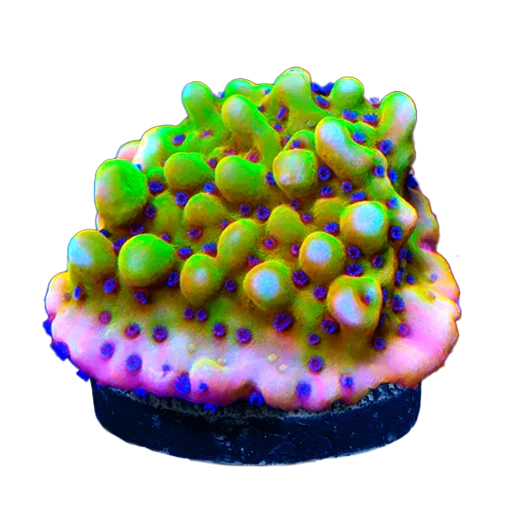
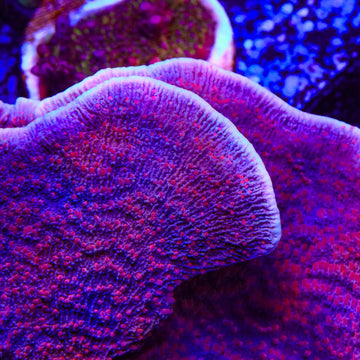
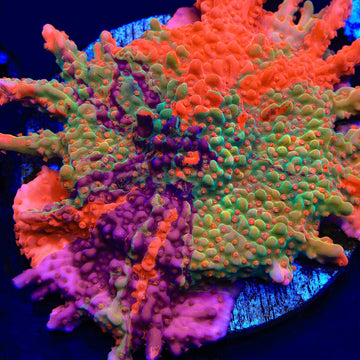
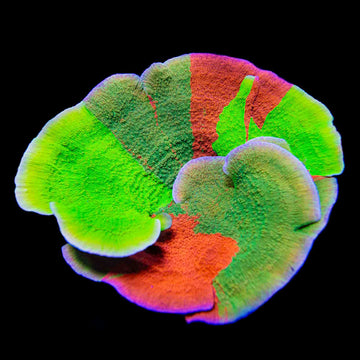
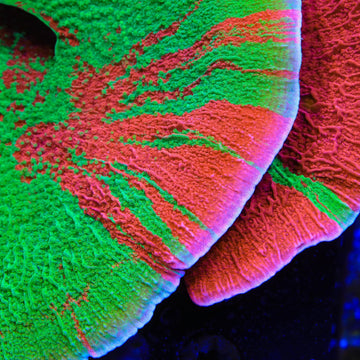
TSA Aquarim Montipora Coral
Overview
Aqua Rim Montipora Coral shows broad, whorled plating growth with a contrasting rim. Montipora capricornis is a hard plating SPS coral that prefers moderate to high light and moderate to strong, turbulent water flow. It is primarily photosynthetic with symbiotic algae but benefits from occasional fine particulate feedings, which can support growth and coloration. Place higher on stable rockwork with room to expand, and keep distance from aggressive corals to avoid damage.
Quick Facts
Care
Moderate
Lighting
Moderate–High
Flow
Moderate–High
Placement
Mid–High
Temperament
Peaceful (3–4 inches spacing)
Recommended Parameters
Temp
76–80°F
pH
8.1–8.4
Salinity
1.025–1.026
Calcium
400–450 ppm
AlkAlkalinity
8–9 dKH
Magnesium
1250–1350 ppm
Feeding
photosynthetic (primary), phytoplankton, microplankton, rotifers, fine zooplankton suspensions, coral-specific powdered foods, amino acid supplements
Care & Placement
FAQ
Frequently Asked Questions
About the TSA Aquarim Montipora Coral
-
Why does my Aqua Rim Montipora Coral plate upward in some spots and flatten in others, and how can I guide its shape?
This species adjusts form to light and flow. Strong, random flow with higher light encourages cupped, tiered shelves; lower flow and uneven light push flatter, sprawling plates. Rotate the colony quarterly to limit self-shading, and trim undersides that die back. Mount on a vertical face or pillar to promote upward whorls, keeping 3–4 inches of space for future growth. -
My rim lost its neon edge—what spectrum and nutrients best bring out the color without washing it out?
Aim for PAR ~200–350 with strong blue/UV (420–460 nm) and moderate white. Keep nitrate 5–15 ppm and phosphate 0.03–0.10 ppm; too lean dulls color, too rich browns it. Maintain alk 7.5–8.5 dKH with minimal daily swing. Sudden light increases or carbon dosing can pale the rim—ramp changes over 2–3 weeks and monitor polyp extension. -
What’s the best plan if I suspect Montipora-eating nudibranchs hiding under the plates?
Check at night for tiny white nudibranchs and crescent egg spirals on the underside and rim. Remove plates for a focused dip (iodine or commercial coral dip) every 4–5 days for 3–4 cycles to break the egg hatch cycle. Manually siphon adults/eggs with a fine tube. Increase flow under shelves, and consider a Halichoeres wrasse as a helper, plus strict quarantine for new frags. -
How do I balance flow so the rim doesn’t erode while keeping the underside clean and alive?
Use alternating, cross-tank gyres or random pulsing to keep detritus suspended without blasting the lip. Avoid a fixed, direct stream at the rim—it can thin the edge and cause tissue recession. Periodically reposition pumps as the plate expands. If the underside pales, increase turbulent flow beneath and slightly raise PAR, or prune overhangs that cast persistent shadows. Polyp extension should rebound within days.