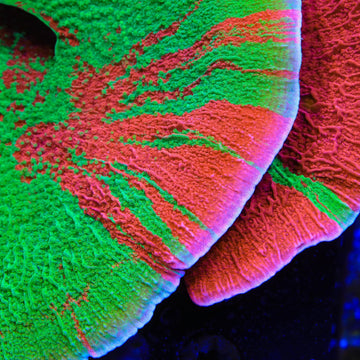
TSA Appleberry Montipora Coral
Overview
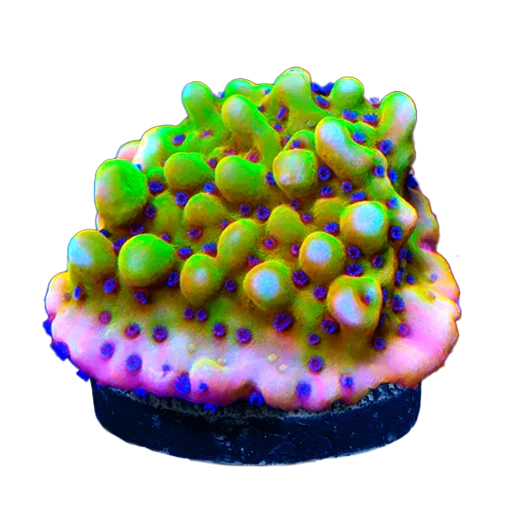
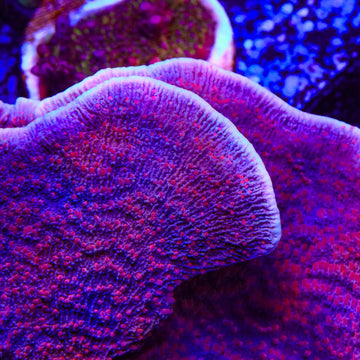
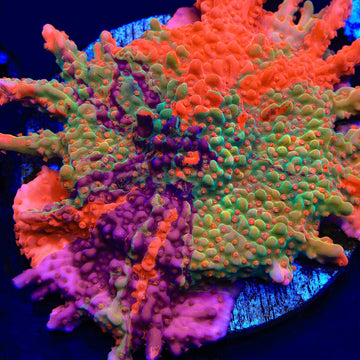
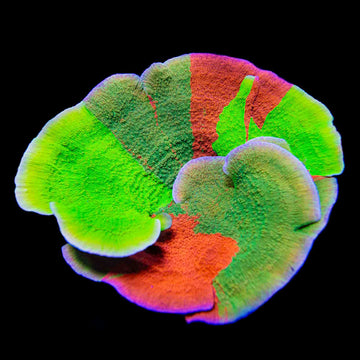
Appleberry Montipora Coral shows a green base with contrasting purple polyps and forms thin, undulating plates. Montipora undata Coral is a small polyp stony, plating coral that prefers moderate to strong lighting and moderate, steady water flow. It is photosynthetic via symbiotic algae but can take fine particulate foods, which may support faster growth and richer color. Place on stable rockwork with room to expand, and keep distance from aggressive, stinging neighbors.
Quick Facts
Care
Moderate
Lighting
Moderate–High
Flow
Moderate–High
Placement
Mid–High
Temperament
Peaceful (2–3 inches spacing)
Recommended Parameters
Temp
76–80°F
pH
8.1–8.4
Salinity
1.025–1.026
Calcium
400–450 ppm
AlkAlkalinity
8–9 dKH
Magnesium
1280–1350 ppm
Feeding
Photosynthetic, microplankton, phytoplankton, zooplankton, rotifers, copepod nauplii, powdered SPS coral foods, amino acid supplements
Care & Placement
FAQ
Frequently Asked Questions
About the TSA Appleberry Montipora Coral
-
Why does my Appleberry Montipora lose its purple rim or turn dull green-brown?
The rim intensifies with higher, stable PAR and strong blue spectrum. Dull coloration often points to low light or elevated nutrients. Aim for moderate-to-high light (increase gradually), phosphate ~0.03–0.07 ppm, nitrate 5–15 ppm, and stable alkalinity 8–9 dKH. Trace balance (iodine/iron) can help greens pop. Sudden shifts or low flow also mute color. -
What growth pattern should I expect, and how can I shape it?
Montipora undata starts encrusting, then forms thin plating shelves. Mount the frag on a vertical face or angled plug to encourage attractive plates and limit self-shading. Provide random, moderate-to-strong flow to prevent detritus from settling under plates. Periodically rotate the colony to even out light exposure if a fixture is directional. -
My colony is receding from the base while tips look fine—what’s the likely cause?
Base recession is often from detritus accumulation and low flow under the plate, or from montipora-eating nudibranchs starting on shaded undersides. Increase turbulent flow beneath shelves, turkey-baste weekly, and inspect at night for tiny white nudis and egg spirals. If found, dip repeatedly on a schedule and quarantine affected pieces. -
Are there compatibility quirks with other corals I should plan around?
It has mild sting and can be overrun by aggressive LPS (favia, galaxea, some euphyllia sweeper stings). Give a few inches of space and avoid placing directly downcurrent of allelopathic soft corals. Near other Montipora, it may compete or fuse along edges; manage contact lines and prune to prevent shading and loss of the purple rim.