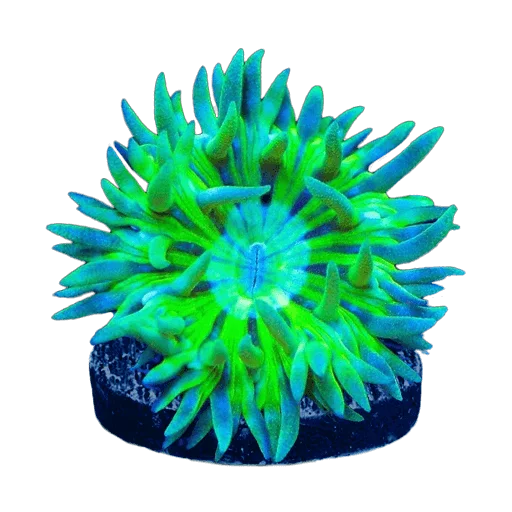
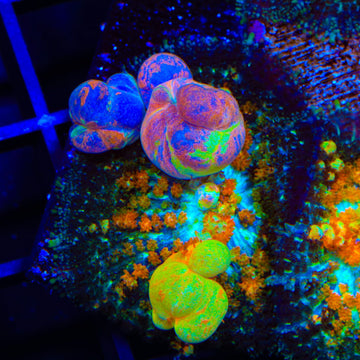
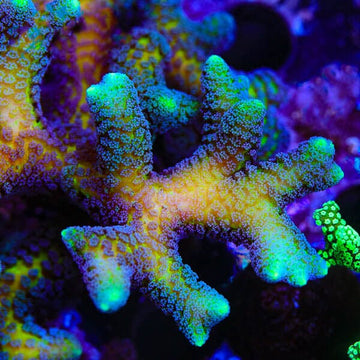
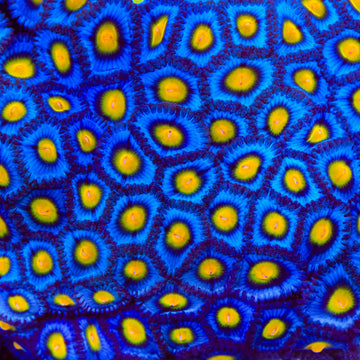
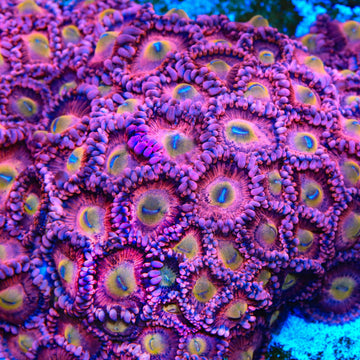
TSA Apple Jacks Montipora Cap Coral
Overview
Apple Jacks Montipora Cap Coral forms thin, overlapping plates with raised ridges and contrasting polyps. Montipora capricornis is a small polyp stony, plating coral that prefers moderate to strong light and moderate, turbulent flow. It relies on symbiotic algae for most nutrition but accepts fine particulate foods, which can support growth and color stability. Place high on stable rockwork with space around it, as plates can shade neighbors and break if handled.
Quick Facts
Care
Moderate
Lighting
Moderate–High
Flow
Moderate–High
Placement
Mid–High
Temperament
Peaceful to semi-aggressive (3–4 inches spacing; may overgrow neighbors)
Recommended Parameters
Temp
76–80°F
pH
8.1–8.4
Salinity
1.025–1.026
Calcium
400–450 ppm
AlkAlkalinity
7–9 dKH
Magnesium
1250–1350 ppm
Feeding
photosynthetic, microplankton, rotifers, copepod nauplii, oyster eggs, reef roids, amino acids
Care & Placement
FAQ
Frequently Asked Questions
About the TSA Apple Jacks Montipora Cap Coral
-
Why does my Apple Jacks Montipora capricornis bleach at the rim while the center stays colored?
The rim grows fastest and is most light-exposed, making it sensitive to sudden PAR increases and alkalinity swings. Gradually ramp light after placement, target KH 8–9 dKH, and maintain stable nutrients (nitrate 5–15 ppm, phosphate 0.03–0.1 ppm). If the center stays colored, check that the rim isn’t exceeding 250–300 PAR too quickly; use a short photoperiod increase instead of intensity jumps. -
How can I keep the orange base vivid without the green polyps dominating the look?
Balance spectrum and nutrients. Too blue-heavy lighting can favor green fluorescence; include some neutral/white channels for orange expression. Avoid ultra-low nutrients, which wash out reds; keep moderate nitrate and measurable phosphate. Iron dosing is rarely needed and can shift hues if overdone. Regular amino additions can improve polyp extension without skewing color when used sparingly and with good export. -
The plate is shading itself and receding underneath—what’s the fix?
Increase cross-flow beneath the shelves and periodically turkey-baste detritus from the underside. Slightly tilt or remount the colony to encourage upward whorls instead of flat discs. Trim back overextended plates by snapping the outer rim; fresh growth will re-edge and reduce stagnant areas. Ensure no low-lying sand is contacting tissue, and keep PO4 detectable to prevent STN from nutrient starvation in shaded zones. -
What pests specifically threaten Montipora capricornis, and how do I catch them early?
Montipora-eating nudibranchs leave irregular white bite tracks, often on the underside and at plate edges. Inspect at night with a flashlight, remove the colony to check under shelves, and look for egg spirals. Use a series of iodine or Bayer dips, manual removal, and a quarantine cycle. Wrasses may help but won’t eradicate. Sealing fresh frag edges and keeping detritus low reduces egg-laying spots.