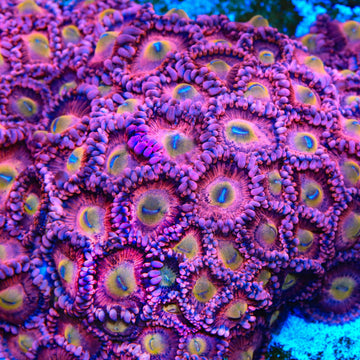
TSA Acid Bath Zoanthids Coral
Overview
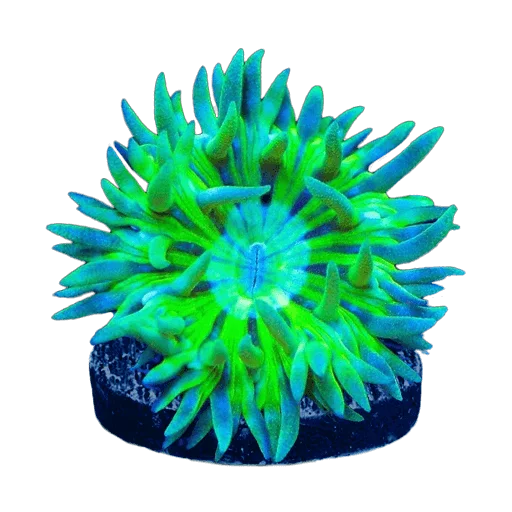
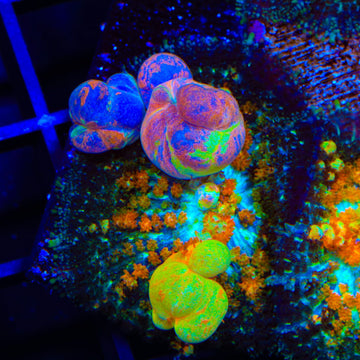
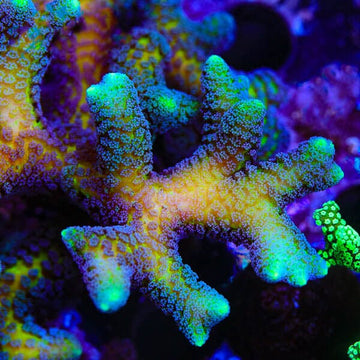
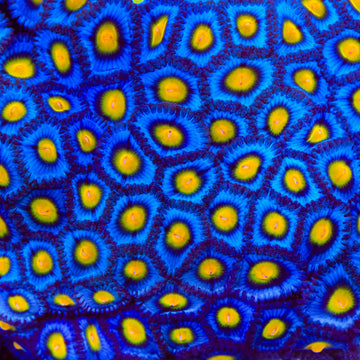
Acid Bath Zoanthids Coral displays tight mats of small button-like polyps with bright contrasting centers and skirts. Zoanthus spp., a soft colonial polyp coral, grows as encrusting clusters and prefers moderate light with low to moderate, variable flow. It is photosynthetic through symbiotic algae but will accept small meaty foods, which can boost growth and color. Place on isolated rock to manage rapid spread and keep distance from aggressive corals with long sweepers.
Quick Facts
Care
Easy
Lighting
Moderate–High
Flow
Moderate
Placement
Low–Mid
Temperament
Peaceful to semi-aggressive (can overgrow; 2–3 inches spacing)
Recommended Parameters
Temp
76–82°F
pH
8.1–8.4
Salinity
1.025–1.026
Calcium
400–450 ppm
AlkAlkalinity
8–10 dKH
Magnesium
1250–1350 ppm
Feeding
photosynthetic (primary), microplankton, phytoplankton, zooplankton, rotifers, copepod nauplii, baby brine shrimp, coral-specific powdered foods
Care & Placement
FAQ
Frequently Asked Questions
About the TSA Acid Bath Zoanthids Coral
-
Why do Acid Bath Zoanthids sometimes shrink or “reach” under strong light when other zoas don’t?
This morph often prefers moderate PAR and heavy blue spectrum. Intense white or sudden increases can cause long stalks, smaller heads, or bleaching. Ramp up light slowly over 2–3 weeks, aim for diffuse flow to keep polyps clean, and prioritize spectrum over raw intensity. If polyps elongate, lower PAR or add blue-heavy channels while maintaining stable alkalinity and nutrients. -
My colony’s colors dulled over time—how can I restore the neon look typical of this morph?
Color fade usually tracks ultra-low nutrients or excess white light. Target nitrate 2–10 ppm and phosphate 0.03–0.1 ppm, increase blue/violet (420–470 nm), and reduce long photoperiods of white channels. Feed fine particulate foods sparingly 1–2x weekly at night. Stable salinity and alkalinity help pigment recovery; avoid rapid corrections, which prolong stress and drab tones. -
How can I spot and eliminate pests that target this morph specifically?
Watch for nocturnal zoa-eating nudibranchs (match the colony’s color), sundial snails, and tiny spiders—signs include bite marks, closed heads, and missing skirts. Inspect and swish frags at lights-out, remove adults with tweezers, and use targeted dips (iodine or commercial coral dips) every 3–4 days for two weeks to break egg cycles. Quarantine new frags; eggs resist single dips. -
My polyps are closed for days with no obvious pests—what niche issues affect Zoanthus spp.?
Zoanthus can sulk from low pH mornings, alk swings, or chemical warfare from softies. Run fresh carbon and ensure good gas exchange to stabilize pH. Maintain alk 7.5–9 dKH with minimal daily swing. Provide varied, non-laminar flow to clear films. If biofilms or bacterial issues are suspected, a short iodine dip and improved flow usually restore extension within 48 hours.