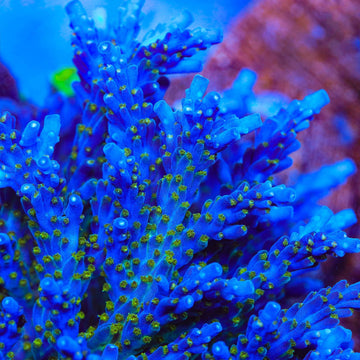
TGC Red Cadillac Acropora Coral
Overview
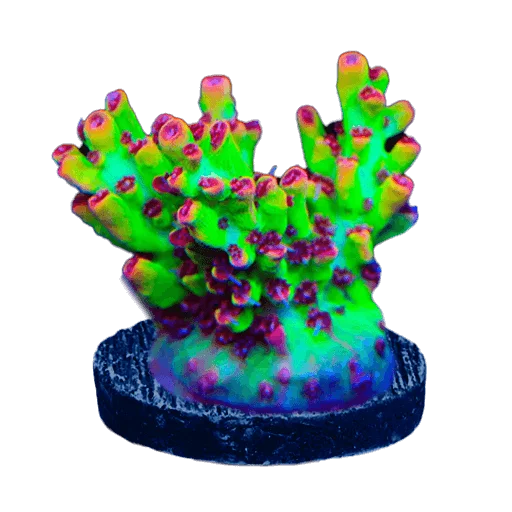
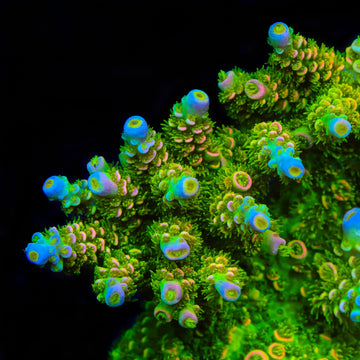
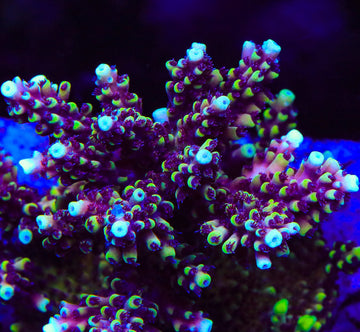
TGC Red Cadillac Acropora Coral displays vivid red branch tips with compact, upward-growing branches. Acropora sp., a branching small-polyp stony coral, prefers strong lighting and high, variable water flow. It relies on symbiotic algae for energy, and occasional small particulate foods can support growth and color. Place high on stable rockwork with space from stinging corals, and keep water parameters stable.
Quick Facts
Care
Difficult
Lighting
High
Flow
High
Placement
High
Temperament
Peaceful (3–4 inches spacing)
Recommended Parameters
Temp
78–80°F
pH
8.2–8.4
Salinity
1.025–1.026
Calcium
400–450 ppm
AlkAlkalinity
8–9 dKH
Magnesium
1280–1350 ppm
Feeding
photosynthetic (primary), microplankton, rotifers, copepod nauplii, oyster eggs, reef-specific powdered coral foods
Care & Placement
FAQ
Frequently Asked Questions
About the TGC Red Cadillac Acropora Coral
-
How do I keep the signature deep red color on TGC Red Cadillac Acropora?
Aim for stable alkalinity (7.5–8.5 dKH) and moderate nutrients (nitrate 5–15 ppm, phosphate 0.03–0.08 ppm). Provide strong blue-heavy light at 300–400 PAR with high, chaotic flow. Avoid excessive white light that can wash reds. Regular, small water changes and balanced trace elements—especially potassium and iron—support reds. Increase PAR gradually over weeks to prevent paling. -
What growth behavior should I expect, and how should I place it?
This coral often lays down a thick base before pushing dense branches. Give it 3–4 inches of space and strong cross-flow to keep detritus off the base. Mount at a slight angle to reduce self-shading and encourage even branching. Avoid shadowy ledges; consistent light to the base helps prevent tissue recession from the bottom up. -
My Red Cadillac’s polyp extension is reduced and color looks flat—what should I check first?
Verify no alk swings over 0.3 dKH/day, and check for pests (AEFW bite marks, red bugs) with a white-light inspection and dip if needed. Ensure strong, random flow reaches the base. If nutrients are ultra-low, lightly increase feeding. If running intense UV/blue, reduce 10–15% and ramp back slowly after stability returns. -
Are there unique compatibility concerns with nearby corals or tank mates?
Keep stinging LPS and sweeper-tentacle species several inches away; contact leads to rapid tissue loss. Run fresh carbon to reduce chemical warfare in mixed reefs. Avoid shading from fast-growing acros above it. Consider hosting Acropora-dwelling crabs for natural grooming and improved polyp behavior. Maintain stable temperature and avoid sudden nutrient or light changes during neighboring coral maintenance.