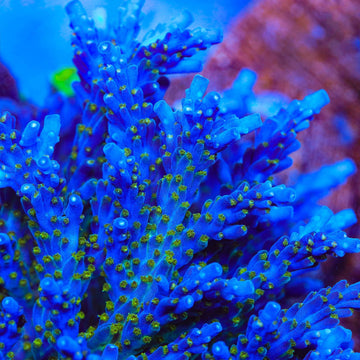
TGC Acrolandia Tenuis Acropora Coral
Overview
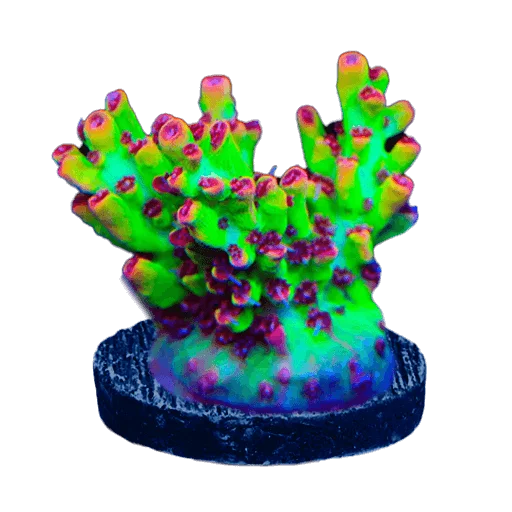
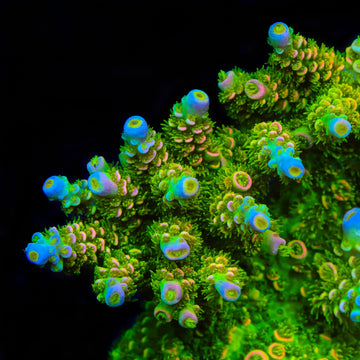
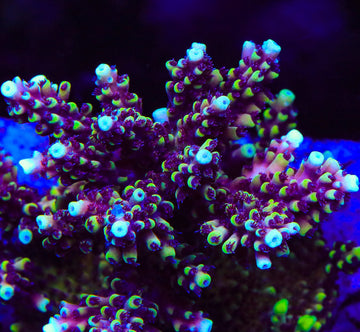
TGC Acrolandia Tenuis Acropora Coral shows branching, tightly spaced axial tips with contrasting polyp coloration. Acropora tenuis is a small-polyp stony coral forming dense branching colonies; it prefers strong lighting and high, turbulent water flow. Primarily photosynthetic with symbiotic algae, it benefits from occasional fine particulate foods, which can support polyp extension, growth, and coloration. Place high on stable rockwork with ample space from aggressive neighbors, and maintain stable alkalinity and low nutrients to prevent tissue loss.
Quick Facts
Care
Difficult
Lighting
Moderate–High
Flow
High, turbulent
Placement
High
Temperament
Peaceful (2–3 inches spacing)
Recommended Parameters
Temp
76–80°F
pH
8.1–8.4
Salinity
1.025–1.026
Calcium
400–450 ppm
AlkAlkalinity
8–9 dKH
Magnesium
1280–1350 ppm
Feeding
photosynthetic, microzooplankton, rotifers, copepod nauplii, powdered SPS coral foods (e.g., Reef-Roids, Benepets), amino acid supplements
Care & Placement
FAQ
Frequently Asked Questions
About the TGC Acrolandia Tenuis Acropora Coral
-
Why does TGC Acrolandia Tenuis lose its neon hues and turn green or brown?
This strain is sensitive to light spectrum and nutrient balance. Too little blue/violet intensity or excess nutrients (NO3 >15 ppm, PO4 >0.15 ppm) push chlorophyll, causing green/brown. Conversely, ultra-low nutrients with high PAR can pale it. Aim for 250–400 PAR heavy in 420–470 nm, NO3 2–10 ppm, PO4 0.03–0.10 ppm, and stable alk 7.6–8.4 dKH. Trace balance (potassium, iodine) helps maintain fluorescence. -
How should I place and orient it to promote the signature tenuis branching without self-shadowing?
Mount on a small plug or narrow rock ledge and let it encrust first; that’s the go-signal for vertical branching. Angle the frag 10–20 degrees so axial tips face flow and light, reducing shaded bases. Provide strong, randomized flow that flips polyps from multiple directions. Avoid placing under overhangs of faster growers; leave 3–4 inches clearance to prevent shading and allelopathic stress. -
What causes burnt tips or slow base recession on this coral?
Burnt tips often result from high PAR combined with a sudden alk rise or low nutrients. Keep daily alk change under 0.2 dKH and match PAR gradually over 2–3 weeks. Base recession points to stagnant flow at the encrusting edge or trace imbalance. Increase cross-flow near the base, check for low potassium (<380 ppm) or iodine depletion, and rule out metal contamination with an ICP test. -
Are there pest signs unique to tenuis and safer dip practices for this variety?
Tenuis shows AEFW as pale bite rings and sand-like eggs on shaded undersides; red bugs cause poor polyp extension with pinprick yellow dots. This strain can be tender to harsh dips—use reduced-strength povidone or commercial coral dips for 5–7 minutes with strong baster agitation, then rinse well. For AEFW, repeat dips weekly for 3–4 weeks and remove any egg clutches manually.