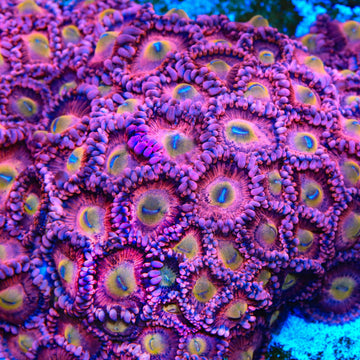
Tequila Sunrise Mushroom Coral
Overview
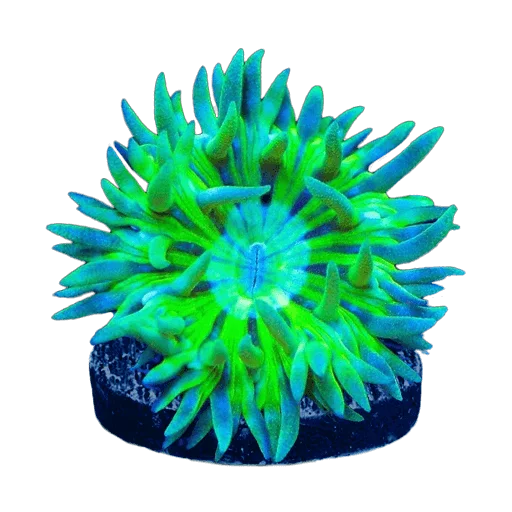
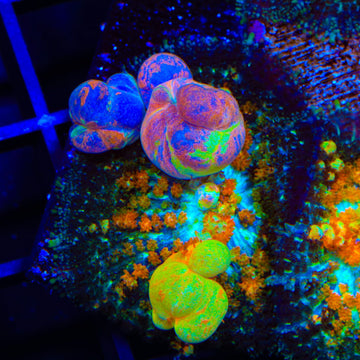
Tequila Sunrise Mushroom Coral shows a smooth, disk-like cap with orange to red tones and a slightly textured surface. Classified as Discosoma sp., it is a soft mushroom polyp that does well in low to moderate light and gentle water movement. It is primarily photosynthetic via symbiotic algae but will accept small meaty foods or coral foods, which can support faster growth and deeper coloration. Place it on stable rock or substrate with space around it, as it can spread and may irritate nearby corals on contact.
Quick Facts
Care
Easy
Lighting
Low–Moderate
Flow
Low–Moderate
Placement
Low–Mid
Temperament
Semi-aggressive (2–3 inches spacing)
Recommended Parameters
Temp
76–80°F
pH
8.1–8.4
Salinity
1.025–1.026
Calcium
380–430 ppm
AlkAlkalinity
8–10 dKH
Magnesium
1250–1350 ppm
Feeding
photosynthetic (primary), microplankton, phytoplankton, coral-specific powdered foods (e.g., Reef-Roids), marine snow, finely minced mysis shrimp, enriched brine shrimp
Care & Placement
FAQ
Frequently Asked Questions
About the Tequila Sunrise Mushroom Coral
-
My Tequila Sunrise Mushroom keeps “ballooning” and drifting. What’s causing this, and how do I stop it?
Discosoma inflate to move away from stress—usually excess light, sharp flow, or irritants like vermetid mucus. Dim PAR to 40–80, switch to gentle, indirect flow, and reduce white spectrum. Place on a low-light ledge with a rubble cup so it can reattach. Use pump guards; once settled, it will deflate and stay put. -
The orange-yellow hues are fading to brown. Can I recover the color?
Color loss often follows high white light, ultra-low nutrients, or recent carbon dosing. Target moderate nutrients (NO3 5–15 ppm, PO4 0.03–0.1), increase blue spectrum, and cut intense whites. Avoid sudden changes; shift over a week. Trace elements help, but stability matters more. Expect gradual improvement over 2–4 weeks as zooxanthellae balance returns. -
Will it overgrow other corals, and how can I contain it without a full rescape?
Discosoma can carpet rock via pedal laceration and shade neighbors. Use an “island” rock on the sand with a small gap to limit spread. Trim edges by gently lifting and slicing the rim; place fragments in a specimen cup with rubble under mesh until they attach. Carbon helps manage any chemical cues near sensitive SPS. -
It looks “melty” after a big water change. Is this bacterial, and how should I respond?
Mushrooms can slump under rapid parameter swings, then recover. First, verify salinity, temp, and alkalinity match prior values; correct slowly if off. If tissue turns gray and foul-smelling, do an iodine or dilute povidone dip (per label), increase aeration, and improve gentle flow. Relocate to shaded, stable conditions and hold off on feeding until firmness returns.