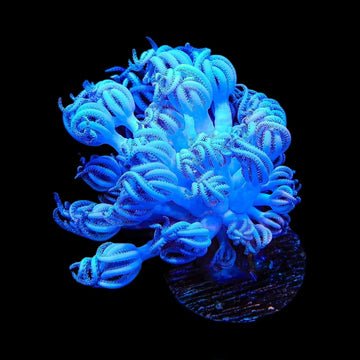
Taser Zoanthids Coral
Overview
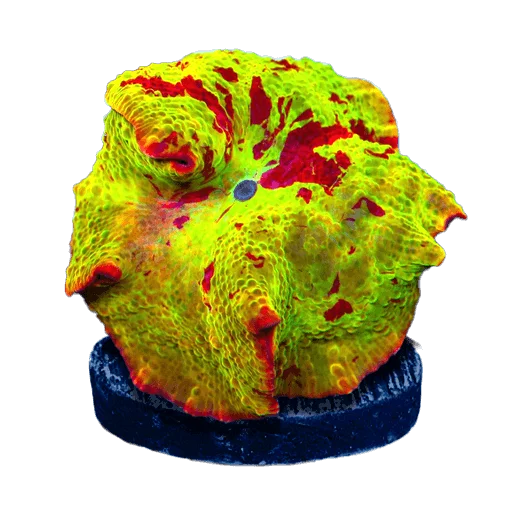
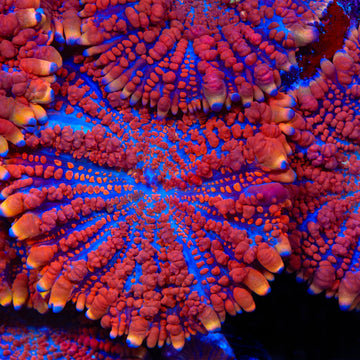
Taser Zoanthids Coral shows small button-like polyps with bright, ringed centers and short skirts. Zoanthus sp., a soft colonial polyp coral, does well under moderate light and moderate, steady water flow. It relies on symbiotic algae but will accept occasional small particulate foods, which can support faster growth and maintain color. Place on a separate rock to limit spreading and keep space from stinging corals.
Quick Facts
Care
Easy
Lighting
Low–Moderate
Flow
Moderate, indirect
Placement
Low–Mid
Temperament
Semi-aggressive (2–3 inches spacing)
Recommended Parameters
Temp
76–80°F
pH
8.1–8.4
Salinity
1.025–1.026
Calcium
380–450 ppm
AlkAlkalinity
8–10 dKH
Magnesium
1280–1350 ppm
Feeding
photosynthetic (primary), microplankton, phytoplankton, zooplankton, rotifers, marine snow, powdered coral foods (e.g., Reef-Roids), brine shrimp nauplii
Care & Placement
FAQ
Frequently Asked Questions
About the Taser Zoanthids Coral
-
My Taser Zoanthids are “reaching” with long stalks. Is this normal for Zoanthus sp.?
Long, thin stalks usually indicate low PAR or low flow. Aim for moderate blue-heavy light (PAR ~80–150 at the colony) and a gentle, random flow that keeps skirts fluttering without blasting them shut. Increase light slowly over 1–2 weeks. If polyps still stretch, check for shading by neighboring corals or algae film on the mat. -
How do I keep the neon Taser coloration from washing out or browning?
Maintain stable nutrients (nitrate 5–15 ppm, phosphate 0.03–0.10 ppm), strong blue/UV spectrum (420–460 nm), and avoid rapid changes. Too “clean” water or sudden high PAR can fade pigments; too dirty drives browning. Don’t chase trace elements unless testing; instead, prioritize consistency, good carbon use, and clean lenses/screens so spectrum reaches the colony. -
he colony is shrinking or “melting” with closed polyps. What are advanced troubleshooting steps?
Inspect at night for zoa-eating nudibranchs and sundial snails; remove manually. For bacterial issues (e.g., zoa pox), perform dips: Furan-2 per label or Lugol’s iodine (follow precise dosing), improve flow, and cut away necrotic tissue. Run fresh carbon, increase oxygenation, and verify stability in salinity, temp, and pH. Avoid heavy target feeding until recovery. -
Do Taser zoas wage chemical warfare or get stung easily by neighbors?
Zoanthus can be outcompeted by aggressive LPS sweepers and by larger Palythoa. Give several inches of space, avoid direct contact, and place upstream of passive corals to limit slime/allelopathy exposure. Run carbon and do regular water changes after major pruning. If growth stalls near another colony, relocate a fragment to test for localized chemical stress.