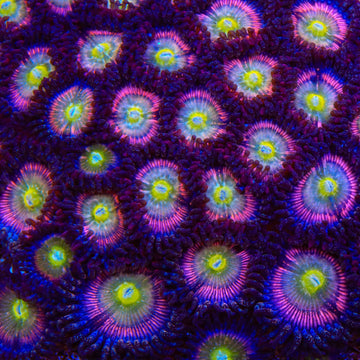
Supergirl Zoanthids Coral
Overview
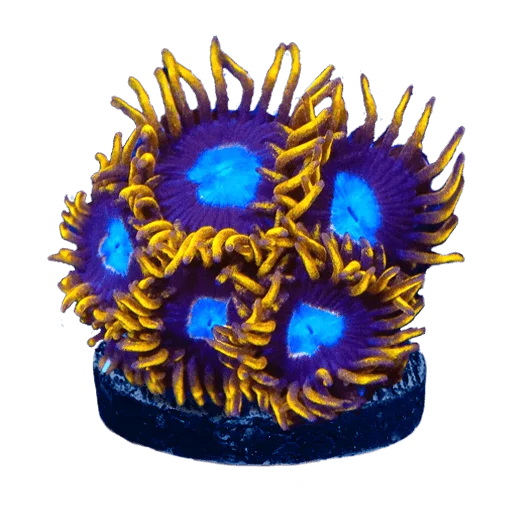
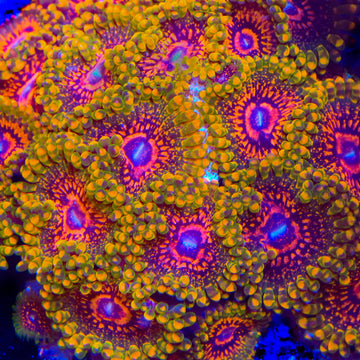
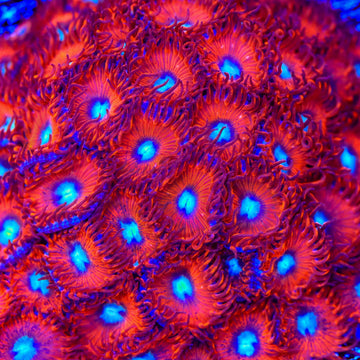
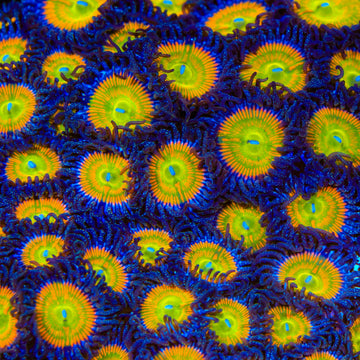
Supergirl Zoanthids Coral displays small button polyps with bright centers and fringed skirt tentacles. Zoanthus sp., a soft colonial polyp coral, thrives under moderate light and low to moderate, steady water flow. It is primarily photosynthetic via symbiotic algae but accepts fine particulate or small meaty foods, which can support faster growth and maintain color. Place on isolated rock to control spread and allow space from stinging neighbors; handle with care and avoid damage during fragging.
Quick Facts
Care
Easy
Lighting
Low–Moderate
Flow
Moderate, indirect
Placement
Low–Mid
Temperament
Semi-aggressive (2–3 inches spacing)
Recommended Parameters
Temp
76–82°F
pH
8.1–8.4
Salinity
1.025–1.026
Calcium
400–450 ppm
AlkAlkalinity
8–10 dKH
Magnesium
1250–1350 ppm
Feeding
photosynthetic (primary), phytoplankton, microplankton, marine snow, powdered coral foods, amino acid supplements, broadcast zooplankton suspensions
Care & Placement
FAQ
Frequently Asked Questions
About the Supergirl Zoanthids Coral
-
Why do my Supergirl Zoanthids stretch upward or “umbrella” under strong light, and how can I keep their colors tight and vivid?
Supergirl morphs often inflate under excessive PAR without enough blue spectrum. Aim for moderate PAR (80–150) with strong 420–470 nm, and increase intensity gradually. Keep nitrate 5–15 ppm and phosphate 0.03–0.1 to prevent pastel washout. Maintain potassium 390–420 ppm and stable iodine; avoid aggressive dosing. Moderate, random flow helps keep skirts compact and prevents detritus shading. -
My colony is growing but new polyps are tiny and slow to open. What’s the likely cause?
Low micron nutrition or trace imbalance can stunt buds. Feed occasionally with fine particulate foods (e.g., rotifers, powdered zooplankton) after lights ramp down. Keep alk stable (7.5–8.5 dKH) and avoid ultra-low nutrients. Check for vermetid snails and film algae at the base; increase intermittent flow and gently baste detritus. Carbon use can help if nearby softies are releasing irritants. -
Polyps won’t open and I see speckling on discs—could this be zoa pox, and what’s the plan?
Speckled, sand-grain pustules and persistent closure point to pox. Isolate the colony. Improve flow, siphon detritus, and perform iodine baths. Many hobbyists report success with short nitrofurazone baths where permitted; follow manufacturer dosage precisely. Reduce stressors: stable temp, moderate light, and avoid stacking multiple dips. Inspect nightly for nudibranchs; remove eggs and consider a targeted dip once recovered. -
Will Supergirl Zoanthids overrun neighbors or be outcompeted, and how do I manage boundaries?
They spread by mat and can carpet rock if nutrients and light suit them, but can be slowed by aggressive LPS or fast encrusters. Place them on isolated islands or create sand gaps. Trim the mat edge with a scalpel every few months. Run fresh activated carbon and maintain good flow to limit chemical skirmishes with palys and soft corals.