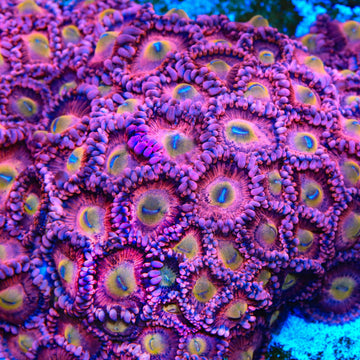
Stratospehere Zoanthids Coral
Overview
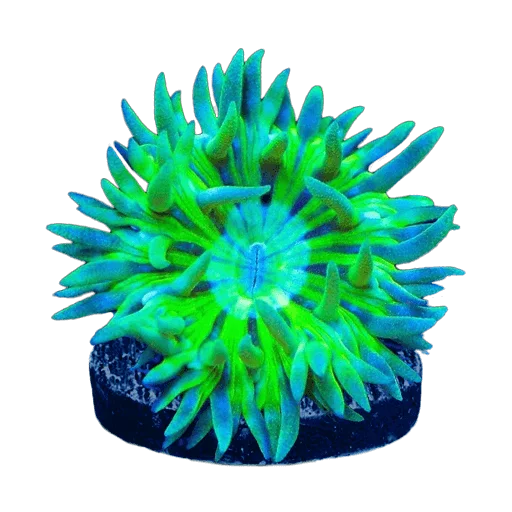
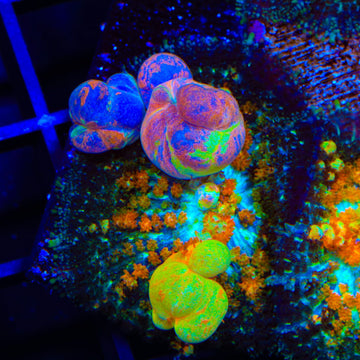
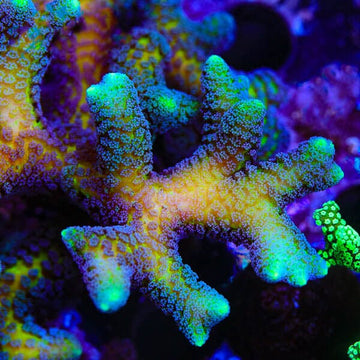
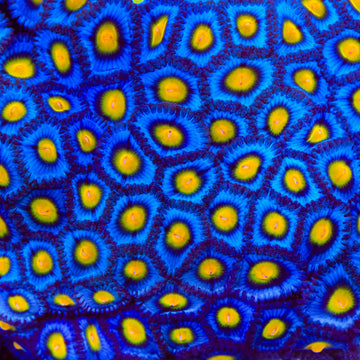
Stratosphere Zoanthids Coral displays tightly packed button-like polyps with bold ringed centers and frilled skirts. Zoanthus sp. is a colonial soft polyp that forms encrusting mats; it prefers moderate light and gentle to moderate, variable flow. Primarily photosynthetic with symbiotic algae, it accepts occasional small meaty or planktonic foods, which can speed growth and deepen color. Place on isolated rock to manage spreading, allow space from stinging neighbors, and handle with care due to potential toxins.
Quick Facts
Care
Easy
Lighting
Low–Moderate
Flow
Moderate
Placement
Low–Mid
Temperament
Peaceful to semi-aggressive (allow 2–3 inches spacing)
Recommended Parameters
Temp
76–82°F
pH
8.1–8.4
Salinity
1.025–1.026
Calcium
380–450 ppm
AlkAlkalinity
8–10 dKH
Magnesium
1280–1350 ppm
Feeding
photosynthetic (primary), phytoplankton, zooplankton, microplankton, rotifers, baby brine shrimp nauplii, powdered coral foods, marine snow
Care & Placement
FAQ
Frequently Asked Questions
About the Stratospehere Zoanthids Coral
-
Why do Stratosphere Zoanthids lose their neon striations under certain lighting?
This morph holds its vivid rings best under blue-heavy spectrum (peak 420–470 nm) with moderate PAR (80–150). Too white or overly intense light can wash colors or cause shrinking skirts. Acclimate slowly, favor 14–20K appearance, and maintain nutrients (NO3 5–15 ppm, PO4 0.03–0.10). Trace balance matters—iodine and iron at natural levels support saturation, while ULNS conditions often dull them. -
My colony is staying closed for days with no visible pests—what advanced checks should I run?
Verify salinity stability (±0.001), temperature swings, and alkalinity drift—rapid shifts trigger “melting.” Increase random flow to shed films, swap old carbon to remove irritants, and perform an iodine dip. If you suspect bacterial issues, Furan-2 baths can help. Inspect at night for tiny nudibranchs or spiders; remove egg spirals manually, as dips don’t affect eggs. -
Do Stratospheres prefer “dirty” water to grow faster?
They appreciate non-starved nutrients, not neglect. Aim for measurable NO3 and PO4 as above, steady alk 8–9 dKH, and decent dissolved organics. Occasional fine particulate foods or amino acids boost growth, but overfeeding fuels film algae that irritates polyps. Maintain brisk, varied flow to keep surfaces clean; growth accelerates once detritus and pests are controlled. -
Can I place Stratospheres near aggressive LPS or palythoas?
Keep space from long-sweeper LPS (euphyllias, galaxea), which can burn and stunt colonies. Zoanthus can overgrow neighbors but are easily damaged by stings. Avoid mixing with fast, invasive palythoas that can overshadow or chemically stress them. Carbon use and regular pruning maintain separation; island rock placement helps contain spread while keeping prized patterns intact.