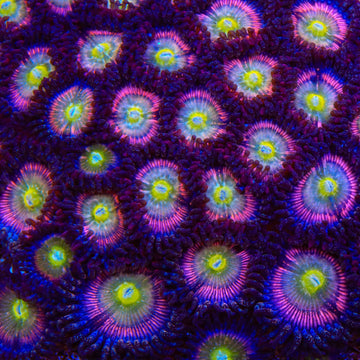
Stratocaster Zoanthids Coral
Overview
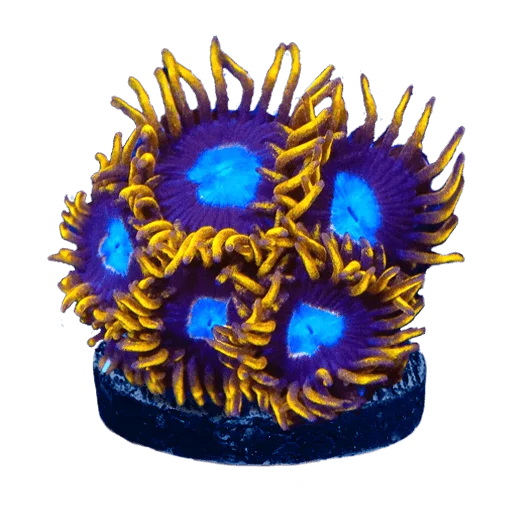
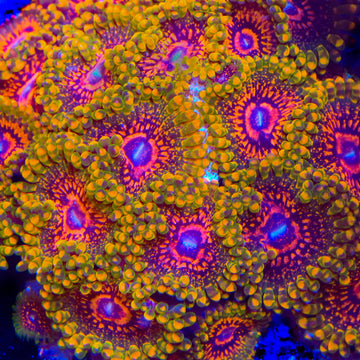
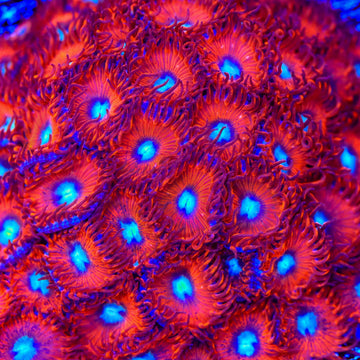
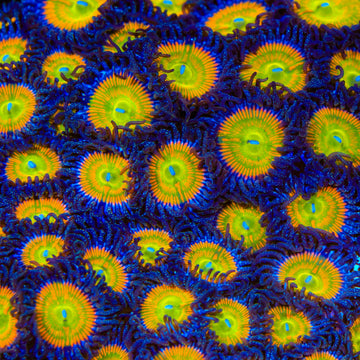
Stratocaster Zoanthids Coral shows compact button-like polyps with contrasting centers and fringed skirts. Zoanthus spp. is a colonial soft coral that thrives under moderate light and low to moderate water flow. It gains most energy from symbiotic algae but will accept fine particulate or small meaty foods, which can improve growth and color. Place on an isolated rock to manage spreading, and handle with care since some related zoanthids may contain palytoxin.
Quick Facts
Care
Easy
Lighting
Low–Moderate
Flow
Moderate
Placement
Low–Mid
Temperament
Semi-aggressive (allow 3–6 inches to prevent overgrowth)
Recommended Parameters
Temp
76–82°F
pH
8.1–8.4
Salinity
1.025–1.026
Calcium
380–450 ppm
AlkAlkalinity
8–10 dKH
Magnesium
1250–1350 ppm
Feeding
photosynthetic (primary), phytoplankton, microplankton, zooplankton, rotifers, cyclops, brine shrimp nauplii, finely minced mysis shrimp, marine snow, powdered coral foods
Care & Placement
FAQ
Frequently Asked Questions
About the Stratocaster Zoanthids Coral
-
How do I keep Stratocaster Zoanthids Coral colors stable and bright?
Maintain moderate PAR (100–200) with a blue-heavy spectrum to preserve fluorescence and the “guitar-pick” speckling. Avoid rapid light shifts; photoacclimate over 1–2 weeks. Keep nutrients non-zero (NO3 5–15 ppm, PO4 0.03–0.1 ppm) and stable alkalinity. Higher temps and very white light can wash colors. Trace elements like iodine/iron from regular water changes help; avoid heavy dosing swings. -
My polyps are stretching or staying closed—what’s the likely cause?
Stretching suggests low light or low flow; increase PAR gradually and add a bit more random flow. Extended closure often points to pests (zoa-eating nudibranchs, sundial snails, spiders), detritus buildup, or chemical warfare. Inspect after lights out, turkey-baste detritus, and run fresh carbon. If nutrients are near zero, feed small particle foods and ease skimming to avoid “starving.” -
Can I rescue Stratocaster zoas from a “melting” episode?
Yes—act fast. Dip in iodine-based solution (per label) or a mild hydrogen peroxide dip (1–2 mL 3% H2O2 per 100 mL tank water for 2–3 minutes) to target bacteria/algae. Remove necrotic polyps, increase flow, and stabilize parameters. Keep nutrients modest, not stripped. Quarantine if pests are found. Follow up with weekly dips until tissue recession stops. -
Are there compatibility issues unique to Zoanthus spp. colonies?
Give them space from aggressive LPS sweepers and soft corals that shed terpenes. Run carbon and maintain good flow to dilute chemicals. Some fish (dwarf angels, butterflies) may nip; zoa-eating wrasses help control nudibranchs. Avoid placing near fast-spreading palys that can overgrow them. If neighboring corals retract after you handle zoas, increase filtration and perform a small water change.