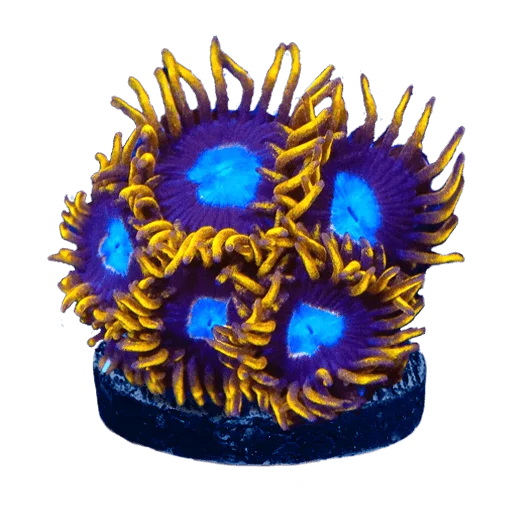
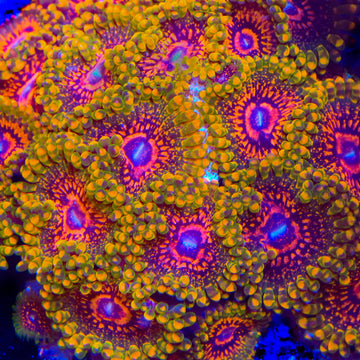
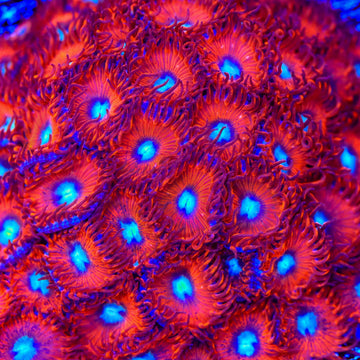
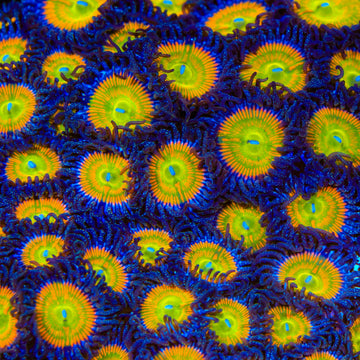
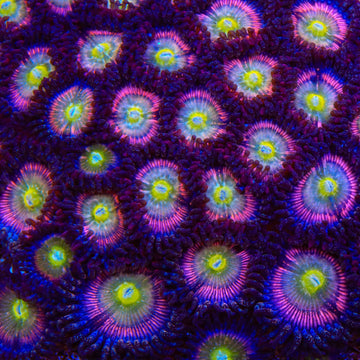
Spiderman Zoanthids Coral
Overview
Spiderman Zoanthids Coral features small button polyps with contrasting red skirts and blue to purple centers. Zoanthus sp., a colonial soft polyp coral, does well under moderate light and gentle to moderate water flow. It is primarily photosynthetic via symbiotic algae but accepts occasional small meaty or particulate foods, which can support faster growth and stronger color. Place on an isolated rock to control spread and avoid direct contact with aggressive stinging corals.
Quick Facts
Care
Easy
Lighting
Low–Moderate
Flow
Moderate, indirect
Placement
Mid–Low
Temperament
Peaceful to semi-aggressive (2–4 inches spacing)
Recommended Parameters
Temp
76–82°F
pH
8.1–8.4
Salinity
1.025–1.026
Calcium
400–450 ppm
AlkAlkalinity
8–10 dKH
Magnesium
1250–1350 ppm
Feeding
photosynthetic (primary), microplankton, rotifers, copepod nauplii, coral-specific powdered foods, marine snow, amino acid supplements
Care & Placement
FAQ
Frequently Asked Questions
About the Spiderman Zoanthids Coral
-
How do I keep the red-and-blue contrast on Spiderman Zoanthids from fading?
Prioritize strong blue/violet spectrum (405–470 nm) with moderate PAR (80–150) and avoid heavy white intensity. Maintain non-zero nutrients (NO3 5–15 ppm, PO4 0.03–0.1 ppm) to prevent shrinking, but don’t let nutrients climb or browning can occur. Stable alkalinity and trace elements (iodine/iron via regular water changes) help pigment production. Sudden light changes wash colors; use a 2–3 week acclimation ramp when adjusting LEDs or moving colonies. -
What growth habits should I anticipate, and how do I keep them from overrunning rockwork?
Spidermans spread via a creeping mat and will bridge gaps quickly under good conditions. Place them on an “island” rock with sand buffer or isolated shelves to limit spread. Trim the mat edge with a sharp scalpel and remove small sections regularly. A narrow rock neck or rubble border makes peeling manageable. Avoid placing adjacent to slow LPS; they won’t duel aggressively, but can smother tissue by sheer coverage. -
What pests and diseases target this morph, and how can I respond early?
Watch for zoa-eating nudibranchs (frilly, color-matching), sundial snails, and tiny “spiders.” Inspect after lights out with a flashlight. For pests, use targeted dips (iodine or Bayer-type dips) and manually remove egg spirals. For “zoa pox” (tan pustules), a Furan-2 bath series often helps. Improve flow to prevent detritus traps at the mat edge, run fresh carbon, and avoid rapid nutrient swings that trigger prolonged closing or “melting.” -
Why do my polyps stay small and tight even though parameters look fine?
Often it’s flow or spectrum balance. Increase indirect, turbulent flow so skirts flutter, preventing waste buildup. Shift the light mix toward more blues and reduce harsh whites. Check for low-level irritants: nearby leather corals releasing chemicals (swap carbon weekly), hermits picking, or micro-pests. If you recently increased PAR, step back and re-acclimate. Slightly higher nutrients and a once-weekly micro-food target feed can restore fuller extension.