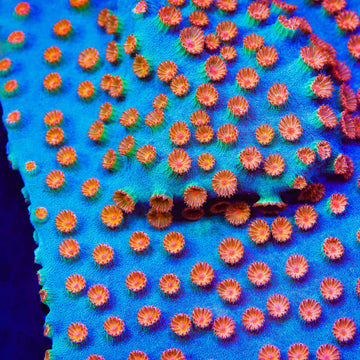
Spearmint Cyphastrea Coral
Overview
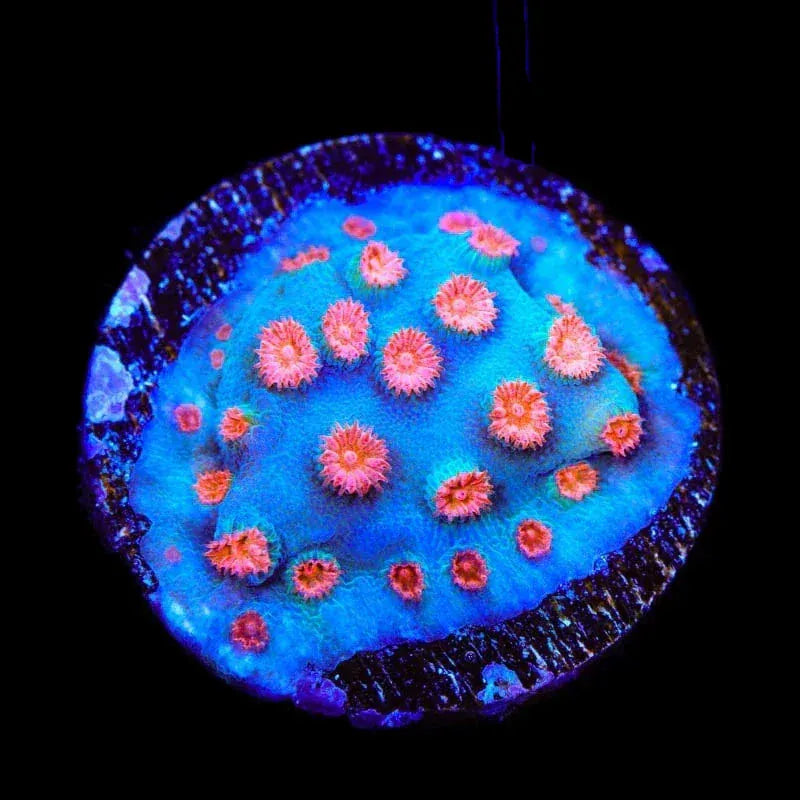
Spearmint Cyphastrea Coral forms an encrusting mat with small, tightly spaced mint-green polyps on a darker base. Classified as Cyphastrea sp., it is an encrusting stony coral that prefers low to moderate lighting and gentle to moderate, indirect water flow. It is photosynthetic via symbiotic algae but will accept fine particulate foods at night, which can support faster growth and better color. Place on stable rockwork away from intense light and leave space at the edges, as it can slowly overgrow nearby surfaces and irritate close neighbors.
Quick Facts
Care
Easy
Lighting
Low–Moderate
Flow
Low–Moderate
Placement
Low–Mid
Temperament
Peaceful to semi-aggressive (2–3 inches spacing)
Recommended Parameters
Temp
76–80°F
pH
8.1–8.4
Salinity
1.025–1.026
Calcium
400–450 ppm
AlkAlkalinity
8–9 dKH
Magnesium
1250–1350 ppm
Feeding
photosynthetic (primary), microplankton, rotifers, copepod nauplii, cyclops, powdered coral foods (e.g., Reef Roids), phytoplankton, oyster eggs, marine snow, enriched baby brine shrimp
Care & Placement
FAQ
Frequently Asked Questions
About the Spearmint Cyphastrea Coral
-
Why is my Spearmint Cyphastrea fading under strong LEDs even though nutrients and alkalinity look fine?
This coral prefers low to moderate PAR (about 50–100). Intense light, especially lots of white/UV, can wash out the mint tones and shrink polyp extension. Reduce PAR gradually via dimming, shorter photoperiod, or screen acclimation. Aim for stable nitrate 5–15 ppm and phosphate 0.03–0.1 ppm. A small bump in blue-dominant spectrum helps. Consider low-dose iron/iodine per test results; avoid heavy carbon dosing that strips nutrients too hard. -
How do I get it to encrust neatly on the back wall or around odd rock shapes?
Start with a small, healthy frag and anchor it on a rough patch where coralline is sparse. Keep flow gentle but consistent to prevent detritus settling at the growth edge. Maintain slightly higher nutrients (not ultra-low) for steady calcification. Periodically brush away film algae near the edge. If growing on glass, place a textured plug as a “bridge” and let the colony hop onto the pane, then remove the plug later. -
Does Spearmint Cyphastrea benefit from feeding, and when should I do it?
Yes, it responds to fine particulate foods (reef roids, rotifers, enriched nauplii) broadcasted after lights out when polyps extend. Feed small amounts 1–2 times weekly; overfeeding fuels film algae that can irritate tissue. Pair feeding with a slight increase in flow for 15–30 minutes to suspend particles. Aminos can help color if nutrients run lean, but scale back if you see bacterial sheen or dulling. -
What causes patchy tissue recession at the margins, and how can I arrest it?
Common triggers are detritus accumulation at the edge, microalgae filaments abrading tissue, or bacterial irritation under low flow. Increase crossflow, turkey-baste debris every few days, and trim nearby nuisance algae. If recession advances, do an iodine or broad-spectrum coral dip and improve aeration. Check for low potassium or unstable alkalinity; both can stall calcification. Keep stinging neighbors at least a few centimeters away—short sweeper tentacles still irritate.