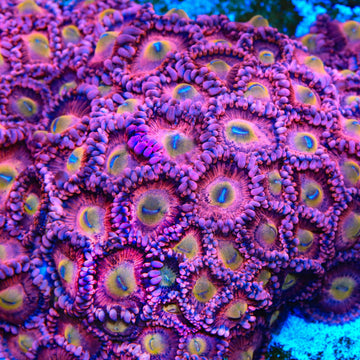
Space Monster Zoanthids Coral
Overview
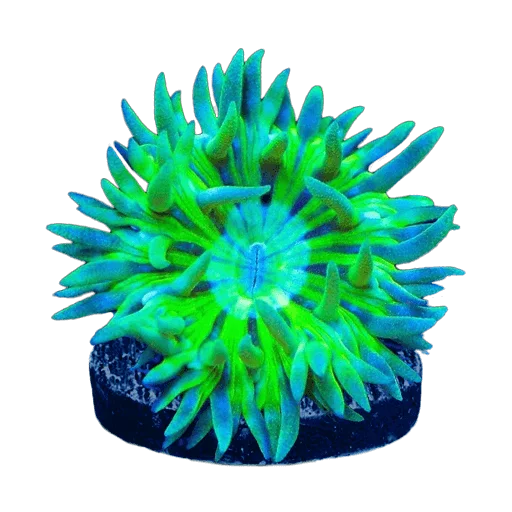
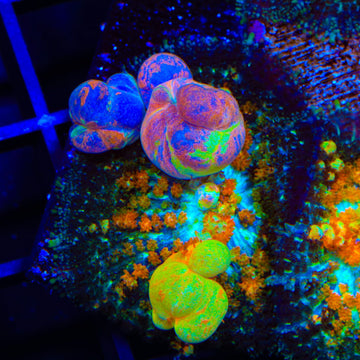
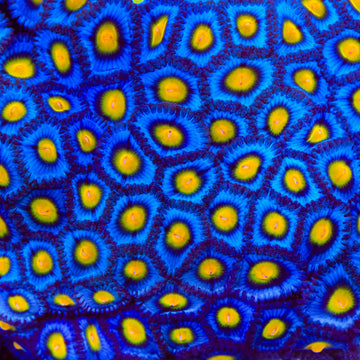
Space Monster Zoanthids Coral displays large polyps with contrasting centers and fringed skirts. Zoanthus sp., a soft colonial polyp coral, thrives under moderate light and gentle to moderate water flow. It is photosynthetic due to symbiotic algae but accepts small particulate foods, which can support faster growth and deeper coloration. Place on isolated rock to control spreading, and leave space from aggressive neighbors.
Quick Facts
Care
Easy
Lighting
Moderate–High
Flow
Moderate
Placement
Low–Mid
Temperament
Semi-aggressive (fast spreaders; 2–3 inches spacing)
Recommended Parameters
Temp
76–82°F
pH
8.1–8.4
Salinity
1.025–1.026
Calcium
400–450 ppm
AlkAlkalinity
8–10 dKH
Magnesium
1250–1350 ppm
Feeding
photosynthetic, phytoplankton, microplankton, zooplankton, rotifers, cyclops, powdered coral foods, amino acids
Care & Placement
FAQ
Frequently Asked Questions
About the Space Monster Zoanthids Coral
-
Why do my Space Monster Zoanthids fade from deep reds to dull orange under strong light?
This morph often washes out under high PAR and heavy white spectrum. Keep light moderate with a blue-leaning spectrum (actinic helps) and acclimate slowly. Maintain stable nitrate 5–15 ppm and phosphate 0.03–0.1 ppm; ultra‑low nutrients can pale colors. If fading occurs, lower PAR 20–30% over a week and increase feeding of fine coral foods to restore pigmentation. -
My colony stopped opening after adding new rock—could chemical warfare be the cause?
Yes. Zoanthus can respond to allelopathic compounds from leathers, palythoa, or new uncured rock. Run fresh carbon, increase surface agitation, and perform a moderate water change. Space Monsters react well to improved flow across the mat and stable alk 8–9 dKH. If nearby soft corals are shed-sloughing, redirect flow and consider spacing or a temporary barrier. -
What pests specifically target this morph, and how do I distinguish bite damage from irritation?
Zoa-eating nudibranchs and sundial snails leave crescent bites and cause shrinking skirts. Night inspections with a flashlight reveal nudibranchs mimicking polyp colors; their egg spirals look like tiny white ribbons. Irritation from grit or too much flow causes smooth, uniform closure without bite marks. Treat pests with repeated dips (e.g., peroxide or commercial dips) and manual removal over several nights. -
The polyps are large but growth has stalled—what advanced tweaks help Space Monsters spread?
They spread fastest on clean, rough surfaces with stable nutrients. Slightly higher nitrate (8–12 ppm) and moderate phosphate support mat growth. Provide cross-flow to keep detritus off the base; avoid blasting the skirts. Feed fine particulate foods 1–2× weekly at lights-out. Periodically trim surrounding faster zoa morphs so Space Monsters aren’t shaded or overrun.