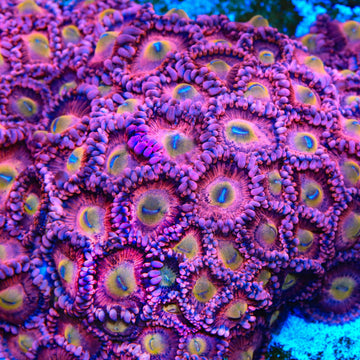
Skittles Favia Coral
Overview
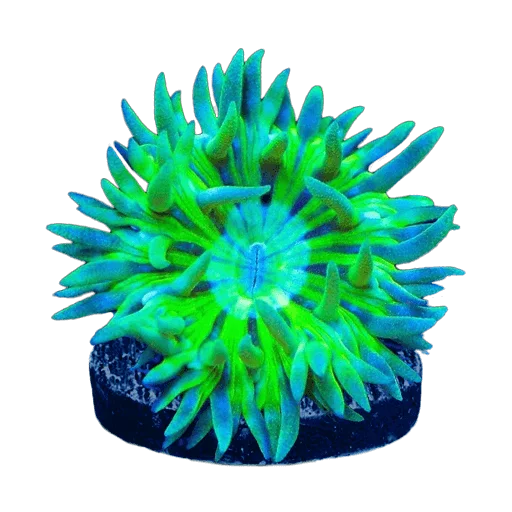
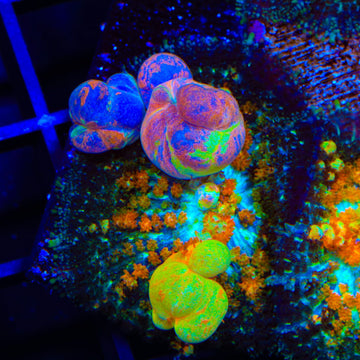
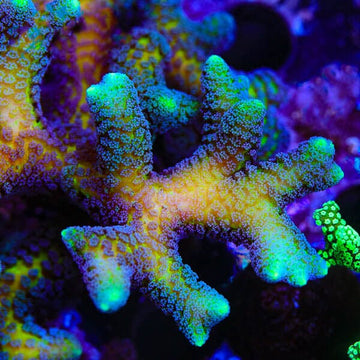
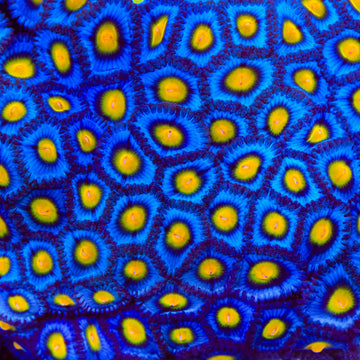
Skittles Favia Coral shows multicolored polygonal corallites with raised ridges. Favia favus is a stony, encrusting to dome-forming large-polyp coral that prefers moderate lighting and low to moderate, steady water flow. It is photosynthetic via symbiotic algae but benefits from occasional small meaty foods at night, which can improve growth and maintain coloration. Place with space around it, as sweeper tentacles can extend at night and sting nearby corals.
Quick Facts
Care
Moderate
Lighting
Low–Moderate
Flow
Moderate indirect
Placement
Low–Mid
Temperament
Semi-aggressive (6+ inches spacing)
Recommended Parameters
Temp
76–80°F
pH
8.1–8.4
Salinity
1.025–1.026
Calcium
400–450 ppm
AlkAlkalinity
8–10 dKH
Magnesium
1280–1350 ppm
Feeding
photosynthetic, mysis shrimp, enriched brine shrimp, copepods, rotifers, zooplankton, microplankton, reef-specific powdered foods (e.g., Reef-Roids), finely chopped seafood
Care & Placement
FAQ
Frequently Asked Questions
About the Skittles Favia Coral
-
Why does my Skittles Favia extend very long sweepers some nights but not others?
Favia favus responds to chemical cues and feeding opportunities. After heavy feeding or when it “smells” nearby corals, it may deploy 2–4 inch sweepers to stake territory. Stable alkalinity and moderate flow reduce random aggression. If sweepers are frequent, increase spacing, redirect flow to disperse cues, and feed smaller portions earlier in the evening to satisfy feeding response without provoking nightly battles. -
How can I preserve its multi-color “skittles” look without washing out hues?
Run moderate PAR (80–150) with strong blue/royal channels and restrained white/red. Ultra-low nutrients fade greens and yellows; maintain modest nitrate (5–15 ppm) and measurable phosphate (0.03–0.1). Trace balance matters—iron and manganese support greens; excess white can mute contrast. Acclimate slowly to light changes over 2–3 weeks and avoid large spectrum swings that can shock pigments and cause paling -
My colony is receding from the base upward—what should I check first?
Check for detritus accumulation at the skeleton rim, vermetid mucous nets, and low-flow dead spots. Siphon debris, increase gentle cross-flow, and remove vermetids. Confirm stable alkalinity and avoid daily swings >0.3 dKH. If tissue looks gelatinous, treat for brown jelly in a separate container (iodine dip, improved aeration). Slightly higher nutrients often help Favia recover better than starved, ULNS conditions. -
Why does it inflate at night and shade neighbors even without sweepers?
Favia favus has strong nocturnal polyp expansion for feeding and respiration. In low flow or when CO2 rises after lights out, the tissue can puff significantly. Give several inches of clearance, and consider a slight nighttime flow increase to keep tissues compact and oxygenated. If shading becomes chronic, raise the colony on a small stand or relocate it away from light-demanding neighbors.