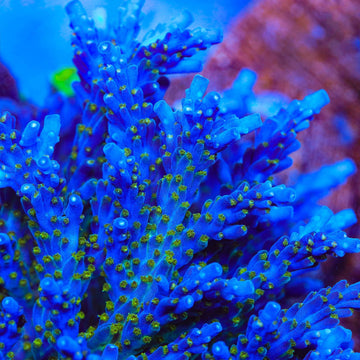
Sexy Corals Orange Passion Tenuis Acropora Coral
Overview
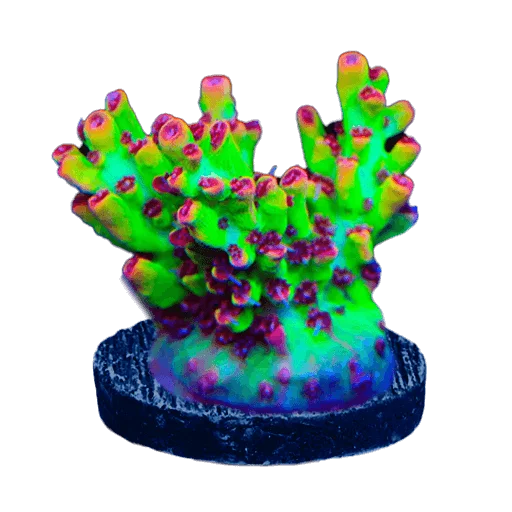
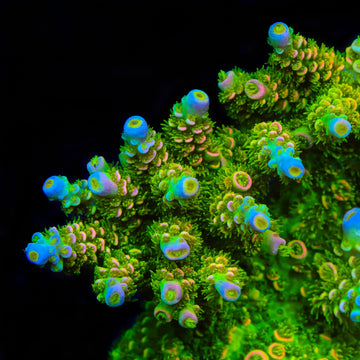
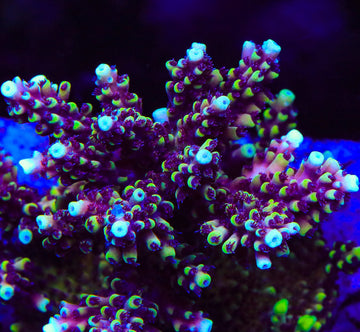
Orange Passion Acropora Coral shows bright orange to yellow branches with blue growth tips and small, uniform polyps. Acropora tenuis is a branching small-polyp stony coral that forms compact clumps; it prefers strong lighting and high, turbulent water flow. It relies on symbiotic algae for most nutrition but can accept fine particulate foods, which may support growth and help maintain coloration. Place high on stable rock with space from stinging corals, and avoid shading or sudden changes in light or flow.
Quick Facts
Care
Difficult
Lighting
High
Flow
High, turbulent
Placement
High
Temperament
Peaceful (2–3 inches spacing)
Recommended Parameters
Temp
76–80°F
pH
8.1–8.4
Salinity
1.025–1.026
Calcium
420–450 ppm
AlkAlkalinity
8–9 dKH
Magnesium
1280–1350 ppm
Feeding
photosynthetic (primary), microplankton, zooplankton, phytoplankton, rotifers, reef roids, coral-specific powdered foods, amino acid supplements
Care & Placement
FAQ
Frequently Asked Questions
About the Sexy Corals Orange Passion Tenuis Acropora Coral
-
How can I keep Orange Passion Acropora’s orange base and blue tips from fading over time?
Maintain strong, stable PAR (300–450) with a blue-heavy spectrum, moderate nutrients (nitrate ~2–10 ppm, phosphate ~0.03–0.1), and very stable alkalinity. Avoid rapid nutrient stripping or sudden light changes. Encourage high, randomized flow to prevent detritus and boost gas exchange. If color washes out, slightly raise nutrients and lower white channels; if browning occurs, increase flow and gradually raise light over a week. -
My colony encrusts fast but stalls vertically. Is this normal for Acropora tenuis?
Yes. This species often prioritizes encrustment to anchor firmly before pushing upward branches. Provide a wide, stable mounting surface and keep surrounding rock clear so the base can spread. Once a strong basal plate forms and flow/light are optimal, axial corallites accelerate. Avoid frequent fragging of the growing edge; it resets momentum and delays vertical growth. -
Why is the base receding while tips look healthy?
Self-shading and sluggish flow under dense branches can starve the base. Increase cross-flow to reach the interior, trim a few shaded branchlets to open channels, and consider rotating the frag/colony slightly. Aim for turbulent flow that ruffles polyps without constant blasting. Keep alkalinity and temperature rock-steady; micro-swings often show first as slow base recession in tenuis. -
How do I troubleshoot sudden paling without full bleaching?
Check recent changes first: new bulbs, higher intensity, media refresh, or aggressive skimming. Slightly reduce light (10–20%), feed small particulate foods or amino acids sparingly, and bring nutrients into target range. Verify alkalinity stability (daily swing <0.2 dKH) and boost random flow. If tissue is intact but pale, recover gradually over 1–2 weeks; avoid drastic corrections.