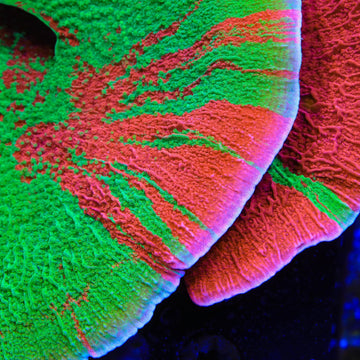
Seasons Greeting Montipora Coral
Overview
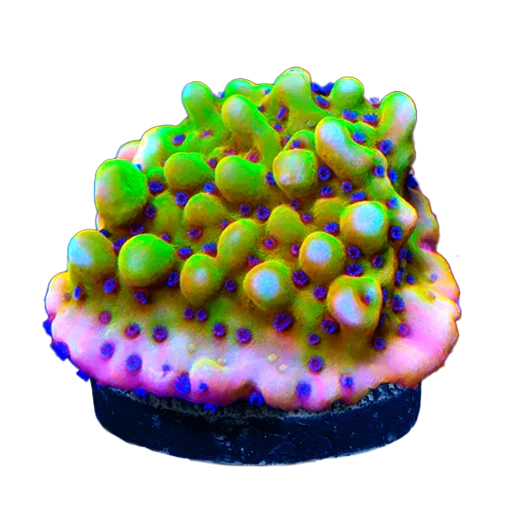
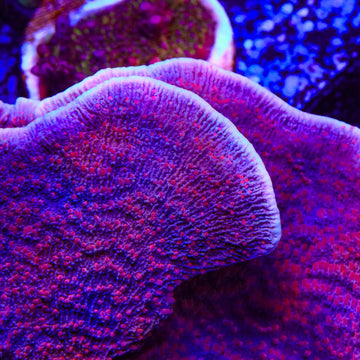
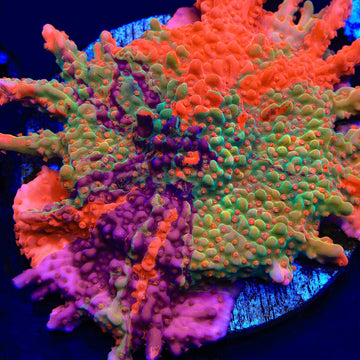
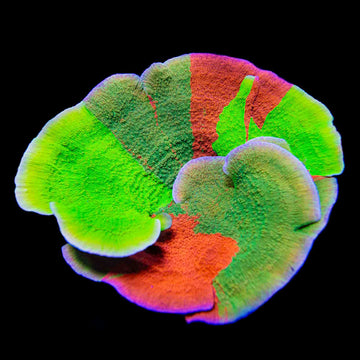
Seasons Greeting Montipora Coral shows a bright green base with red polyps and forms thin, undulating plates. Montipora undata is a small-polyp stony plating coral that prefers moderate to strong light and moderate to strong, turbulent water flow. It is photosynthetic with symbiotic algae but can benefit from occasional fine particulate foods to support growth and color. Place on stable rock with room to expand, and keep distance from aggressive stinging corals to prevent damage.
Quick Facts
Care
Moderate
Lighting
Moderate–High
Flow
Moderate–High
Placement
Mid–High
Temperament
Peaceful (2–3 inches spacing)
Recommended Parameters
Temp
76–80°F
pH
8.1–8.4
Salinity
1.025–1.026
Calcium
400–450 ppm
AlkAlkalinity
8–9 dKH
Magnesium
1250–1350 ppm
Feeding
photosynthetic (primary), microplankton, zooplankton (rotifers, copepod nauplii), coral-specific powdered foods (e.g., Reef Roids), amino acid supplements, marine snow, bacterioplankton
Care & Placement
FAQ
Frequently Asked Questions
About the Seasons Greeting Montipora Coral
-
Why does my Seasons Greeting Montipora Coral lose its red base or turn brown under strong LEDs?
M. undata often prefers moderate PAR (about 150–200). Excess intensity can wash out the red base, while ultra-low nutrients cause paling and zero PO4/NO3 can mute greens. Aim for stable alkalinity 8–9 dKH, measurable (but low) nutrients, and strong blue/violet spectrum with gradual acclimation. If faded, lower PAR 10–15% weekly and raise nutrients slightly until color returns. -
How can I encourage the classic plating-with-nodules growth instead of a flat encrust?
Start the frag on a vertical or angled surface and give crossflow to prevent detritus settling on the rim. Keep nearby corals from shading the growth edge. Moderate PAR promotes plate formation; overly high PAR can keep it tight to the rock. Maintain steady alkalinity and avoid frequent fragging of the rim, which resets the plate. -
My undata has slow tissue loss at the base (STN) while the rim still grows—what’s the fix?
This pattern often points to detritus buildup and low flow under the plate combined with alkalinity drift. Increase turbulent flow to the underside, siphon detritus during water changes, and stabilize dKH swings to <0.3/day. Frag a healthy rim section as insurance, and consider a short Lugol’s dip for affected areas. Check for nudibranchs hiding along the underside at night. -
What’s the best strategy to prevent and eliminate Montipora-eating nudibranchs on this coral?
Quarantine all new frags, inspect at night with a flashlight, and dip repeatedly since eggs resist dips. Manually remove egg spirals with a soft brush. Keep a natural predator like a Halichoeres wrasse if your tank suits it. If infested, isolate the colony, perform dips every 3–4 days for two weeks, and trim heavily damaged sections.