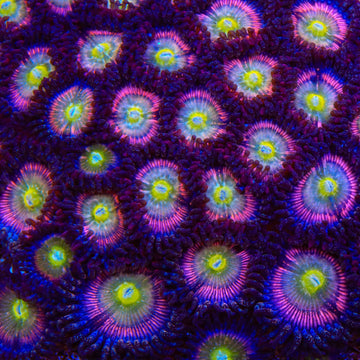
Safecracker Zoanthids Coral
Overview
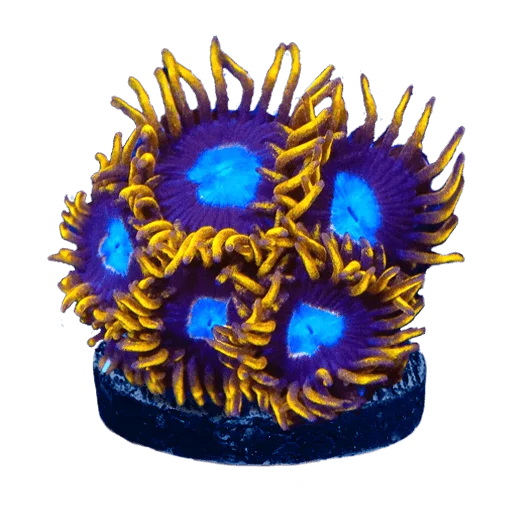
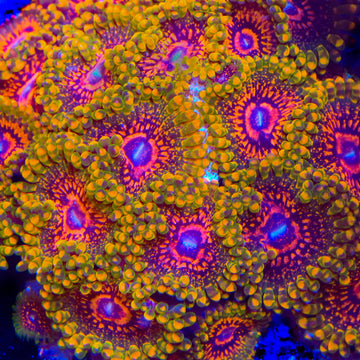
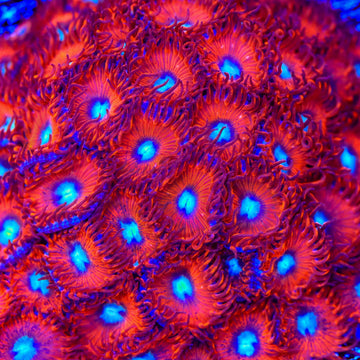
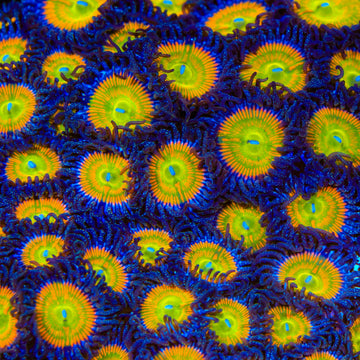
Safecracker Zoanthids Coral displays small button polyps with bright red centers and contrasting skirts. Zoanthus sp. is a colonial soft polyp coral that thrives under moderate light and low to moderate, indirect flow. It is primarily photosynthetic via symbiotic algae but will accept fine particulate foods, which can boost growth and maintain color. Place it on a separate rock to control spreading and leave space from stinging or shading neighbors.
Quick Facts
Care
Easy
Lighting
Low–Moderate
Flow
Moderate
Placement
Low–Mid
Temperament
Semi-aggressive (2–4 inches spacing)
Recommended Parameters
Temp
76–80°F
pH
8.1–8.4
Salinity
1.025–1.026
Calcium
400–450 ppm
AlkAlkalinity
8–10 dKH
Magnesium
1250–1350 ppm
Feeding
photosynthetic, microplankton, phytoplankton, zooplankton, rotifers, copepod nauplii, powdered coral foods (e.g., reef roids), marine snow
Care & Placement
FAQ
Frequently Asked Questions
About the Safecracker Zoanthids Coral
-
Why do my Safecracker Zoanthids lose their deep red skirts or dark centers over time?
Color can shift with spectrum, PAR, and nutrients. Too much white light or very low nutrients often wash out reds. Aim for moderate PAR (100–200), strong blue spectrum, and measurable nutrients (nitrate 5–15 ppm, phosphate 0.03–0.1 ppm). Stable iodine/iron helps. If polyps “stretch,” increase light gradually; if they shrink, lower intensity or improve nutrients and flow. -
My colony suddenly “melted” after looking fine for months—what causes this and how can I respond?
Rapid decline often follows parameter swings, bacterial issues, or pests. Immediately boost random flow, run fresh carbon, and perform an iodine/Lugol’s dip. Inspect for nudibranchs, sundial snails, and spiders. In stubborn cases, advanced keepers use short cipro baths in a hospital container. Stabilize salinity/alkalinity, keep nutrients non-zero, and reduce stress from aggressive neighbors. -
Are Safecracker Zoanthids likely to overrun other corals, and how do I contain them without harming the colony?
They can mat outward and shade nearby frags. Island them on isolated rocks or use sand gaps as barriers. For trimming, cut the mat between polyps with a clean scalpel and remove small sections. Immediately glue exposed edges to halt regrowth. Wear gloves and eye/face protection due to potential zoanthid toxins; handle outside the tank when possible. -
How can I tell pest damage from nutrient/light stress in this morph?
Pest damage shows nibbled skirts, closed polyps despite steady parameters, eggs on undersides, or nocturnal predators (check at night). Stress from light/nutrients shows uniform stretching, paling, or shrinking without bite marks. If uncertain, do a brief inspection dip to reveal hitchhikers, adjust PAR slowly, and restore nutrients to target ranges. Maintain clean, varied flow to prevent detritus buildup between polyps.