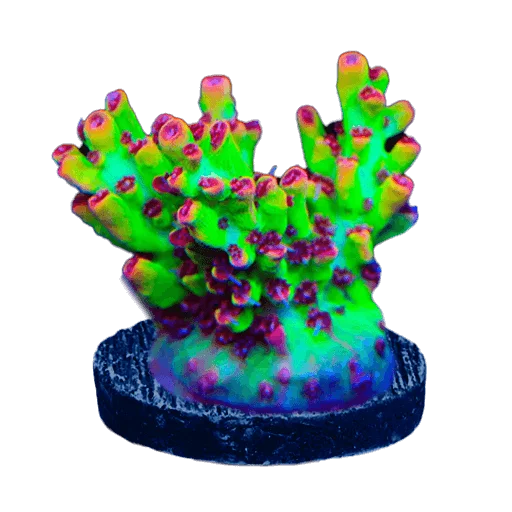
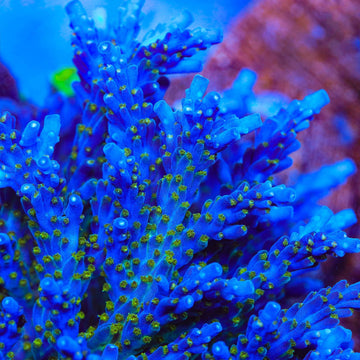
RRC Shazam Acropora Coral
Overview
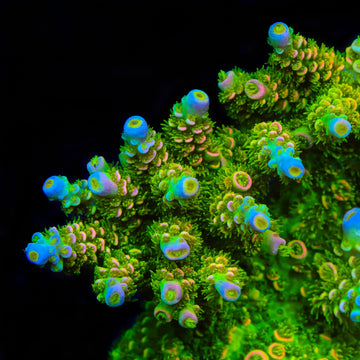
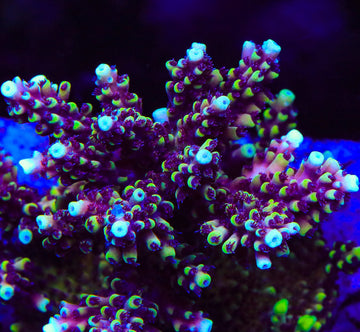
RRC Shazam Acropora Coral shows dense, upward-branching growth with small, closely spaced corallites. Acropora sp., a small-polyp stony branching coral, thrives under strong light and high, turbulent water flow. It is primarily photosynthetic through symbiotic algae but can take very fine particulate foods; occasional feeding can support growth and maintain coloration. Place high with stable water parameters and leave space from stinging neighbors to avoid tissue damage.
Quick Facts
Care
Difficult
Lighting
High
Flow
High
Placement
High
Temperament
Peaceful (2–3 inches spacing)
Recommended Parameters
Temp
76–80°F
pH
8.1–8.4
Salinity
1.025–1.026
Calcium
420–450 ppm
AlkAlkalinity
8–9 dKH
Magnesium
1250–1350 ppm
Feeding
photosynthetic (primary), microplankton, rotifers, copepod nauplii, reef roids, oyster eggs, amino acids
Care & Placement
FAQ
Frequently Asked Questions
About the RRC Shazam Acropora Coral
-
How do I maintain the signature colors of the RRC Shazam Acropora Coral (Acropora sp.)?
Prioritize strong PAR (300–450) with heavy blue/UV (400–450 nm) to bring out reds/yellows. Keep nutrients low but not zero (NO3 5–15 ppm, PO4 0.03–0.08). Stable alk 7.5–8.5 dKH prevents washout or tip burn. Trace balance matters: potassium 390–420 ppm supports reds; iron/manganese in modest doses can deepen tones. Avoid rapid spectrum changes; ramp intensity over 2–3 weeks after any relocation. -
What placement and flow pattern reduces base shadowing and STN on Shazam colonies?
Mount where it receives multi-directional, turbulent flow to keep detritus off the base—use alternating gyres or random pulsing. Place slightly sideways or at a 30–45° tilt so new branches don’t shade the encrusting base. Periodically prune inner branches to open channels. If the base pales, increase crossflow, rotate the colony a quarter turn weekly for a month, and check nutrients aren’t bottoming out. -
Why do the tips look “burnt” or recede after boosting light on this coral?
Tip necrosis often follows a mismatch: high alk with low nutrients under intense light. Keep alk under 8.5 dKH if NO3/PO4 are modest. Increase PAR gradually (no more than 10–15% weekly). Confirm flow is strong at the tips to clear oxygen microbubbles and waste. If damage starts, lower light 15–20%, nudge nutrients slightly upward, and hold parameters steady for two weeks before re-ramping. -
Are there pests that target RRC Shazam specifically, and how can I detect them early?
Like many Acropora, it’s vulnerable to AEFW and red bugs. Look for pale bite tracks or oval eggs on shaded undersides; use a flashlight at lights-out to spot flatworms. Dip new frags (e.g., iodine or commercial dips) and inspect with a loupe. For established colonies, turkey-baste branches weekly—dislodged flatworms reveal infestations. If present, adopt a dip-or-prazi rotation on removable pieces and maintain a clean frag rack.