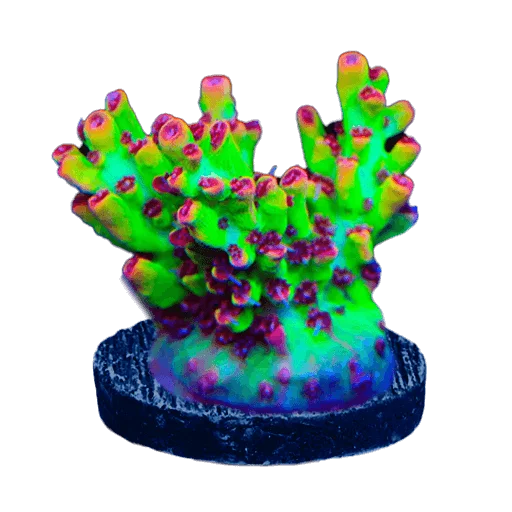
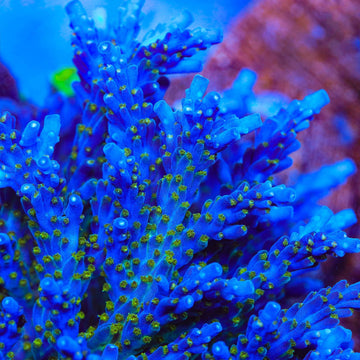
RRC Rainbow Splice Acropora Coral
Overview
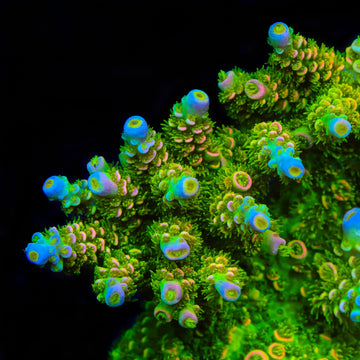
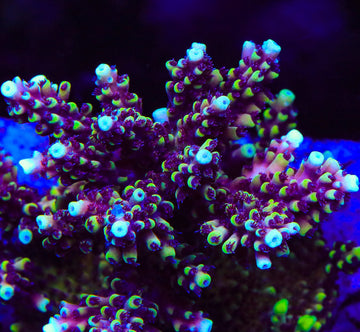
Rainbow Splice Acropora Coral shows multicolored branch tips with dense radial corallites. Acropora millepora is a small‑polyp branching stony coral that prefers high light and strong, turbulent water flow. It is primarily photosynthetic via symbiotic algae but can benefit from occasional fine plankton foods to support growth and coloration. Place high on stable rockwork, keep alkalinity and calcium steady with low nutrients, and allow space from aggressive neighbors.
Quick Facts
Care
Difficult
Lighting
High
Flow
High, turbulent
Placement
High
Temperament
Peaceful (2–4 inches spacing)
Recommended Parameters
Temp
77–80°F
pH
8.1–8.4
Salinity
1.025–1.026
Calcium
420–450 ppm
AlkAlkalinity
8–9 dKH
Magnesium
1280–1350 ppm
Feeding
photosynthetic (primary), microplankton, rotifers, copepod nauplii, coral-specific powdered foods (e.g., Reef Roids), amino acids, marine snow
Care & Placement
FAQ
Frequently Asked Questions
About the RRC Rainbow Splice Acropora Coral
-
Why did my Rainbow Splice Acropora millepora fade from multi-color to a single tone?
This morph is sensitive to spectrum, nutrients, and stability. Keep balanced blue/UV with some white to maintain reds/yellows; avoid ultra-low nutrients (target NO3 5–15 ppm, PO4 0.03–0.08 ppm). Hold alkalinity steady around 7.5–8.5 dKH and avoid rapid changes. Ensure strong, random flow to prevent shading and detritus on branches. Test and replenish key traces (potassium, iron, iodine) rather than dosing blindly. -
My millepora’s tips burn while the base encrusts well—what’s the cause?
Tip burn often follows high PAR paired with elevated alkalinity and low phosphate. Lower PAR gradually or acclimate; run alk closer to 7.5–8.0 dKH; keep PO4 detectable (0.03–0.08 ppm). Replace direct laminar jets with broad, alternating flow. Watch for micro-spikes in temperature and pH at lights-on. Stabilize before increasing light to drive vertical growth. -
What pests target millepora and how do I catch them early?
Watch for sandpapery bite tracks, crescent scuffs, and daytime polyp retraction—early flags for Acropora-eating flatworms. Blast branches with a baster; dislodged, oval worms confirm suspicion. Red bugs present as tiny moving dots and reduced extension. Quarantine new frags; use targeted dips (e.g., Bayer alternatives or commercial coral dips) on a schedule. A Halichoeres wrasse can help with stragglers but won’t replace quarantine. -
How does this coral fare in mixed reefs with softies and LPS?
It’s sensitive to chemical allelopathy and stings. Keep generous spacing from Euphyllia and similar sweepers. Run fresh activated carbon and maintain robust export to reduce toxins from leathers and zoanthids. Ensure vigorous, random flow around the colony to prevent localized irritation. If colors dull despite good numbers, try moving it upstream of softies or increasing carbon change frequency.