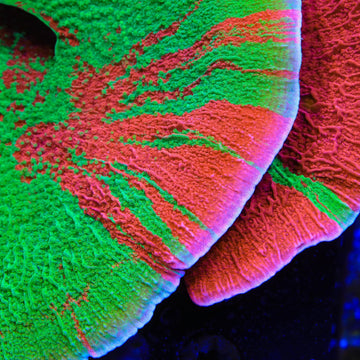
Red Setosa Montipora Coral
Overview
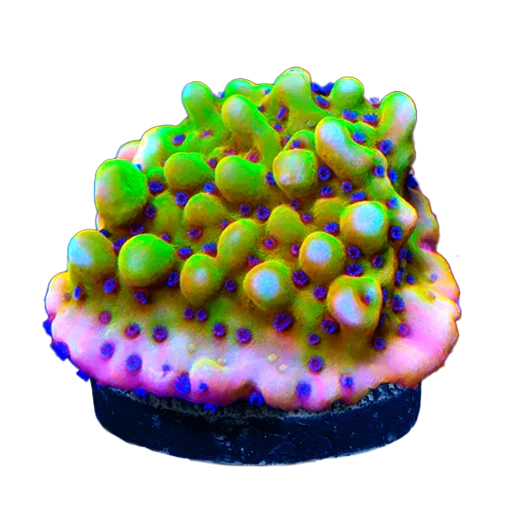
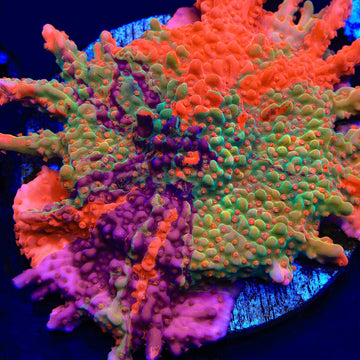
Red Setosa Montipora Coral features bright red, finger-like branches with a smooth texture. Montipora setosa is a small-polyp stony branching coral; it does well under moderate light and moderate to strong, varied water flow. It is photosynthetic via symbiotic algae but can take occasional fine particulate foods, which may support growth and coloration. Place with room to grow and away from aggressive neighbors with long sweeper tentacles; secure to stable rock to prevent breakage.
Quick Facts
Care
Moderate
Lighting
Moderate–High
Flow
Moderate-High, indirect
Placement
Mid–Low
Temperament
Peaceful (2–3 inches spacing)
Recommended Parameters
Temp
76–80°F
pH
8.1–8.4
Salinity
1.025–1.026
Calcium
420–450 ppm
AlkAlkalinity
7.5–9 dKH
Magnesium
1280–1380 ppm
Feeding
photosynthetic (primary), microplankton, phytoplankton, rotifers, fine zooplankton, powdered coral foods, amino acids, marine snow
Care & Placement
FAQ
Frequently Asked Questions
About the Red Setosa Montipora Coral
-
Why does my Red Setosa Montipora fade or turn salmon/pink under strong lighting?
Setosa often washes out above ~250–300 PAR, especially under intense blue-heavy LEDs. Move it to moderate light with strong, random flow. Maintain stable alkalinity (8.0–8.6 dKH), temperature 24–26°C, and non-zero nutrients (NO3 5–15 ppm, PO4 0.03–0.08 ppm). Adequate potassium (380–420 ppm) and iron traces help sustain deep red/orange pigments. Color typically returns over several weeks after stability improves. -
My colony recedes at the base while the tips look fine—what’s going on?
Setosa’s knobby growth can shade its base. Combined with low flow at the attachment point, this causes slow tissue loss (STN). Increase crossflow, rotate or remount the colony more vertical, and avoid shadowy ledges. Keep alkalinity drift minimal and ensure moderate nutrients. Targeting gentle flow beneath the plate helps oxygenate tissue and prevents detritus accumulation. -
How do I spot and manage Montipora-eating nudibranchs on setosa?
Look for irregular white bite marks and opaque, ribbon-like egg strands on shaded undersides. Inspect under blue light off-cycle. Manually remove adults, scrub eggs, and use repeated coral dips every 3–4 days for 2–3 weeks to break the life cycle. Isolate affected frags, rinse well after dips, and increase nighttime inspections. Consider a quarantine rack until no new damage appears. -
Can chemical competition from nearby corals affect setosa’s color and growth?
Yes. Allelopathy from soft corals (e.g., leathers, xenia) and sweepers from LPS can stunt setosa and mute coloration. Run fresh activated carbon, maintain good export, and give several inches of clearance—more if flow may whip sweepers. Periodic carbon changes and stable nutrients often restore polyp extension and color within a couple of weeks.