Red Hot Goniopora Coral
Overview
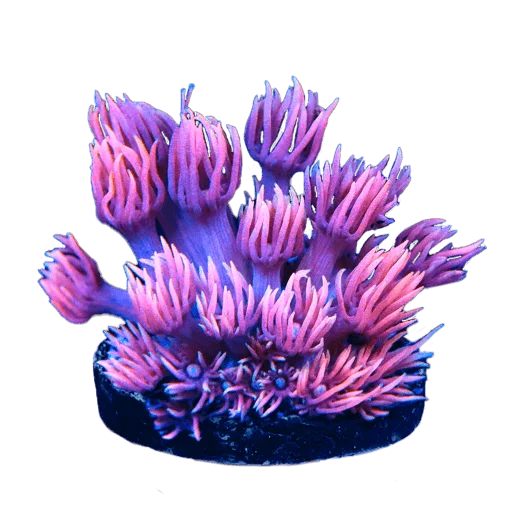
Red Hot Goniopora Coral displays vivid red polyps with long, flower-like tentacles that sway when extended. Goniopora sp. is a large-polyp stony coral forming domed colonies, preferring moderate light and gentle to moderate, indirect water flow. It is primarily photosynthetic with symbiotic algae but benefits from occasional small particulate foods, which can improve growth and coloration. Place it with space around the colony for full extension and keep it away from aggressive corals to avoid stings and tissue damage.
Quick Facts
Care
Difficult
Lighting
Moderate
Flow
Moderate, indirect
Placement
Mid–Low
Temperament
Semi-aggressive (3–6 inches spacing)
Recommended Parameters
Temp
76–80°F
pH
8.1–8.4
Salinity
1.025–1.026
Calcium
420–450 ppm
AlkAlkalinity
8–9 dKH
Magnesium
1280–1350 ppm
Feeding
photosynthetic (primary), phytoplankton, microplankton, rotifers, copepod nauplii, oyster eggs, powdered coral foods (e.g., Reef-Roids), enriched baby brine shrimp nauplii, finely minced meaty foods
Care & Placement
FAQ
Frequently Asked Questions
About the Red Hot Goniopora Coral
-
Why does my Red Hot Goniopora look great for months then slowly retract over weeks?
This “slow fade” often points to depleted trace metals (iron/manganese) or steadily rising phosphate while nitrate bottoms out. Target 5–15 ppm nitrate, 0.03–0.08 ppm phosphate, and dose iron/manganese lightly while monitoring ICP. Provide gentle, random flow and small-particle foods 2–3x weekly. Avoid sudden PAR jumps; many thrive around 80–150 PAR. -
How can I tell it’s Goniopora sp. and not Alveopora, and why does it matter?
Count tentacles: Goniopora polyps usually have 24; Alveopora about 12. This matters because Goniopora generally need steadier nutrition and trace metals, respond better to finer foods (rotifers/phyto), and are less forgiving of ultra-low nutrients. Misidentification can lead to underfeeding or placing it in overly harsh flow/light. -
My coral’s red is fading to pink/tan—what’s the likely cause and fix?
Fading often follows excessive light or very lean nutrients. Check PAR and reduce 20–30% if above ~150–180. Restore moderate nutrients, feed micron-sized planktonic foods, and consider low-dose iron to support zooxanthellae. Stabilize alkalinity (7.5–8.3 dKH). Color typically rebounds over 2–4 weeks if stressors are removed. -
Can I rescue a polyp bailout event?
Sometimes. Collect bailed polyps in a perforated specimen cup with rubble, very gentle flow, and low light. Target-feed tiny foods and maintain stable nutrients. Improve root causes: temperature swings, alkalinity shocks, or rapid PAR changes. Some polyps reattach over weeks, though success is mixed; focus on stabilizing the main colony.