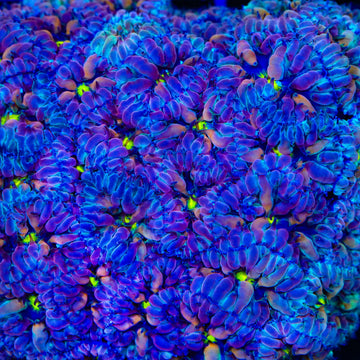
Red Hot Blastomussa Coral
Overview
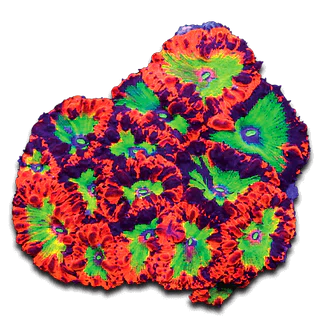
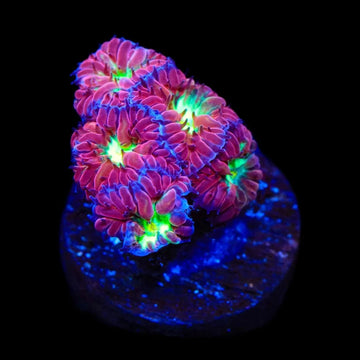
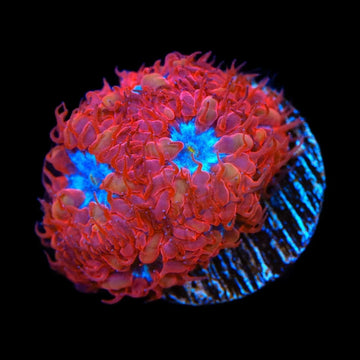
Red Hot Blastomussa Coral shows fleshy, round polyps with bright red rims and contrasting centers. Blastomussa wellsi is a large-polyp stony coral that forms clustered heads; it prefers moderate lighting and gentle to moderate water flow. It is photosynthetic via symbiotic algae but benefits from occasional small meaty foods, which can improve growth and sustain coloration. Place it on the sand bed or isolated rock with space around it, as sweeper tentacles can sting nearby corals.
Quick Facts
Care
Moderate
Lighting
Low–Moderate
Flow
Low–Moderate
Placement
Low–Mid
Temperament
Peaceful (2–3 inches spacing)
Recommended Parameters
Temp
76–80°F
pH
8.1–8.4
Salinity
1.025–1.026
Calcium
400–450 ppm
AlkAlkalinity
8–10 dKH
Magnesium
1280–1350 ppm
Feeding
photosynthetic, mysis shrimp, enriched brine shrimp, finely chopped marine meats, rotifers, copepods, zooplankton, microplankton, coral-specific powdered foods
Care & Placement
FAQ
Frequently Asked Questions
About the Red Hot Blastomussa Coral
-
My Red Hot Blastomussa stays shrunken despite “good” parameters. What’s the usual culprit?
This species dislikes strong light and gusty flow. Aim for PAR 60–120 with a blue-heavy spectrum and gentle, indirect movement. Stabilize alkalinity (8–9 dKH) and keep moderate nutrients (NO3 5–15 ppm, PO4 0.03–0.1). Check for irritants like vermetid snails, sand abrasion, or nearby stingers. Feed small meaty foods at dusk. Improvement often appears within a week after reducing light and flow and restoring stability. -
Why is the vibrant red fading or shifting toward brown/green?
Excess white light, very high PAR, and ultra-lean nutrients often wash out color. Shift to bluer lighting, keep PAR on the lower end, and avoid sudden photoperiod changes. Maintain moderate nutrients rather than chasing zeros. Ensure consistent trace replenishment via water changes. If recently imported, give time—colors often rebound after several weeks of stable conditions and gentle feeding with fine particulate foods or small mysis. -
What placement minimizes damage from neighbors and sand irritation?
Seat it on a stable rock ledge or low shelf where polyps can inflate without rubbing edges. Provide a 2–3 inch buffer from euphyllia, favias, and other stingy LPS. Avoid high-flow sand beds that blast grains into tissue; if on sand, use a small tile or cup-like base to protect the rim. Gentle crossflow prevents detritus from settling without lifting sand onto the fleshy mantle. -
Any feeding tips to boost growth without causing regurgitation or film?
Target feed after lights dim when feeder tentacles peek out. Pause pumps, use small pieces (minced mysis, enriched brine, pellets softened), and feed modest amounts once or twice weekly. Rinse frozen foods to reduce excess phosphates. Resume low flow after 10–15 minutes so food settles without blowing off. Overfeeding can trigger bacterial slime on tissue; if you see that, reduce portions and improve export.