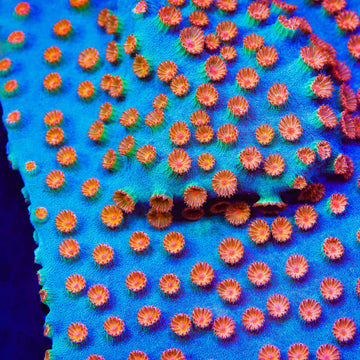
Red Brick Cyphastrea Coral
Overview
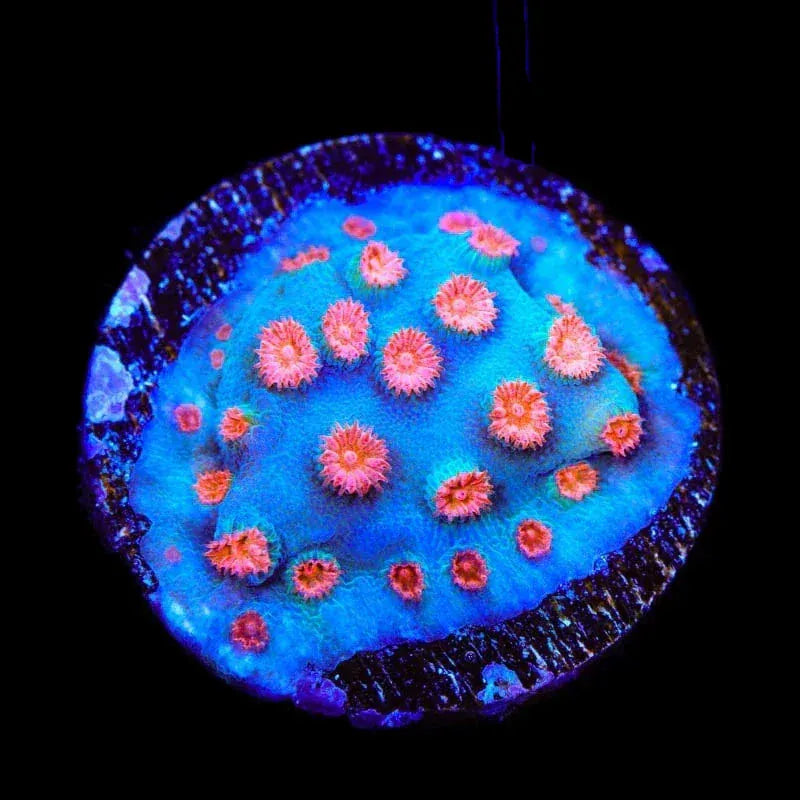
Red Brick Cyphastrea Coral shows a dense encrusting surface with small, raised polyps that give a brick-like texture. Cyphastrea sp. is a small-polyp stony, encrusting coral that does well in low to moderate light and gentle to moderate water flow. It relies on symbiotic algae for most nutrition but accepts fine particulate foods; occasional feeding can improve growth and deepen coloration. Place on stable rock away from aggressive neighbors, and allow space for slow outward spread.
Quick Facts
Care
Easy
Lighting
Low–Moderate
Flow
Low–Moderate
Placement
Low–Mid
Temperament
Peaceful (1–2 inches spacing)
Recommended Parameters
Temp
76–80°F
pH
8.1–8.4
Salinity
1.025–1.026
Calcium
400–450 ppm
AlkAlkalinity
8–9.5 dKH
Magnesium
1250–1350 ppm
Feeding
photosynthetic, microplankton, rotifers, copepod nauplii, oyster eggs, coral-specific powdered foods, marine snow
Care & Placement
FAQ
Frequently Asked Questions
About the Red Brick Cyphastrea Coral
-
My Red Brick Cyphastrea fades under strong LEDs. Is it light-shy or lacking nutrients?
Cyphastrea sp. is naturally found in shaded, turbid zones and prefers modest PAR (40–120). Excessive white-heavy intensity washes out red pigments; pair moderate PAR with a blue-dominant spectrum. Maintain nutrients in the “not-ultra-low” range (nitrate 5–15 ppm, phosphate 0.03–0.1 ppm). If color is pale with good nutrients, lower light 20–30% over a week and reassess polyp extension at night. -
It’s receding from the edges despite stable parameters. What subtle factors should I check?
Edge recession often follows detritus buildup and microalgae encroachment at the growth rim. Increase random, indirect flow to keep the margin clean, and manually siphon debris weekly. Inspect for vermetid snails or spirorbid clusters irritating tissue. Slightly raise alkalinity stability (8.0–9.0 dKH with <0.2 daily swing). A short broad‑spectrum antibiotic dip can help if tissue looks bacterial, but address flow first. -
Will it sting neighbors, or does it win differently?
Cyphastrea rarely throws long sweepers; it wins by slow, steady overgrowth. It can smother zoas, encrusting montis, or rockwork seams. Give a perimeter gap or isolate on its own “island” rock. If it approaches a prized coral, create a thin sand trench or place a small rubble barrier you can relocate as the mat advances. -
Nighttime polyp extension is weak—am I underfeeding?
It’s a subtle feeder. Try feeding after lights out when flow is slowed: rotifers, oyster eggs, or very fine coral foods. Precondition with a brief amino/carbohydrate broadcast 10–15 minutes prior to cue feeding response. Ensure trace stability (iodine, iron) and avoid carbon dosing that strips particulates. If extension remains minimal, reduce light intensity slightly for a week; response often improves.