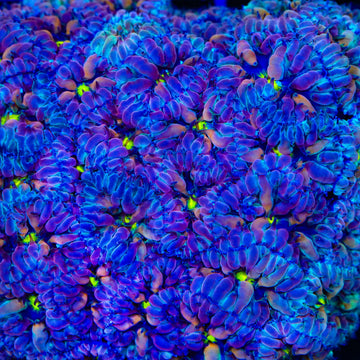
Raspberry Blastomussa Coral
Overview
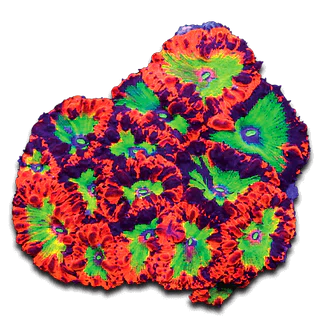
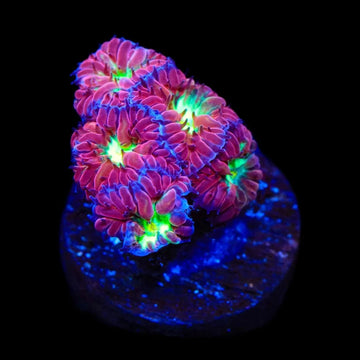
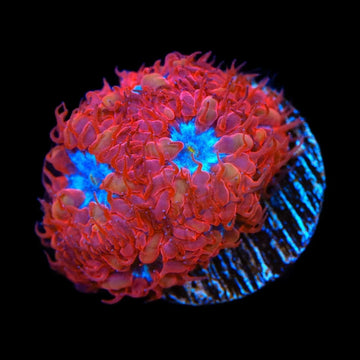
Raspberry Blastomussa Coral shows fleshy, round polyps with raspberry-red mantles and contrasting mouths. Blastomussa wellsi is a large-polyp stony coral that forms clustered heads and prefers moderate light with low to moderate, gentle water flow. It is photosynthetic through symbiotic algae but benefits from occasional small meaty feedings to support growth and maintain color. Place it on stable rock or sand with space around it, as short sweeper tentacles can sting nearby corals at night.
Quick Facts
Care
Moderate
Lighting
Low–Moderate
Flow
Low–Moderate
Placement
Low–Mid
Temperament
Semi-aggressive (3 inches spacing)
Recommended Parameters
Temp
76–80°F
pH
8.1–8.4
Salinity
1.025–1.026
Calcium
400–450 ppm
AlkAlkalinity
8–9.5 dKH
Magnesium
1280–1350 ppm
Feeding
photosynthetic, mysis shrimp, enriched brine shrimp, copepods/zooplankton, microplankton, finely chopped marine meats (clam, shrimp), coral-specific powdered foods, small sinking LPS pellets
Care & Placement
FAQ
Frequently Asked Questions
About the Raspberry Blastomussa Coral
-
Why does my Raspberry Blastomussa swell and deflate throughout the day, and when is it a concern?
Normal diurnal inflation helps the coral feed and shed mucus. Brief deflation after feeding or maintenance is typical. Red flags: prolonged shrinking, gaping mouths, or tissue pulling from the skeleton. Check for excess light, sudden alkalinity/salinity swings, vermetid snail irritation, and detritus trapped under the flesh. Gentle, indirect flow that lifts debris without lifting tissue usually restores the coral’s full, puffy extension. -
How can I keep its raspberry coloration from fading or browning?
Color shifts with spectrum, nutrients, and stress. This coral often shows best reds under blue-heavy lighting with moderate PAR; too much white or intensity can wash it out or bleach it. Keep nitrate and phosphate measurable but not high, and avoid rapid nutrient drops. Target-feed small meaty foods weekly for depth of color. Stability in alkalinity and temperature helps maintain pigment expression and prevents dulling. -
My colony has receding tissue at the base while the tops look fine—what’s the usual culprit?
Detritus accumulation under fleshy skirts is common, especially on sandbeds or in low, stagnant pockets. The trapped debris fosters bacterial irritation and localized dieback. Lift the colony slightly on a ring or frag stand, increase indirect flow to roll debris away, and turkey-baste weekly. Inspect and remove nearby vermetid snails. A mild antiseptic dip can halt early recession when combined with improved cleanliness. -
Can Blastomussa wellsi be outcompeted or stung despite its thick flesh?
Yes. It has short sweepers and loses to many aggressive LPS and fast-spreading soft corals. Keep distance from Euphyllia, Favias, and stinging chalices. Avoid adjacency to GSP, clove polyps, or invasive zoas that can shade and overgrow the rim. Provide a clear perimeter and moderate, laminar-free flow. If encroachment begins, prune neighbors promptly and rotate the colony to expose shaded lobes to balanced light.