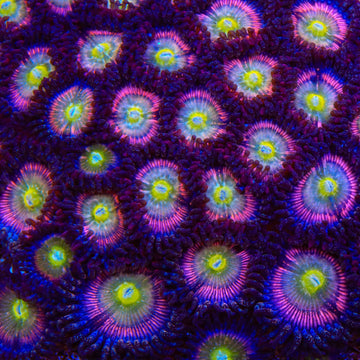
Rainbow Yoda Zoanthids Coral
Overview
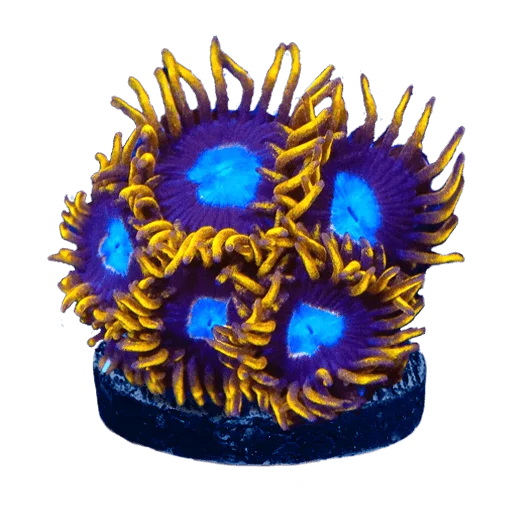
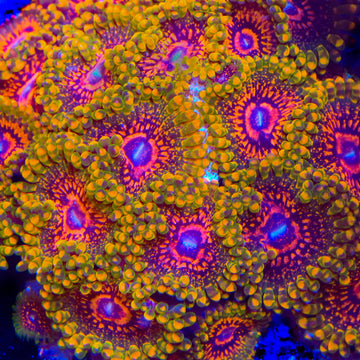
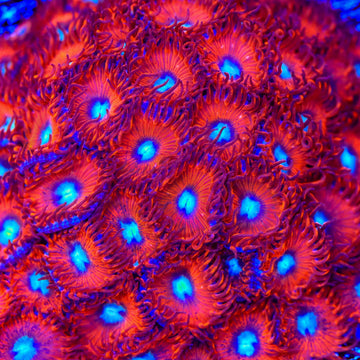
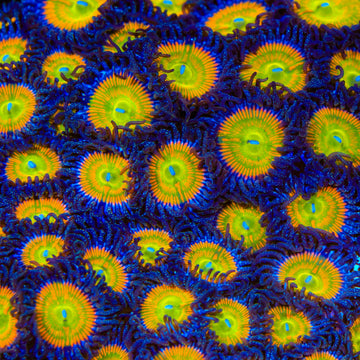
Rainbow Yoda Zoanthids Coral shows multi-colored polyps with a bright oral disc and contrasting skirts. Classified as Zoanthus sp., it is a soft, colonial polyp coral that does well under moderate light and low to moderate water flow. It is photosynthetic via symbiotic algae but accepts small meaty foods or coral foods, which can support faster growth and maintain color. Place on isolated rock to manage spreading, and keep distance from aggressive stingers to avoid damage.
Quick Facts
Care
Easy
Lighting
Moderate
Flow
Moderate, indirect
Placement
Mid–Low
Temperament
Peaceful to semi-aggressive (allow a few inches; may overgrow neighbors)
Recommended Parameters
Temp
76–82°F
pH
8.1–8.4
Salinity
1.025–1.026
Calcium
400–450 ppm
AlkAlkalinity
8–10 dKH
Magnesium
1250–1350 ppm
Feeding
photosynthetic (primary), microplankton, phytoplankton, powdered zooplankton, rotifers, copepod nauplii, oyster eggs, reef-specific powdered coral foods, marine snow
Care & Placement
FAQ
Frequently Asked Questions
About the Rainbow Yoda Zoanthids Coral
-
How do I keep Rainbow Yoda Zoanthids’ reds and yellows from washing out over time?
Aim for 80–150 PAR with strong blue/royal-blue and some violet (420–430 nm). Avoid blasting with white-heavy light, which can mute reds. Keep nutrients measurable (NO3 5–15 ppm, PO4 0.03–0.1 ppm); ultra-low nutrients dull color. Stable alkalinity (8–9 dKH) and weekly small water changes help maintain trace balance that supports pigmentation. -
My Rainbow Yodas are stretching and losing their skirt—what’s the likely cause?
Stretching (long stalks, narrow skirts) usually points to low light or overly soft flow. Gradually increase PAR into the target range and add a bit more random flow so polyps “dance” but don’t fold. Check for shading from faster growers. Maintain moderate nutrients; starving polyps can thin and elongate even under decent light. -
What’s a safe, effective way to deal with pests specific to Zoanthus, like nudibranchs or zoa pox?
For nudibranchs/sundial snails, manual removal plus 2–3 rounds of a commercial coral dip (per label) at 4–5 day intervals breaks egg cycles. For zoa pox, improve flow, raise stability, and try daily Lugol’s iodine dips (short, 3–5 minutes) for several days. Rinse after dips. Run fresh carbon to reduce stress compounds released by soft corals. -
Why do my Rainbow Yodas “melt” after a big water change or new carbon?
Rapid changes in organics or alkalinity can shock Zoanthus. Limit water changes to 10–15% and pre-rinse carbon, using smaller amounts swapped more often. Match temperature/salinity closely, and avoid large dKH moves (>0.5/day). If polyps retract for days, reduce light 20% temporarily, increase flow slightly, and resume normal levels once extension returns.