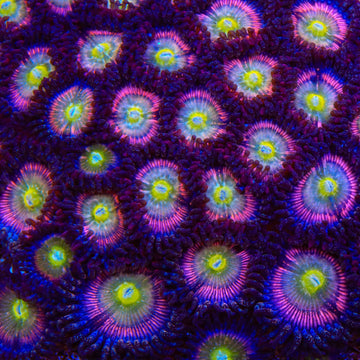
Rainbow Troll Zoanthids Coral
Overview
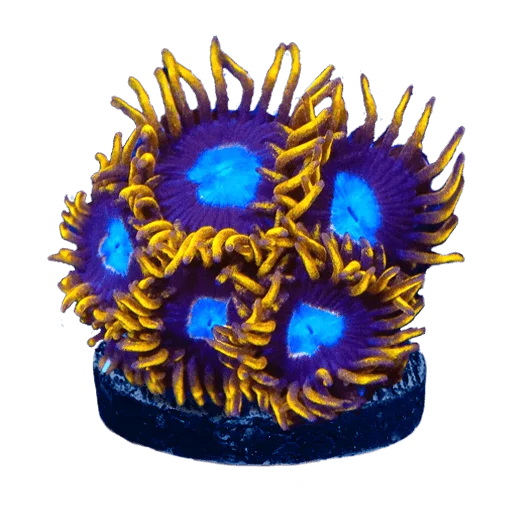
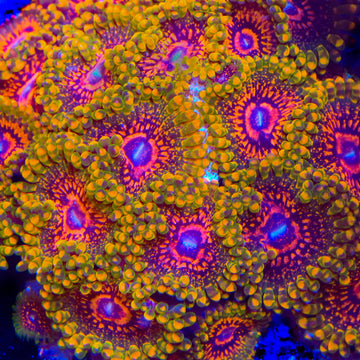
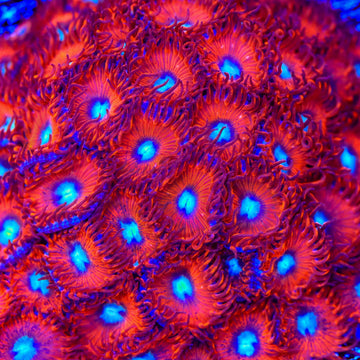
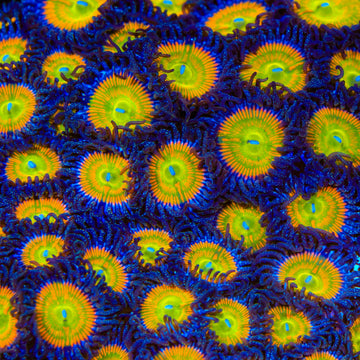
Rainbow Troll Zoanthids Coral displays tight mats of small button polyps with multicolored disks and contrasting skirts. Classified as Zoanthus sp., this soft colonial polyp grows as encrusting mats; it prefers moderate light and low to moderate, indirect flow. It is primarily photosynthetic with symbiotic algae but accepts small particulate foods, which can boost growth and intensify color. Place on isolated rock to manage fast spread and keep space from aggressive neighbors.
Quick Facts
Care
Easy
Lighting
Low–Moderate
Flow
Moderate
Placement
Mid–Low
Temperament
Peaceful to semi-aggressive (2–3 inches spacing; may overgrow neighbors)
Recommended Parameters
Temp
76–80°F
pH
8.1–8.4
Salinity
1.025–1.026
Calcium
400–450 ppm
AlkAlkalinity
8–10 dKH
Magnesium
1250–1350 ppm
Feeding
photosynthetic, microplankton, rotifers, cyclops, powdered coral foods, zooplankton suspensions, amino acid supplements
Care & Placement
FAQ
Frequently Asked Questions
About the Rainbow Troll Zoanthids Coral
-
How can I maintain the intense rainbow colors on Rainbow Troll Zoanthids over time?
Aim for stable PAR around 120–200 with a blue-heavy spectrum (420–460 nm). Acclimate slowly; sudden jumps wash pigments. Keep nutrients non-zero: nitrate 5–15 ppm, phosphate 0.03–0.10 ppm. Maintain potassium and iodine in normal reef ranges. Strong, random flow helps keep polyps clean. Some morph shift is natural—photograph under consistent lighting to judge true changes. -
My Rainbow Troll polyps are stretching or staying tiny—what’s the likely cause?
Stretching often signals low PAR or insufficient blue; increase light gradually. Tiny, tight polyps can indicate too much flow or irritation. Inspect for nudibranchs, sundial snails, zoa spiders, and vermetid tubes. Check for film algae around skirts. Verify metals with an ICP if unexplained. Adjust flow to lively but non-blasting and stabilize alkalinity and temperature. -
How do I troubleshoot sudden “melting” or closed colonies with no obvious pests?
Improve gas exchange and flow, then run fresh carbon to remove allelochemicals. Reduce organics with larger, spaced water changes; avoid abrupt nutrient stripping. For suspected bacterial issues (e.g., pox-like lesions), consider Furan‑2 dips per label. Treat algae encroachment with brief, dilute hydrogen peroxide dips. Stabilize temperature and avoid rapid swings in alkalinity or salinity. -
Can Rainbow Troll Zoas be mixed in a dense zoa garden without issues?
Yes, but leave spacing so mats don’t overgrow each other. Some Zoanthus and Palythoa can chemically compete; run carbon and maintain regular water changes. Keep distance from LPS with long sweepers (euphyllia, favia). Watch for grazers that pick at skirts (certain hermits, emerald crabs). Maintain clean frag plugs to prevent cyanobacteria shadowing lower polyps.