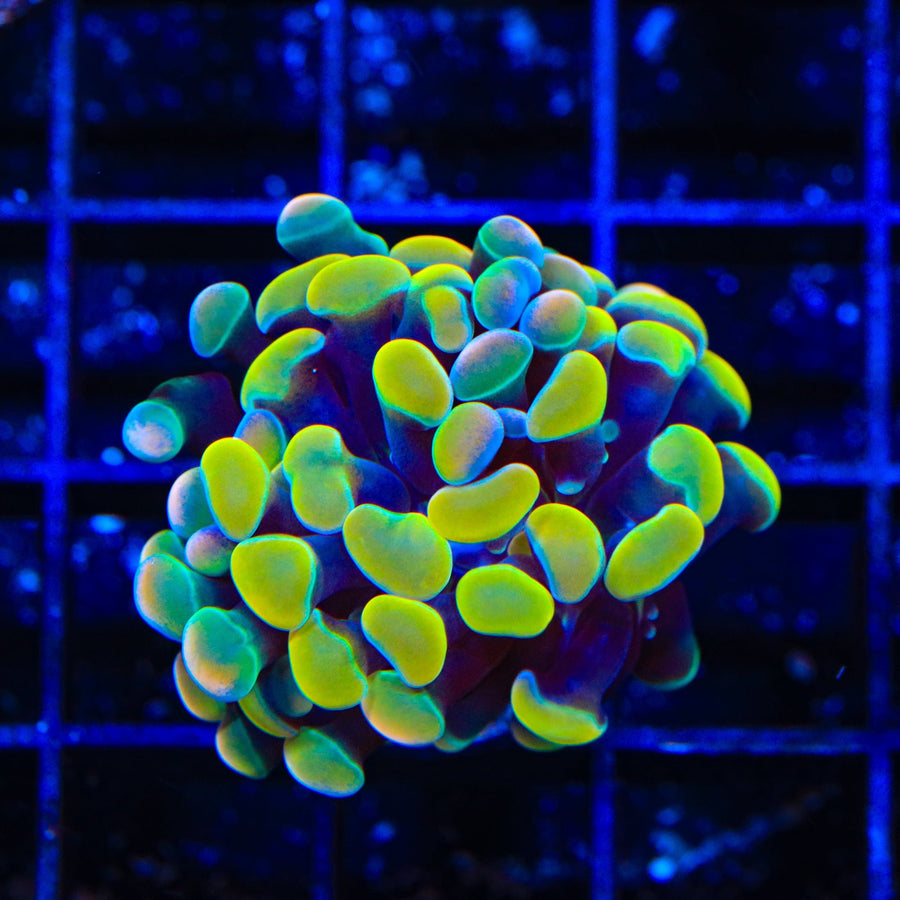
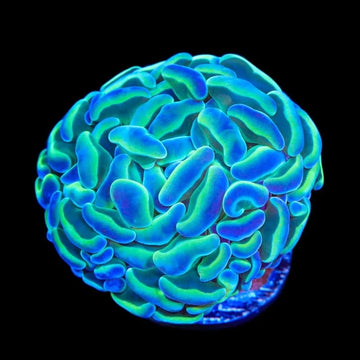
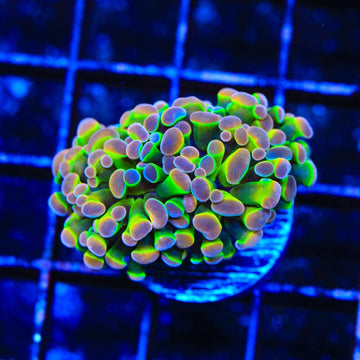
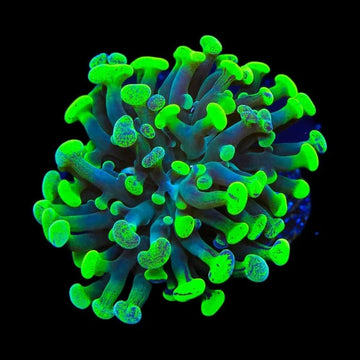
Rainbow Tiger Hammer Coral
Overview
Rainbow Tiger Hammer Coral shows branching heads with hammer- or anchor-shaped tips in striped colors. Fimbriaphyllia paraancora is a branching large-polyp stony coral; keep it under moderate light and gentle to moderate, indirect flow. It hosts symbiotic algae for photosynthesis but accepts small meaty foods or coral foods, which can support faster growth and stronger coloration. Place it with space from neighbors, as its sweeper tentacles can sting nearby corals.
Quick Facts
Care
Moderate
Lighting
Moderate
Flow
Moderate
Placement
Low–Mid
Temperament
Semi-aggressive (6–8 inches spacing)
Recommended Parameters
Temp
76–80°F
pH
8.1–8.4
Salinity
1.025–1.026
Calcium
400–450 ppm
AlkAlkalinity
8–10 dKH
Magnesium
1250–1350 ppm
Feeding
photosynthetic, mysis shrimp, enriched brine shrimp, finely chopped marine meat (clam, shrimp, fish), zooplankton, microplankton, powdered coral foods, marine snow
Care & Placement
FAQ
Frequently Asked Questions
About the Rainbow Tiger Hammer Coral
-
Why does my Rainbow Tiger Hammer’s color shift from rainbow tips to dull brown or green?
This morph’s fluorescence depends on spectrum, PAR, and nutrients. Under strong blue-heavy light with moderate PAR (120–180), pigments pop; too much white or sudden PAR spikes can wash colors. Ultra-low nutrients pale it; elevated but stable NO3 (5–15 ppm) and PO4 (0.03–0.08 ppm) deepen tones. Improve color by gradual light acclimation, stable alk 8–9 dKH, and consistent trace replenishment via regular water changes. -
My Fimbriaphyllia paraancora is receding at the base but polyp tips look fine—cause and fix?
Branching hammers often recede from alk swings or direct, constant flow blasting the branch base. Check dKH stability (daily drift <0.3), reduce pointed flow, and redirect to a gentle, rolling sway. Siphon detritus trapped among branches. If tissue is peeling, perform an iodine or broad-spectrum coral dip, trim any necrotic branch below healthy tissue, and place in lower flow to heal. -
Are torches and Rainbow Tiger Hammers compatible in close quarters?
Not reliably. Torches (F. glabrescens) often outcompete hammers with longer, more potent sweepers and can sting across gaps. Keep 10–15 cm spacing minimum, more if flow is strong. Hammers mix better with other hammers or frogspawn, but even then watch for chemical warfare in smaller systems—run fresh carbon and maintain good export to reduce allelochemicals. -
What’s the best flow pattern to boost growth and prevent infections like brown jelly?
Aim for alternating, moderate flow that rocks tentacles without folding them over—think varied gyre or pulsed streams. Avoid laminar jets hitting a single head. This keeps mucus and detritus from settling in branch forks, reducing bacterial hotspots. Pair with stable temperature (24–26°C), consistent alkalinity and calcium, and prompt dips/quarantine after shipping to limit tissue damage and infection risk.