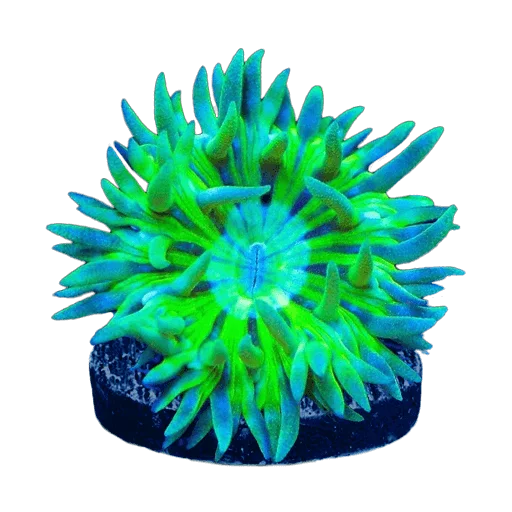
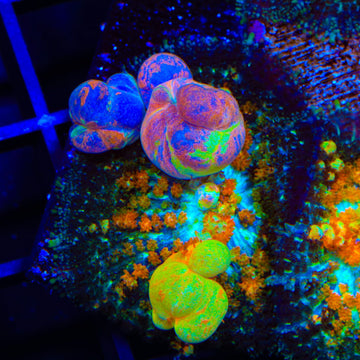
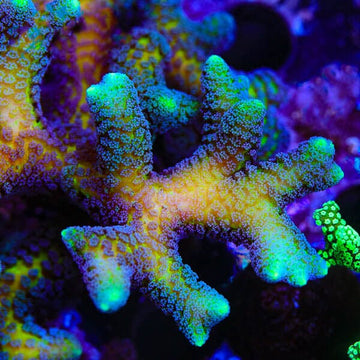
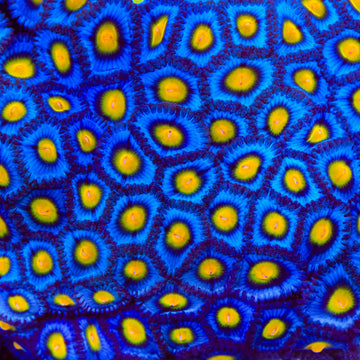
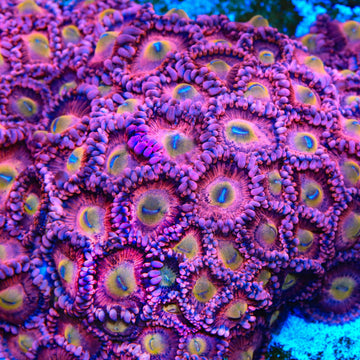
Rainbow Raptor Zoanthids Coral
Overview
Rainbow Raptor Zoanthids Coral displays multi-colored polyps with radiating rings and fringed skirts. Zoanthus sp., a soft colonial polyp, thrives in moderate light and moderate to strong, varied water flow. It is primarily photosynthetic with symbiotic algae but benefits from occasional small meaty or planktonic foods to support growth and maintain color. Place on a separate rock to limit spreading, give space from stinging corals, and handle carefully due to potential toxins.
Quick Facts
Care
Easy
Lighting
Low–Moderate
Flow
Moderate
Placement
Low–Mid
Temperament
Peaceful to semi-aggressive (2–3 inches spacing)
Recommended Parameters
Temp
76–82°F
pH
8.1–8.4
Salinity
1.025–1.026
Calcium
400–450 ppm
AlkAlkalinity
8–10 dKH
Magnesium
1250–1350 ppm
Feeding
photosynthetic, microplankton, phytoplankton, rotifers, baby brine shrimp, marine snow, powdered coral foods
Care & Placement
FAQ
Frequently Asked Questions
About the Rainbow Raptor Zoanthids Coral
-
Why do my Rainbow Raptor Zoanthids shift from multicolor to dull or brown under the same lights?
This morph is sensitive to spectrum balance and nutrients. Too much white or high nitrate/phosphate can mute reds and oranges, while strong blue/violet brings back pop. Aim for moderate PAR (100–200), nutrient stability (nitrate 5–15 ppm, phosphate 0.03–0.1), and gradual changes. Trace iodine and iron at natural seawater levels can support pigment expression without pushing algae. -
My colony stalled and won’t spread on the rock—what advanced tweaks help growth?
Check for micro-shading and boundary competition. Gently lift the mat edge and give it a clean “landing zone” by epoxying a small rubble strip in front of the skirt. Increase random flow so detritus doesn’t settle under the mat. Target feed fine zooplankton once weekly, then siphon excess. Run a bit of carbon to reduce allelopathy from nearby soft corals. -
The polyps look fine but won’t open fully—what hidden issues should I check?
Inspect at night for zoa-eating nudibranchs and sundial snails; look for egg spirals under skirts. Verify flow: skirts should sway, not whip. Check for low pH morning dips, elevated CO2, or unstable salinity—zoas react by partial closure. If irritation persists, perform a short hydrogen peroxide or iodine dip to address film algae or bacterial film on the mat. -
How do I frag Rainbow Raptor zoas safely without stressing the mat?
Cut the substrate, not the polyp. Use bone cutters or a rotary tool to split the plug/rubble beneath a small cluster, keeping a few polyps attached. Avoid slicing through the stolon. Dip frags in an iodine-based solution and rinse to reduce bacterial issues. Wear eye/skin protection; while Zoanthus generally contains less palytoxin than Palythoa, aerosol and mucus exposure can still be hazardous.