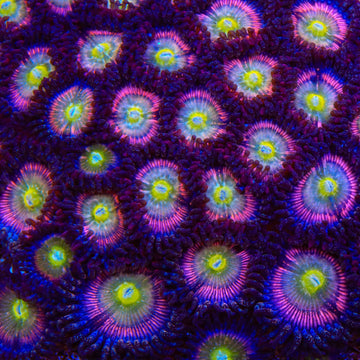
Rainbow Incenerator Zoanthids Coral
Overview
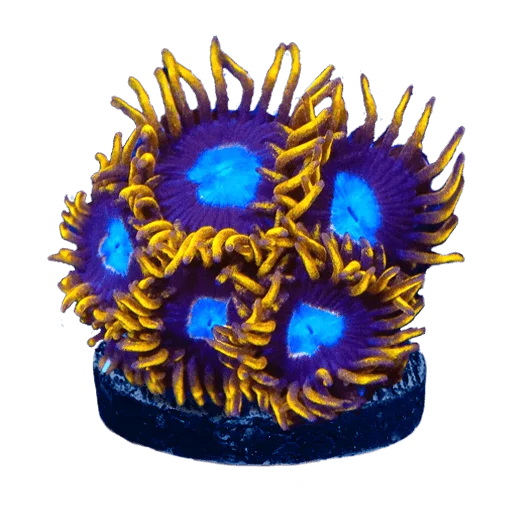
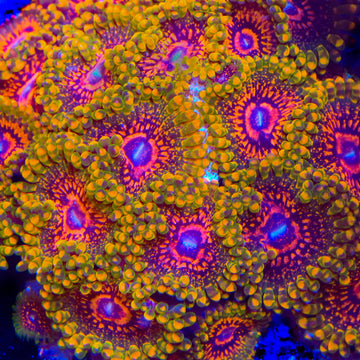
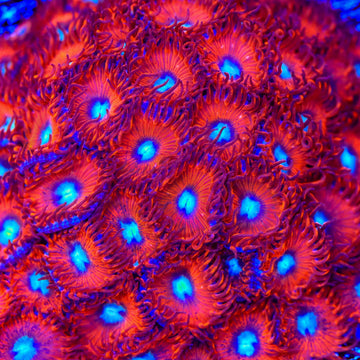
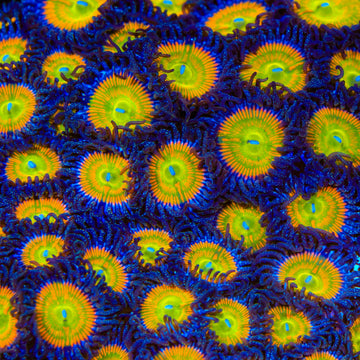
Rainbow Incinerator Zoanthids Coral displays small polyps with bright multicolor centers and contrasting skirts. Zoanthus sp., a soft colonial polyp coral, does well with moderate light and moderate, variable water flow. It is primarily photosynthetic with symbiotic algae but will take small meaty foods, which can support faster growth and color intensity. Place on an isolated rock to control spreading, and handle with care, as some zoanthids can contain toxins.
Quick Facts
Care
Easy
Lighting
Moderate–High
Flow
Moderate
Placement
Low–Mid
Temperament
Semi-aggressive (can overgrow neighbors; 2–3 inches spacing)
Recommended Parameters
Temp
76–82°F
pH
8.1–8.4
Salinity
1.025–1.026
Calcium
380–430 ppm
AlkAlkalinity
8–10 dKH
Magnesium
1250–1350 ppm
Feeding
photosynthetic, phytoplankton, microplankton, rotifers, copepod nauplii, baby brine shrimp, cyclops, powdered coral foods (e.g., Reef-Roids), amino acid supplements
Care & Placement
FAQ
Frequently Asked Questions
About the Rainbow Incenerator Zoanthids Coral
-
Why do my Rainbow Incinerator Zoanthids fade from fiery orange to dull brown or pink?
Color shifts usually track spectrum and nutrients. They hold their orange best under strong, blue‑leaning light (actinic heavy) with stable alkalinity and moderate nitrate (5–15 ppm) and phosphate (0.03–0.1 ppm). Ultra‑low nutrients or sudden spectrum changes mute pigments. Ramp intensity slowly, avoid white-heavy peaks, and don’t strip nutrients with aggressive media. Occasional amino/trace dosing can help, but avoid overdoing iron. -
My colony is “melting” after looking fine for months—what’s the likely culprit?
Sudden decline often ties to pests or bacterial stress. Inspect at night for zoa‑eating nudibranchs, sundial snails, and spiders. Address with a sequence of dips (iodine, then peroxide at 1–2 mL 3% per cup for 2–3 minutes) and siphon eggs. Improve flow across the mat, stabilize pH/alk, and avoid big nutrient swings. If necrosis continues, frag healthy heads away from affected tissue. -
What’s the best way to build a “zoa garden” without this morph overrunning neighbors?
Place Rainbow Incinerators on an isolated rock island with a narrow “bridge” of rubble you can remove to reset boundaries. Aim for moderate, cross‑flow to direct growth along desired edges. Keep stinging LPS at least 3–4 inches away; their sweeper tentacles can damage skirts. Run fresh carbon to reduce chemical aggression from soft corals, and prune regularly by lifting edge polyps. -
My polyps stay small with pinched skirts—light too strong or flow too high?
Often it’s flow angle plus micro‑irritation. They prefer moderate, slightly turbulent flow that keeps detritus off without blasting the faces. Try deflecting flow so skirts flutter, not fold. If intensity is high, raise the colony or shorten the photoperiod rather than cutting blues. Check for film algae around the mat; gentle brushing before a dip can restore extension.