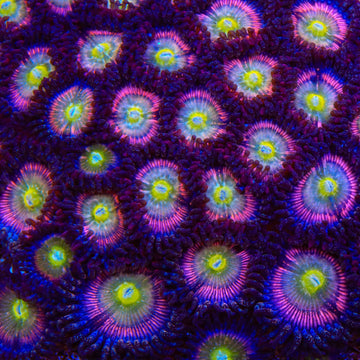
Rainbow Hornet Zoanthids Coral
Overview
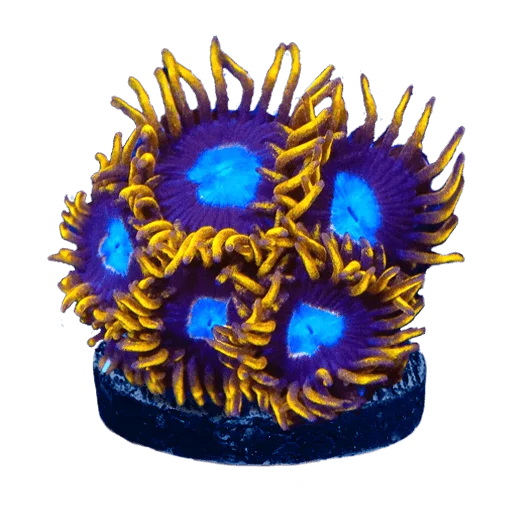
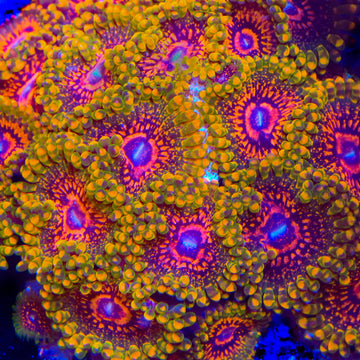
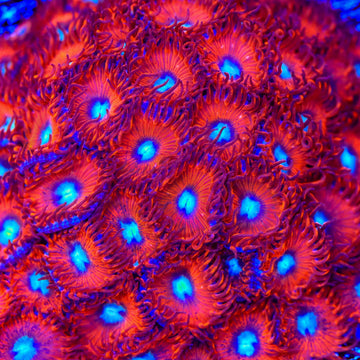
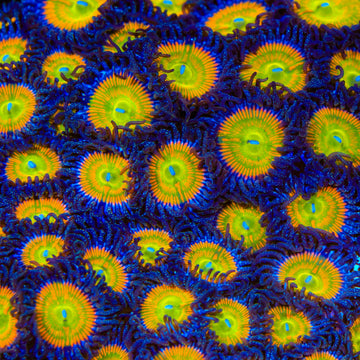
Rainbow Hornet Zoanthids Coral features multi-colored disks with a contrasting ring and a fringed skirt. Zoanthus sp. is a soft, colonial polyp that forms spreading mats, doing well under moderate light and low to moderate water flow. It relies on symbiotic algae but will accept small meaty or planktonic foods, which can improve growth and color. Place on its own rock to control spread and leave space from stinging neighbors.
Quick Facts
Care
Easy
Lighting
Moderate
Flow
Moderate, indirect
Placement
Low–Mid
Temperament
Mostly peaceful (2–3 inches spacing to prevent overgrowth)
Recommended Parameters
Temp
76–80°F
pH
8.1–8.4
Salinity
1.025–1.026
Calcium
400–450 ppm
AlkAlkalinity
8–10 dKH
Magnesium
1250–1350 ppm
Feeding
photosynthetic (primary), microplankton, phytoplankton, zooplankton, rotifers, cyclops, oyster eggs, marine snow, powdered coral foods (e.g., reef roids), very fine meaty suspensions
Care & Placement
FAQ
Frequently Asked Questions
About the Rainbow Hornet Zoanthids Coral
-
Why did my Rainbow Hornet Zoanthids suddenly stay closed after weeks of growth?
Sudden closing usually points to stress from parameter swings (salinity, alkalinity, temperature), irritants, or pests. Check at night for nudibranchs, sundial snails, or spiders. Improve moderate, indirect flow to prevent detritus buildup, run fresh carbon to reduce chemical warfare from soft corals, and verify stable nutrients (nitrate 5–15 ppm, phosphate 0.03–0.1). A brief iodine dip can help after pests are removed and parameters are corrected. -
How do I preserve the distinct rainbow rings without washing out or browning?
Aim for moderate PAR (roughly 80–150) with a blue-heavy spectrum; strong white light can mute rings. Avoid ultra-low nutrients—keep nitrate detectable and phosphate non-zero for balanced zoox density. Change lighting and placement gradually to prevent color shock. Stable alkalinity and salinity are key. If colors fade, reduce white intensity, improve stability, and increase feeding slightly without causing algae issues. -
Will Rainbow Hornets overrun my aquascape, and how do I contain them?
They spread via mats and can quickly carpet porous rock. Start them on an “island” rock with a gap from the main structure. Trim edges by cutting the mat between polyps and removing small sections before they cross bridges. Glue a perimeter barrier (super glue gel line) on the rock to slow creep. Regular fragging and strategic placement keep growth manageable without harming the colony. -
How do I handle “melting” or zoa pox on Rainbow Hornets?
First stabilize parameters and increase flow around the base. Inspect and remove pests. For zoa pox (tiny beige pustules), perform Furan-2 baths in a separate container per package directions for several days, followed by gentle iodine dips. Avoid heavy feeding during treatment. If tissue recession continues, lower light slightly, run carbon, and improve cleanliness around the mat. Once stabilized, polyps typically re-open over 1–2 weeks.