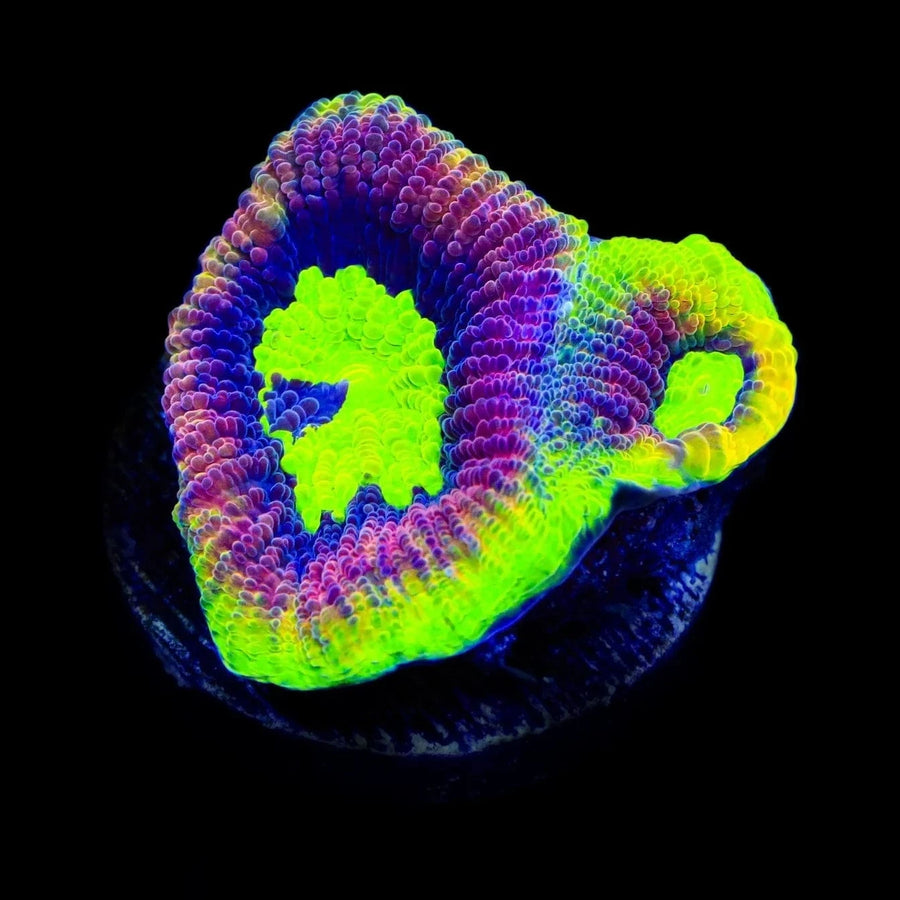
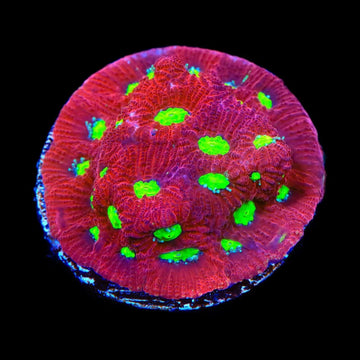
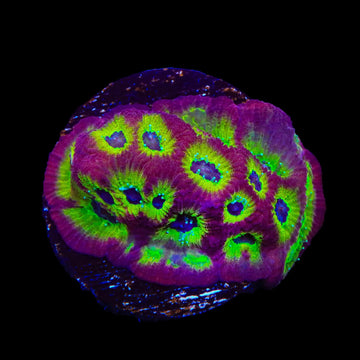
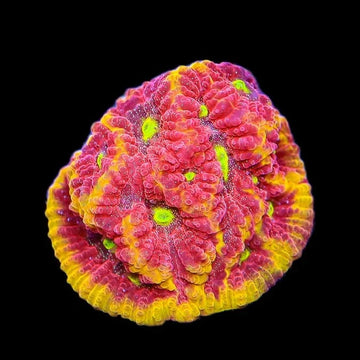
Rainbow Favia Coral
Overview
Rainbow Favia Coral displays multi-colored ridges surrounding large, polygonal corallites. Favia favus is a massive stony (brain-type) coral that prefers moderate lighting and low to moderate water flow. It relies on symbiotic algae for energy and accepts occasional small meaty foods, which can improve growth and color. Give it space and avoid close neighbors, as it extends sweeper tentacles at night.
Quick Facts
Care
Moderate
Lighting
Low–Moderate
Flow
Moderate, indirect
Placement
Low–Mid
Temperament
Semi-aggressive (night sweeper tentacles; 4–6 inches spacing)
Recommended Parameters
Temp
76–80°F
pH
8.1–8.4
Salinity
1.025–1.026
Calcium
400–450 ppm
AlkAlkalinity
8–10 dKH
Magnesium
1250–1350 ppm
Feeding
photosynthetic, mysis shrimp, enriched brine shrimp, finely chopped seafood (clam, shrimp), zooplankton, microplankton, coral-specific powdered foods (e.g., reef roids)
Care & Placement
FAQ
Frequently Asked Questions
About the Rainbow Favia Coral
-
How can I keep the “rainbow” colors of Rainbow Favia Coral from fading or turning brown?
Keep PAR modest (80–150) with strong blue/UV spectrum and stable nutrients (nitrate ~5–15 ppm, phosphate 0.03–0.08 ppm). Too much light bleaches or washes colors; ultra-low nutrients pale it; high nutrients brown it. Maintain steady alkalinity (8–9.5 dKH) and avoid sudden changes. Gentle, random flow helps gas exchange and keeps mucus/detritus off tissue, preserving vibrancy. -
Why do some polyps recede while others look fine on my Favia favus?
This coral has distinct corallites that can be affected individually. Localized recession often follows stings, detritus buildup, or shadows from neighboring growth. Increase slightly stronger, indirect flow to clear debris, rotate the colony to reduce self-shading, and target-feed the troubled polyps at night. If recession spreads, perform an iodine-based dip and stabilize alkalinity, salinity, and temperature to halt tissue loss. -
How aggressive is Rainbow Favia Coral, and how much space does it need?
At night, it extends long sweeper tentacles (often 2–4 inches) that can sting LPS and some soft corals. Give a 3–5 inch buffer in the direction of flow. It tolerates proximity to hardy montiporas better than to fleshy LPS, but still monitor. Feed lightly after lights out to satisfy its appetite, which can reduce nocturnal stinging on neighbors. -
My Rainbow Favia inflates but rarely extends feeding tentacles—how can I improve feeding response?
Try a dusk feeding schedule: ramp down whites, keep blues on, and broadcast a small amount of fine particulate food to “prime” a response. Then target-feed mysis, small pellets, or reef roids near each corallite. Consistent timing trains the coral. If response stays weak, reduce PAR slightly and boost flow a bit to improve oxygenation and scent dispersal.