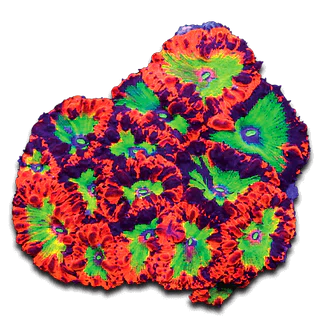
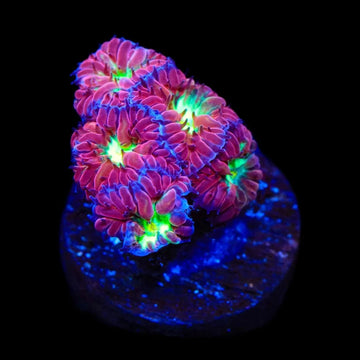
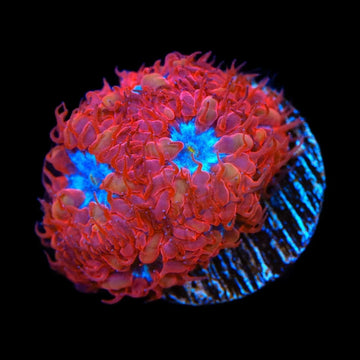
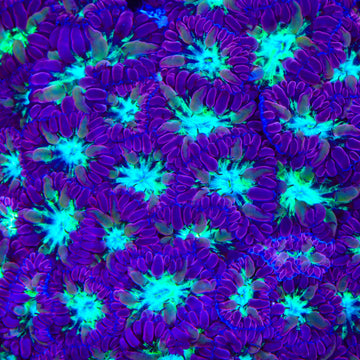
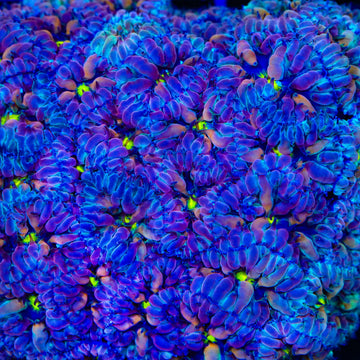
Rainbow Blastomussa Coral
Overview
Rainbow Blastomussa Coral shows fleshy, multi-colored polyps with thick ridged walls. Blastomussa wellsi is a large-polyp stony coral that forms clustered heads and prefers moderate light with low to moderate water flow. It is photosynthetic with symbiotic algae but readily accepts small meaty foods, which can improve growth and maintain color. Place it on a stable substrate with space from neighbors, as it can extend short sweeper tentacles at night.
Quick Facts
Care
Moderate
Lighting
Low–Moderate
Flow
Low–Moderate
Placement
Low–Mid
Temperament
Semi-aggressive (3–6 inches spacing)
Recommended Parameters
Temp
76–80°F
pH
8.1–8.4
Salinity
1.025–1.026
Calcium
400–450 ppm
AlkAlkalinity
8–9 dKH
Magnesium
1280–1350 ppm
Feeding
photosynthetic, mysis shrimp, enriched brine shrimp, copepods, cyclops, finely chopped seafood, zooplankton, microplankton, coral-specific powdered foods
Care & Placement
FAQ
Frequently Asked Questions
About the Rainbow Blastomussa Coral
-
How can I keep the Rainbow Blastomussa Coral’s colors vivid without stressing it?
Aim for low to moderate PAR (60–120) with a blue-leaning spectrum; acclimate slowly to any light change. Maintain moderate nutrients (NO3 5–15 ppm, PO4 0.03–0.08 ppm) and stable alkalinity. Feed small particle or finely chopped meaty foods 1–2× weekly. Avoid overly white lighting and long photoperiods that wash colors, and don’t chase color with abrupt spectrum or intensity shifts. -
My Blastomussa wellsi heads look puffy but are receding at the base—what’s the likely cause?
Common culprits are alkalinity swings, detritus trapping around the skeleton, and abrasive flow causing tissue wear. Verify stability (Alk ~8–9 dKH, Ca 420, Mg 1300), keep gentle, indirect flow, and baste debris off the base. Check for vermetid snails and early brown jelly; if present, frag away affected heads and use an iodine-based dip, then improve cleanliness and stability. -
Why does my Blastomussa inflate and deflate dramatically on some days?
Moderate inflation cycles are normal for gas exchange and feeding. Large swings often point to salinity or alkalinity fluctuations, recent light changes, or carbon dosing shifts. Confirm stable salinity, avoid sudden light increases, and keep flow gentle. Nighttime extension of feeder tentacles is typical; if tissue looks creased or abraded, relocate to a flat, smooth surface (often the sandbed) to prevent rubbing injuries. -
How close can Blastomussa wellsi be to other corals, and what should I watch for?
It’s relatively peaceful with short sweepers but can still sting neighbors; give 2–3 inches of space. Avoid placing near aggressive LPS or fast-growing soft corals that release chemicals; run fresh carbon and maintain good export. Watch for shrimp and fish stealing food from its fleshy polyps—target feed after lights dim and briefly deter cleaners to reduce stress and improve feeding success.