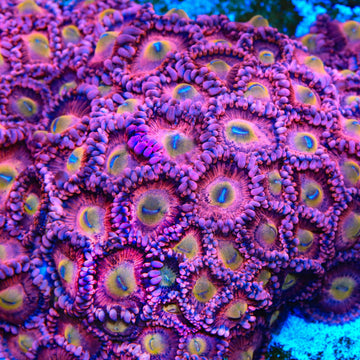
Powerball Bounce Mushroom Coral
Overview
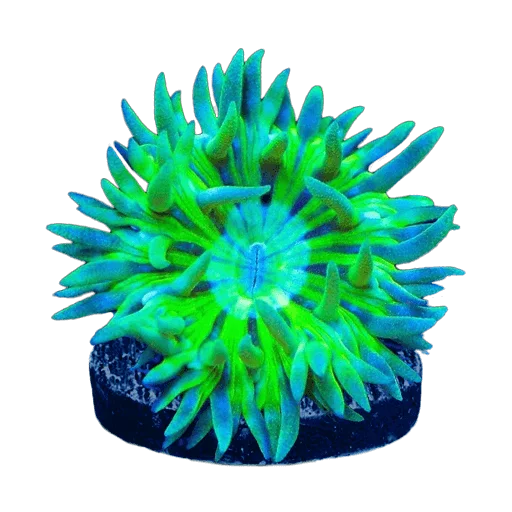
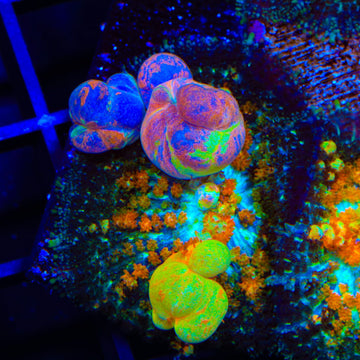
Powerball Bounce Mushroom Coral shows a domed disk with large, inflated bubble-like vesicles across its surface. Rhodactis sp. is a soft mushroom coral that prefers moderate to low light and gentle, indirect water flow. It relies on symbiotic algae for energy and accepts occasional small meaty foods, which support faster growth and deeper color. Place it on stable rock with space from neighbors, as it can expand and irritate nearby corals.
Quick Facts
Care
Easy
Lighting
Low–Moderate
Flow
Low–Moderate
Placement
Low–Mid
Temperament
Semi-aggressive (3–6 inches spacing)
Recommended Parameters
Temp
76–80°F
pH
8.1–8.4
Salinity
1.025–1.026
Calcium
380–430 ppm
AlkAlkalinity
8–9 dKH
Magnesium
1250–1350 ppm
Feeding
photosynthetic (primary), mysis shrimp, enriched brine shrimp, copepods, finely chopped seafood, microplankton/zooplankton, reef-specific powdered foods (e.g., Reef-Roids), marine snow
Care & Placement
FAQ
Frequently Asked Questions
About the Powerball Bounce Mushroom Coral
-
Why do the “bounce” vesicles on my Powerball Bounce Mushroom Coral deflate or flatten over time?
Vesicle inflation is tied to light, nutrients, and feeding. Too much PAR (often >120–150) or harsh, direct flow can flatten bubbles. Very lean water (near-zero nitrate/phosphate) also reduces inflation. Aim for moderate PAR (~70–120), gentle flow, and stable nutrients (nitrate 5–15 ppm, phosphate 0.03–0.1 ppm). Occasional small meaty feedings can help restore vesicles. -
My Rhodactis sp. is “melting” at the margins—how can I save it?
Act quickly. Move to lower light and gentler flow, improve aeration, and perform a diluted iodine dip to reduce bacterial load. Trim away necrotic tissue with a sterile blade. Place the coral on a clean frag plug in a low-flow basket to heal. Maintain stable alk (8–9 dKH) and slightly nutrient-rich water; abrupt swings often trigger tissue loss. -
Is the Powerball Bounce safe with small fish and mobile inverts?
Large Rhodactis can trap tiny, slow fish (e.g., neon gobies) and will grab food from passing shrimp. Keep very small or weak swimmers away, especially during night hours when tentacles are stickier. Emerald crabs and hungry hermits may pick at the tissue or steal food; observe closely and remove offenders if you see nipping or persistent harassment. -
Why does my Powerball grow so slowly compared to other mushrooms?
Bounce morphs typically prioritize vesicle development over rapid tissue expansion. They favor stability over speed—moderate PAR, gentle flow, and consistent, slightly “dirty” water. Target feed small portions (mysis, pellets) weekly to encourage growth. Crowding or chemical warfare from nearby corals can stall expansion; give several inches of space and use carbon if mixed with aggressive neighbors.