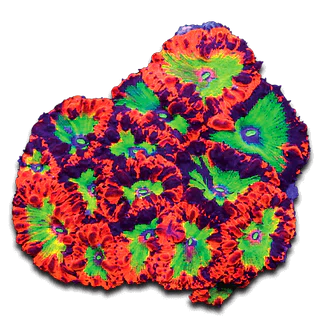
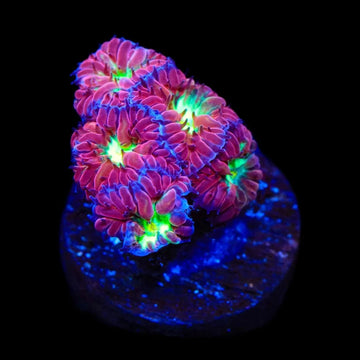
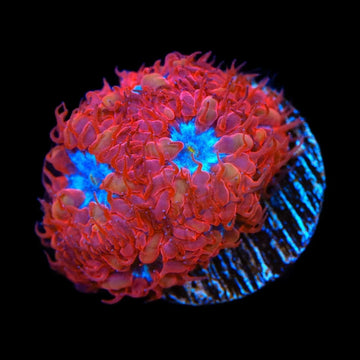
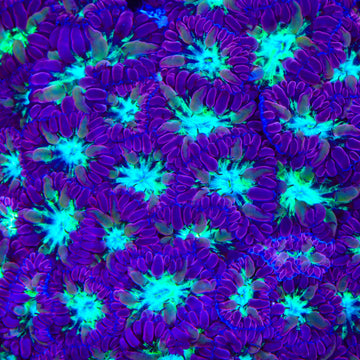
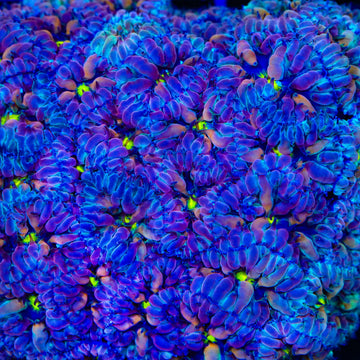
Potion of Life Blastomussa Coral
Overview
Potion of Life Blastomussa Coral features fleshy, round polyps forming clustered heads with contrasting mouths. Blastomussa wellsi is a large-polyp stony coral forming domed colonies; it prefers low to moderate light and gentle to moderate water flow. It hosts symbiotic algae for photosynthesis and benefits from occasional small meaty foods, which can improve growth and maintain coloration. Place it on stable rock or sand with space around it, as its sweeper tentacles can sting nearby corals.
Quick Facts
Care
Moderate
Lighting
Low–Moderate
Flow
Low–Moderate
Placement
Low
Temperament
Semi-aggressive (2–3 inches spacing)
Recommended Parameters
Temp
76–80°F
pH
8.1–8.4
Salinity
1.025–1.026
Calcium
400–450 ppm
AlkAlkalinity
8–10 dKH
Magnesium
1280–1350 ppm
Feeding
photosynthetic, mysis shrimp, enriched brine shrimp, finely chopped marine meats, zooplankton, microplankton, LPS pellets, coral-specific powdered foods (e.g., Reef-Roids)
Care & Placement
FAQ
Frequently Asked Questions
About the Potion of Life Blastomussa Coral
-
Why does my Potion of Life Blastomussa Coral inflate and deflate dramatically during the day?
Blastomussa wellsi modulates water in its tissue to manage light and flow. Large daily “puffing” is normal if tissue remains smooth and responsive. Sudden persistent deflation signals irritation: excessive PAR, direct laminar flow, stinging neighbors, or vermetid mucus. Lower light (target 50–120 PAR), diffuse the flow, and inspect for pests or nearby sweepers. Gentle turkey-basting removes irritating detritus. -
My B. wellsi is losing color at the edges—how do I correct this without bleaching it?
Edge paling often points to too much light with too little nutrients. Reduce intensity or raise the coral, keep blue spectrum dominant, and maintain nitrate 5–15 ppm and phosphate 0.03–0.1 ppm. Feed small meaty foods 1–2x weekly at dusk to support pigments. Avoid abrupt photoperiod changes; adjust 10% per week and monitor polyp extension. -
What’s the best placement to prevent tissue recession from abrasion or stings?
A stable sandbed spot or a smooth ledge with a small putty pad prevents sharp rock edges from chafing the inflated tissue. Give 2–3 inches from aggressive LPS (favia, galaxea, some euphyllia). Moderate, indirect flow keeps slime and detritus off without flapping the flesh. Rotate the colony occasionally to inspect hidden margins for skeleton exposure. -
How can I stop slow “melt” after a minor alk swing or a sting?
Act fast: stabilize parameters (alk changes <0.3 dKH/day), perform an iodine dip, trim any necrotic tissue, and siphon loosened slime. Isolate in a low-flow, low-light area to reduce stress. If polyps detach (bailout), capture them in a breeder box with rubble; some will reattach when conditions stabilize. Resume light feeding once expansion improves.