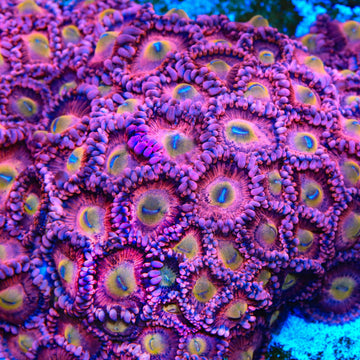
Playboy Bunny Zoanthids Coral
Overview
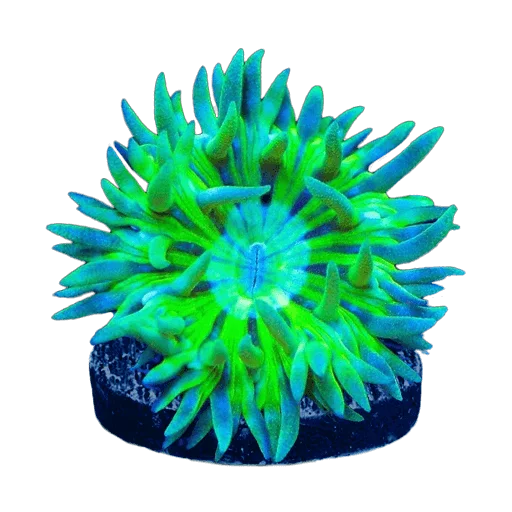
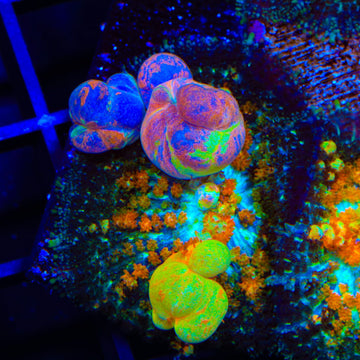
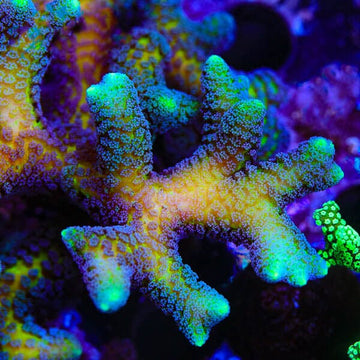
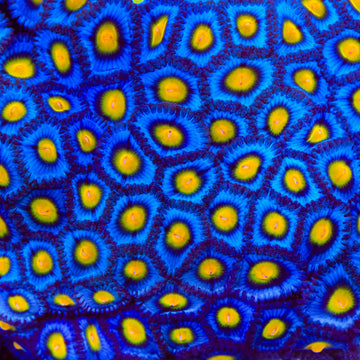
Playboy Bunny Zoanthids Coral shows tight mats of small polyps with a contrasting skirt and eye pattern. Zoanthus sp., a soft colonial polyp coral, does well under moderate light and low to moderate water flow. Primarily photosynthetic with symbiotic algae, it benefits from occasional small meaty or powdered foods, which can support faster growth and stronger color. Place on isolated rock to control spreading, and keep distance from aggressive neighbors to avoid stings.
Quick Facts
Care
Easy
Lighting
Low–Moderate
Flow
Moderate
Placement
Low–Mid
Temperament
Semi-aggressive (2–3 inches spacing)
Recommended Parameters
Temp
76–80°F
pH
8.1–8.4
Salinity
1.025–1.026
Calcium
400–450 ppm
AlkAlkalinity
8–10 dKH
Magnesium
1250–1350 ppm
Feeding
photosynthetic, phytoplankton, microplankton, rotifers, zooplankton, cyclops, oyster eggs, coral-specific powdered foods (e.g., Reef-Roids), amino acids
Care & Placement
FAQ
Frequently Asked Questions
About the Playboy Bunny Zoanthids Coral
-
Why did my Playboy Bunny Zoanthids lose their pink rim or look dull under new lights?
This morph is spectrum sensitive. Under heavy blue (actinic) with moderate PAR (~100–200), the pink rim and green mouth pop. Too much white or very high PAR can wash colors and shrink skirts; too little light stretches polyps. Maintain stable nutrients (nitrate 5–15 ppm, phosphate 0.03–0.1 ppm). A small dose of iron can help greens, but avoid overdosing to prevent nuisance algae. -
How do I stop new frags from “melting” after dips or shipping?
Use gentler, shorter dips for Zoanthus sp. (iodine or commercial dips 3–5 minutes), then rinse in tank water. Provide moderate flow to keep debris off and start them low, raising over a week. Keep nutrients detectable. If pox-like white spots appear, try a Furan-2 bath series. Inspect for pests first—aggressive dipping won’t fix an active infestation. -
What pests target this morph, and how can I spot them early?
Look for zoa-eating nudibranchs (same color as polyps), sundial snails (black/white spiral shell), and zoa spiders (tiny, crab-like). Signs include half-moon bite marks, closed polyps at dawn, and egg spirals under skirts. Use targeted dips, nightly tweezing, and quarantine. A vigilant wrasse (e.g., Melanurus) can help, but manual removal and repeat dips are key. -
How can I control spread without stressing the colony or neighbors?
Mount on an isolated “island” rock with a sand gap so the mat doesn’t overrun LPS or encrusters. Periodically trim the mat edge with a clean scalpel and peel back, then glue the cut margin to stop regrowth. Run fresh carbon if nearby softies wage chemical warfare. Maintain ample flow to keep detritus from fueling fast creep.