Pinky the Bear Goniopora Coral
Overview
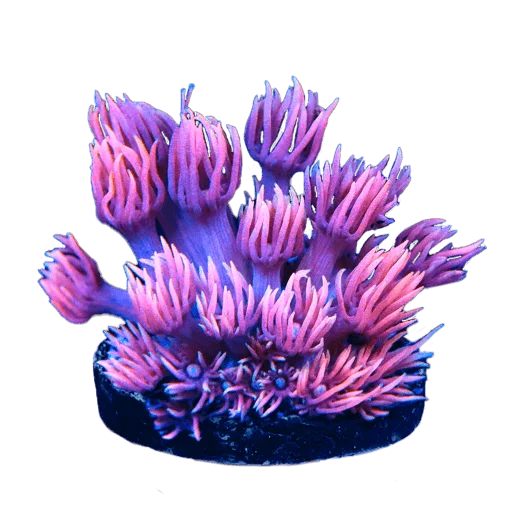
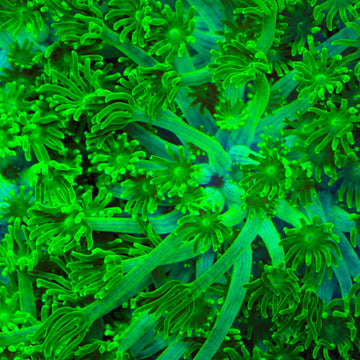
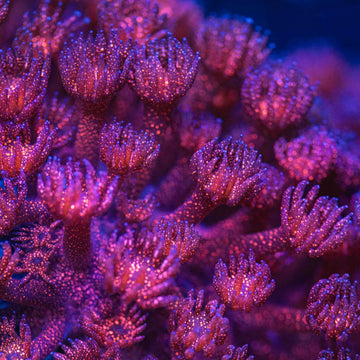
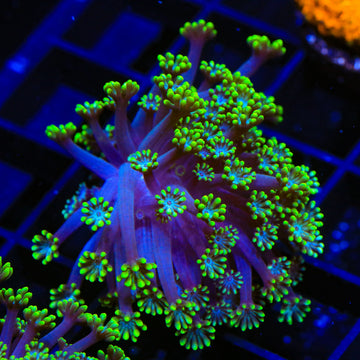
Pinky the Bear Goniopora Coral shows dense clusters of long, flower-like polyps with pink tones. Goniopora sp. is a large-polyp stony coral that forms a solid skeleton with extended tentacles; it prefers moderate light and gentle to moderate, indirect flow. It is photosynthetic with symbiotic algae but benefits from occasional small particulate foods, supporting polyp extension, growth, and color. Place on stable rock or sand with space around the colony, as the long polyps are easily damaged and can irritate nearby corals.
Quick Facts
Care
Difficult
Lighting
Low–Moderate
Flow
Moderate indirect
Placement
Mid–Low
Temperament
Semi-aggressive (6–8 inches spacing)
Recommended Parameters
Temp
76–80°F
pH
8.1–8.4
Salinity
1.025–1.026
Calcium
420–450 ppm
AlkAlkalinity
8–9 dKH
Magnesium
1280–1350 ppm
Feeding
photosynthetic (primary), phytoplankton, microplankton, zooplankton, rotifers, cyclops, oyster eggs, reef-specific powdered coral foods, baby brine shrimp, marine snow
Care & Placement
FAQ
Frequently Asked Questions
About the Pinky the Bear Goniopora Coral
-
My Pinky the Bear Goniopora stopped fully extending after months of doing great—what hidden factors should I check?
Check flow pattern first: random, moderate flow that gently sways polyps, not laminar jets. Rule out irritation from clownfish, nearby leathers (chemical warfare), or micro-crabs. Stabilize NO3 5–15 ppm and PO4 0.03–0.1. Consider low-dose iron/manganese if long-term pale tips persist. Verify PAR ~100–150 with gradual acclimation. A brief iodine dip can reset bacterial film on tissue. -
Why did my coral shift from bright pink to brown/green hues?
Goniopora pigments respond to spectrum and nutrients. Excess white-heavy lighting or very low nutrients boosts zoox density, dulling pinks. Aim for blue-violet weighted spectrum (420–470 nm) and moderate PAR. Keep nutrients non-zero. Trace metals influence color; too much iron can push green tones. Improve feeding of fine particulate foods while avoiding overfiltration that strips dissolved organics. -
Is sandbed placement risky for this coral’s long polyps?
Yes—polyps can abrade on grains, leading to recession or polyp bailout. If kept on sand, set it on a smooth pedestal or tile slightly above the bed. Tune flow to avoid sand swirling onto tissue. Inspect for detritus pockets under the base; lift and baste weekly. Many keep it mid-level on a ledge where polyps can sway without contact. -
How do I respond to sudden recession or brown jelly on a Goniopora head?
Act fast: siphon the slime, then dip in iodine or broad-spectrum coral antiseptic. If a head is melting, saw it off well into healthy skeleton to prevent spread. Increase turbulent flow and ensure stable temperature/alkalinity. Consider a short blackout if light stress triggered it. UV sterilization can reduce waterborne pathogens, but stability and prompt removal are key.