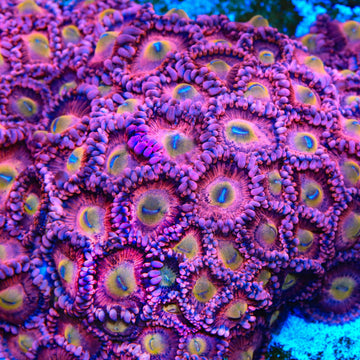
Pink Zipper Zoanthids Coral
Overview
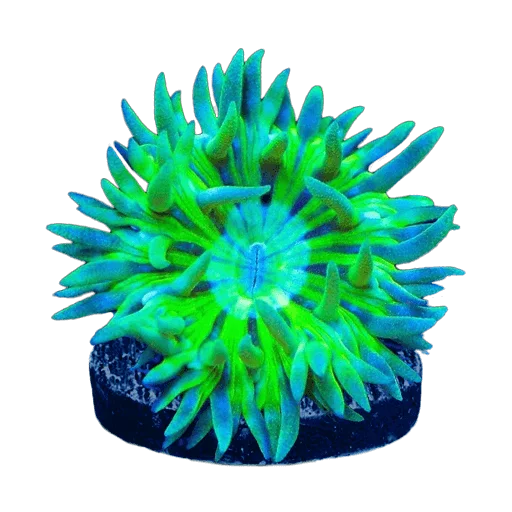
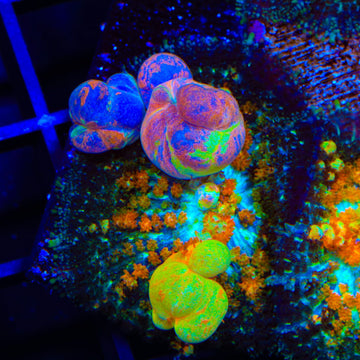
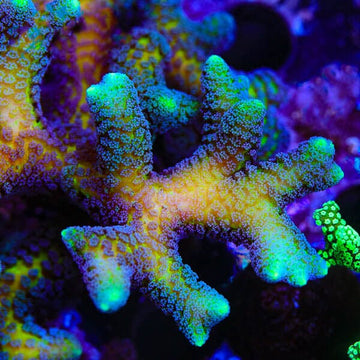
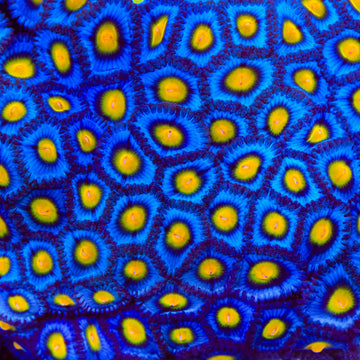
Pink Zipper Zoanthids Coral shows small button-like polyps with bright pink, slit-shaped mouths. Zoanthus sp. is a soft, mat-forming colonial polyp that thrives in moderate light and low to moderate water flow. It is primarily photosynthetic through symbiotic algae, but occasional feeding of fine meaty foods can support faster growth and deeper color. Place on isolated rockwork to manage spreading and leave space from slower-growing neighbors.
Quick Facts
Care
Easy
Lighting
Moderate
Flow
Moderate indirect
Placement
Low–Mid
Temperament
Semi-aggressive (fast grower—allow 2–4 inches spacing)
Recommended Parameters
Temp
76–80°F
pH
8.1–8.4
Salinity
1.025–1.026
Calcium
380–450 ppm
AlkAlkalinity
8–10 dKH
Magnesium
1250–1350 ppm
Feeding
photosynthetic, microplankton, zooplankton, rotifers, cyclops, powdered coral foods, phytoplankton, baby brine shrimp, finely minced mysis shrimp
Care & Placement
FAQ
Frequently Asked Questions
About the Pink Zipper Zoanthids Coral
-
Why do Pink Zipper Zoanthids lose their vivid “zipper” pattern or turn dull?
Color loss usually ties to spectrum and nutrients. Aim for PAR ~80–150 with strong blue/UV (420–460 nm) and gradual white. Keep nitrate 5–15 ppm and phosphate 0.03–0.1 ppm; ultra-clean systems can wash out pinks. Acclimate to light slowly, avoid sudden spectrum shifts, and maintain stable alkalinity. If polyps stretch, increase light slightly or flow. Occasional amino/trace supplementation can help, but prioritize consistency over additives. -
How can I prevent a Pink Zipper colony from overrunning nearby corals?
Mount on an “island” rock with sand moat or use frag tiles as borders to limit mat creep. Trim the mat periodically by slicing between polyps and removing advancing edges. Slightly higher light and moderate flow encourage a tight, low mat; low light favors “leggy” growth that jumps gaps. Be mindful of shading—zoas win by cover, not stings. Activated carbon helps with mixed reefs. -
My Pink Zippers stay closed for days—what uncommon issues should I check?
Inspect at night for zoa-eating nudibranchs, sundial snails, or tiny “zoa spiders.” Dip and manually remove egg spirals. Check for nearby leathers releasing chemicals; run fresh carbon and ensure good skimming. Excessive, direct flow can collapse skirts; redirect to a gentle, random pattern. Verify no shading by faster growers. If all else fails, try a series of dips and a brief “time-out” in a lower light, pest-free rack. -
Do Pink Zippers need direct feeding, and what’s the best approach?
They thrive mostly on light and dissolved nutrients, but periodic target feeding of fine foods (e.g., rotifers, reef roids, pulverized mysis juice) can boost growth. Feed sparingly to avoid film algae on the mat. Turn off flow, waft micro-foods, then restore gentle flow after 5–10 minutes. Consistent nitrate and phosphate levels usually matter more than heavy feeding for color stability.