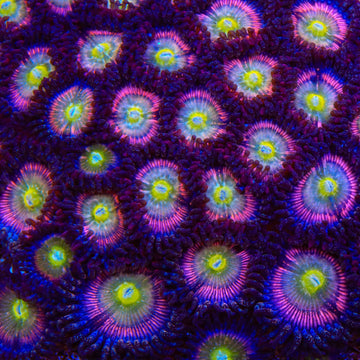
Pink Hippo Zoanthids Coral
Overview
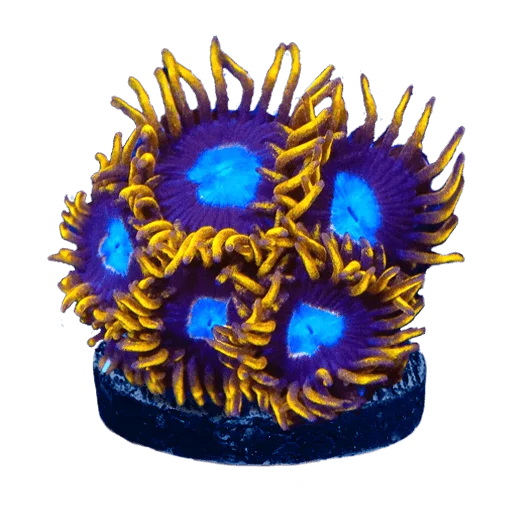
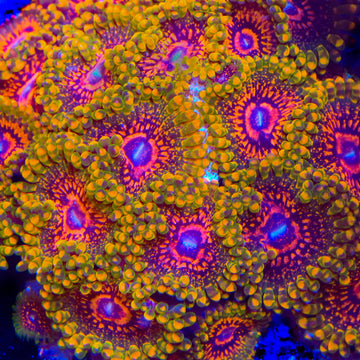
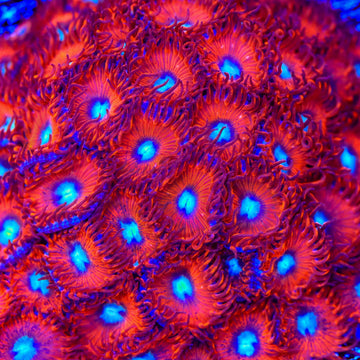
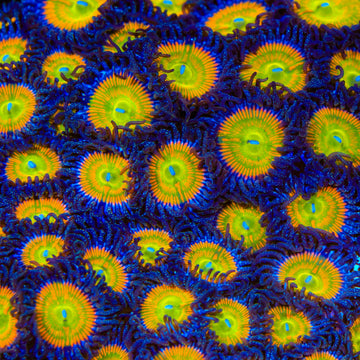
Pink Hippo Zoanthids Coral forms tight clusters of button-like polyps with pink centers and darker skirts. Classified as Zoanthus sp., this colonial soft polyp coral prefers moderate light and gentle to moderate water flow. It relies on symbiotic algae for most nutrition but benefits from occasional small particulate foods, which can support faster growth and maintain color. Place on an isolated rock to control spreading and keep distance from aggressive corals; handle with care.
Quick Facts
Care
Easy
Lighting
Low–Moderate
Flow
Moderate
Placement
Mid–Low
Temperament
Peaceful to moderately aggressive (2–3 inches spacing)
Recommended Parameters
Temp
76–82°F
pH
8.1–8.4
Salinity
1.025–1.026
Calcium
400–450 ppm
AlkAlkalinity
8–10 dKH
Magnesium
1250–1350 ppm
Feeding
photosynthetic, microplankton, rotifers, copepod nauplii, cyclops, brine shrimp nauplii, finely minced mysis, coral-specific powdered foods
Care & Placement
FAQ
Frequently Asked Questions
About the Pink Hippo Zoanthids Coral
-
Why does my Pink Hippo Zoanthids Coral look dull under strong white lights but pop under blues?
Pink morphs rely on fluorescent proteins that respond best to violet/royal blue (420–460 nm). Heavy white intensity can wash out fluorescence and encourage browning by boosting zooxanthellae density. Try a bluer spectrum during viewing hours, keep PAR moderate (80–150), and avoid ultra-low nutrients; mild nitrate (2–10 ppm) and phosphate (0.03–0.1) often improve color and polyp fullness without pushing brown tones. -
How can I control fast matting without stressing the colony?
Isolate on a small “island” rock or a removable tile to confine the mat. Trim the edge rather than the polyp heads: score the coenenchyme between polyps with a sharp scalpel and peel slowly. Immediately glue the cut mat edge to a clean surface to prevent lifting. Maintain moderate, indirect flow to keep cuts clean; iodine-based dips post-trim can help, but use reduced strength to avoid excessive retraction. -
What’s the best approach to propagation for thick, tightly packed Pink Hippo polyps?
Target small, healthy clusters. Chill blades to reduce tearing, and make clean, shallow passes under the mat rather than sawing through polyp bases. Mount frags on rough plugs with a ring of gel glue around, not under, the polyp mouths. Provide gentle, alternating flow for 3–5 days to prevent detritus buildup. Avoid bright light immediately post-cut; ramp PAR over a week to limit bleaching and promote quick re-attachment. -
Why are polyps closing at night and showing tiny bite marks by morning?
Likely zoa-eating nudibranchs, sundial snails, or zoa spiders, which are most active in the dark. Inspect 1–2 hours after lights out with a flashlight; check undersides and mat edges. Use a series of dips (e.g., iodine or commercial coral dips) at lower concentration, repeated every 3–4 days to interrupt egg cycles. Manually remove adults and egg spirals. Consider a brief freshwater rinse for plugs only; avoid prolonged exposure on the colony.