Pink Heart Goniopora Coral
Overview
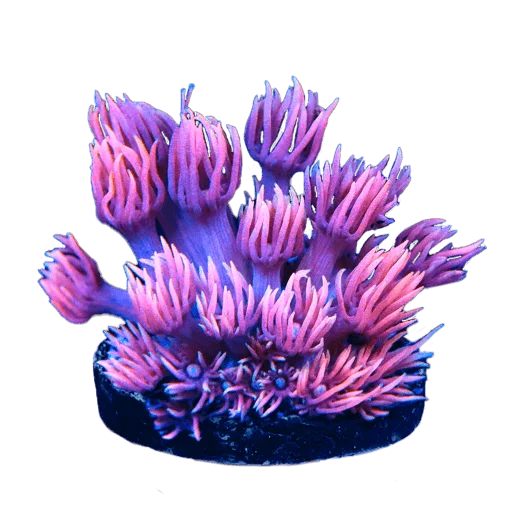
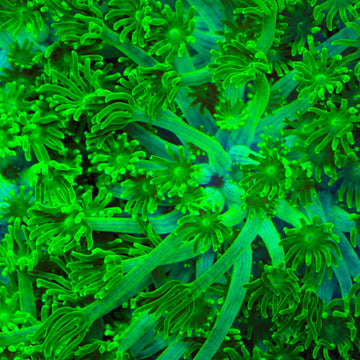
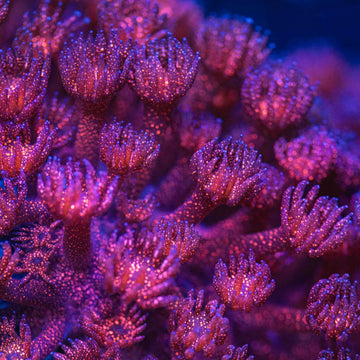
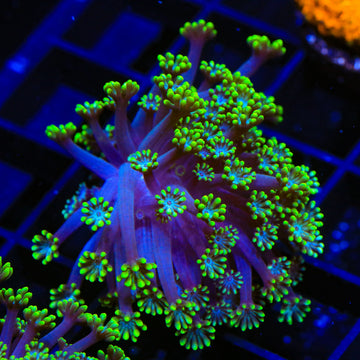
Pink Heart Goniopora Coral shows round, heart-tinted polyps on long, waving stalks. Goniopora sp. is a large-polyp stony coral that forms encrusting to dome colonies, preferring moderate light and gentle, indirect flow. It relies on symbiotic algae for energy but benefits from occasional small-particle foods, which can support growth and maintain color. Place with space around it, as polyps can extend and sting nearby corals; avoid strong, direct flow that causes retraction.
Quick Facts
Care
Moderate
Lighting
Moderate
Flow
Moderate, indirect
Placement
Low–Mid
Temperament
Semi-aggressive (3–6 inches spacing)
Recommended Parameters
Temp
76–80°F
pH
8.1–8.4
Salinity
1.025–1.026
Calcium
420–450 ppm
AlkAlkalinity
8–9.5 dKH
Magnesium
1280–1350 ppm
Feeding
photosynthetic, phytoplankton, microzooplankton, rotifers, baby brine shrimp (nauplii), Cyclops, coral-specific powdered foods (e.g., Reef-Roids), finely minced mysis
Care & Placement
FAQ
Frequently Asked Questions
About the Pink Heart Goniopora Coral
-
Why does my Pink Heart Goniopora show short polyp extension in high light but extends fully under moderate light?
Many Goniopora retract under intense PAR and turbulent flow. Aim for moderate PAR (100–150) with gentle, indirect movement that sways polyps without blasting them. Too much light can cause tissue thinning and reduced feeding response. Try shading acclimation over 1–2 weeks and slightly increase feeding; you’ll often see longer, puffier extension and better coloration. -
My pink coloration is fading toward beige—what adjustments help restore color?
Color washout often ties to excess light, low nutrients, or trace imbalance. Keep NO3 ~5–15 ppm, PO4 ~0.03–0.1 ppm, and stable alkalinity 8–9 dKH. Provide a blue-heavy spectrum (420–460 nm) and consider balanced trace replenishment with attention to iron and manganese. Reduce white intensity 10–20%, increase small-particle feedings, and maintain consistent photoperiods. -
My clownfish started hosting the Goniopora and polyps won’t extend—what should I do?
Persistent rubbing irritates polyps and can lead to recession. Provide alternative hosts (e.g., a rock flower anemone or a soft coral decoy), rearrange aquascape to break the fish’s routine, or add a temporary mesh cage until the clowns redirect. Ensure gentle flow and increase feeding during recovery; watch for secondary infections and dip if tissue looks compromised. -
What causes sudden “polyp bailout” in Goniopora, and can it be reversed?
Bailout often follows rapid parameter swings (alkalinity spikes, salinity shifts), toxins, or severe light/flow stress. Immediately stabilize parameters, lower light 20–30%, and move affected heads to a low-flow nursery basket. Target-feed nano-sized zooplankton and amino acids. Some bailed polyps can reattach to rubble over weeks; maintain very stable conditions and avoid handling to improve odds.